You've probably asked yourself this at least once: Is cold emailing actually legal?
The short answer is yes. Cold emailing is legal in most countries, but only if you follow the rules. Those rules vary wildly depending on where your prospects are located.
What's perfectly fine for B2B outreach in the United States could land you with a €20 million fine in the EU. Send the wrong email to a Canadian prospect without consent? You're risking penalties up to CA$10 million per violation.
This isn't theoretical. Companies have paid hundreds of thousands in fines for cold email violations. Email providers blacklist domains daily for spam-like behavior. One misstep can destroy your sender reputation for months.
But when you do it right, cold email remains one of the most cost-effective ways to generate B2B leads. You just need to understand the legal frameworks governing your outreach.
In this guide, we'll break down the major laws affecting cold email in 2025 (CAN-SPAM, GDPR, CASL, and more), show you exactly how to stay compliant, and give you the best practices that keep your emails legal and effective.
What's the Difference Between Cold Email and Spam?
People often lump cold email and spam together. They're not the same.
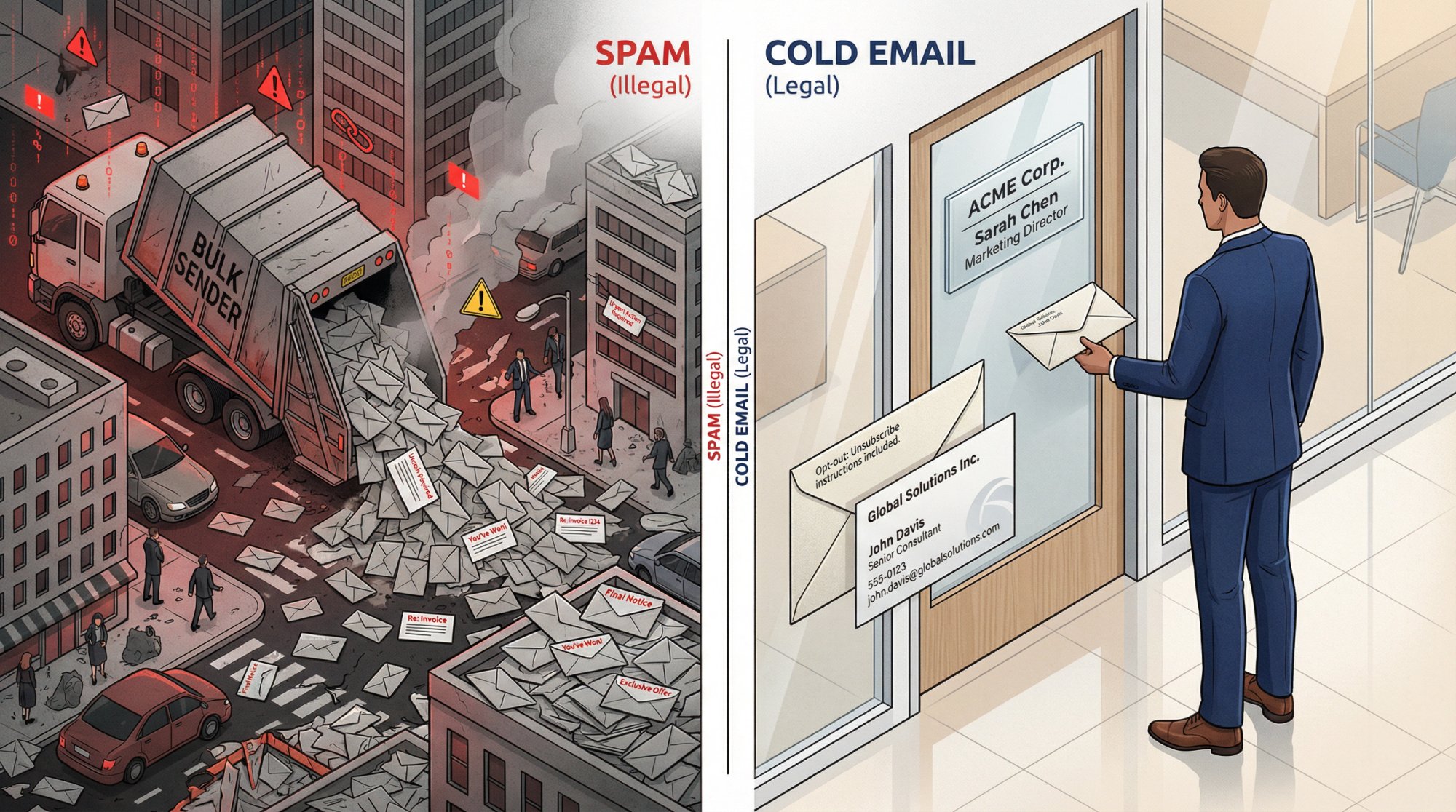
Cold email is targeted, personalized outreach to specific prospects who are likely to find your offer relevant. You've done your research. You know why you're reaching out to this person at this company.
Spam is the opposite. It's bulk-blasted to massive lists with zero regard for relevance or consent. Spam often carries misleading content, hides unsubscribe options, and tries to trick recipients.
Here's how they differ:
Aspect | Cold Email (Legal) | Spam (Illegal) |
|---|---|---|
Intent | Legitimate business proposition | Generic sales pitch or scam |
Targeting | Mass-blasted to anyone | |
Personalization | Customized to recipient | Cookie-cutter template |
Consent | Often allowed without prior opt-in (varies by region) | Ignores consent entirely |
Unsubscribe | Easy, visible opt-out in every email | Hidden or non-functional |
Sender Info | Accurate, transparent identification | Deceptive or anonymous |
The legal frameworks we'll discuss reflect this distinction. Professional, well-targeted cold email with proper disclosures is both legal and ethical. Spam violations, on the other hand, can land you in serious trouble.
The key is ensuring your cold emails meet all required compliance criteria. That's what the rest of this guide covers.
What Are the Major Cold Email Laws by Country?
Laws on cold email vary by country, but they all boil down to a few core principles:
→ Be honest about who's sending and why
→ Give recipients control to opt out
→ Respect privacy rights
Let's break down the major regulations and what each means for your cold email strategy.
United States: The CAN-SPAM Act
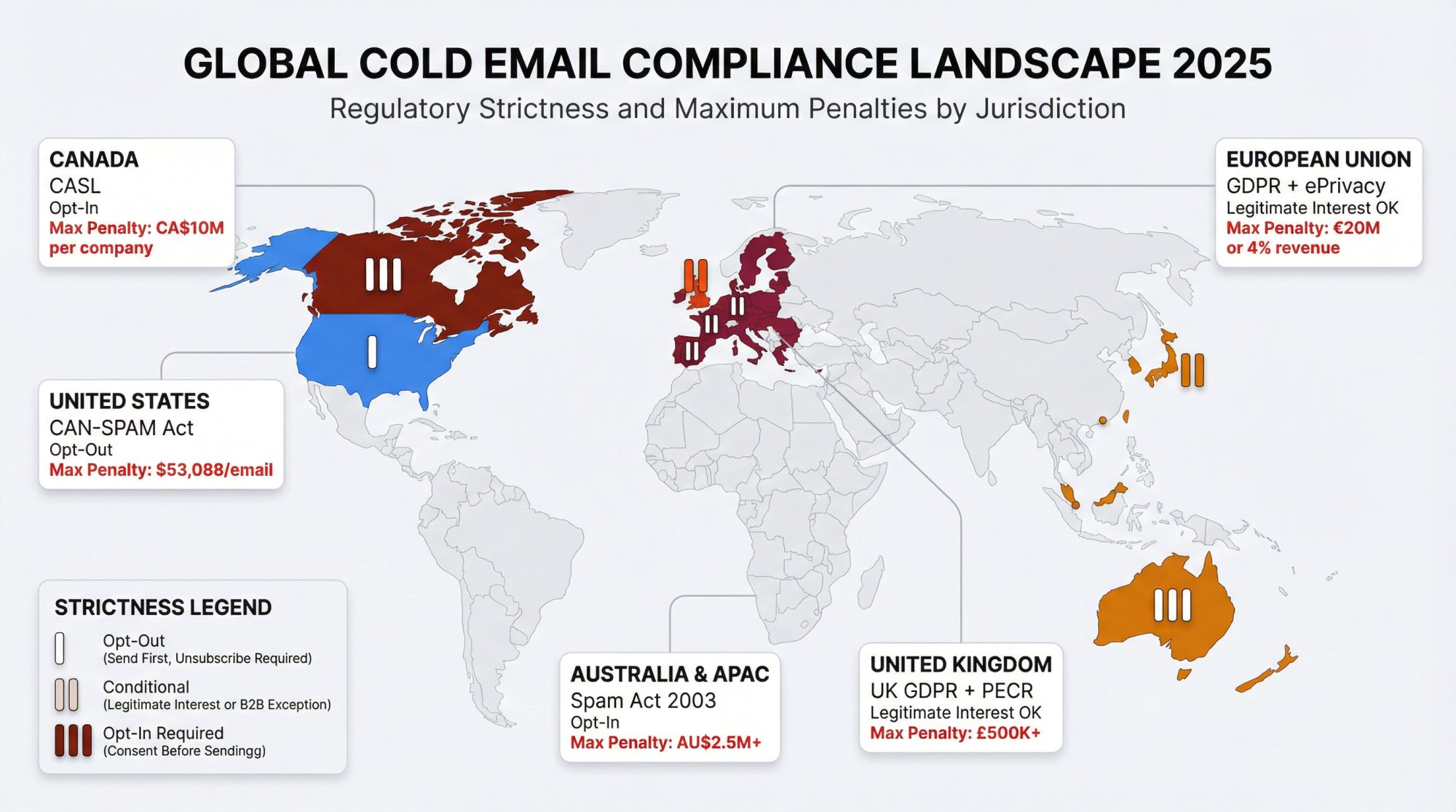
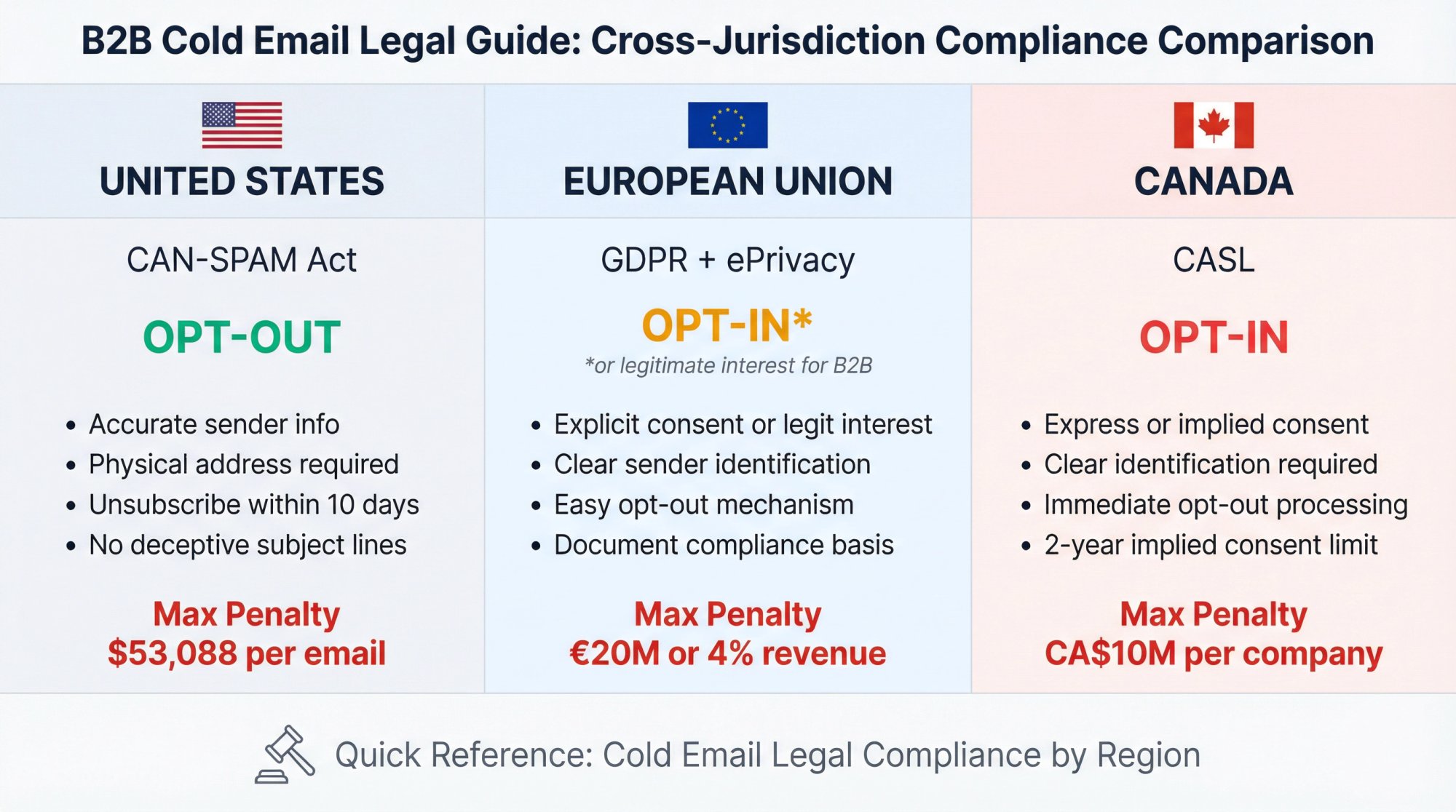
In the U.S., cold emailing is legal without prior consent as long as you comply with the CAN-SPAM Act (Controlling the Assault of Non-Solicited Pornography and Marketing Act of 2003).
CAN-SPAM is an opt-out law. You can send unsolicited emails, but recipients must have an easy way to refuse future messages.
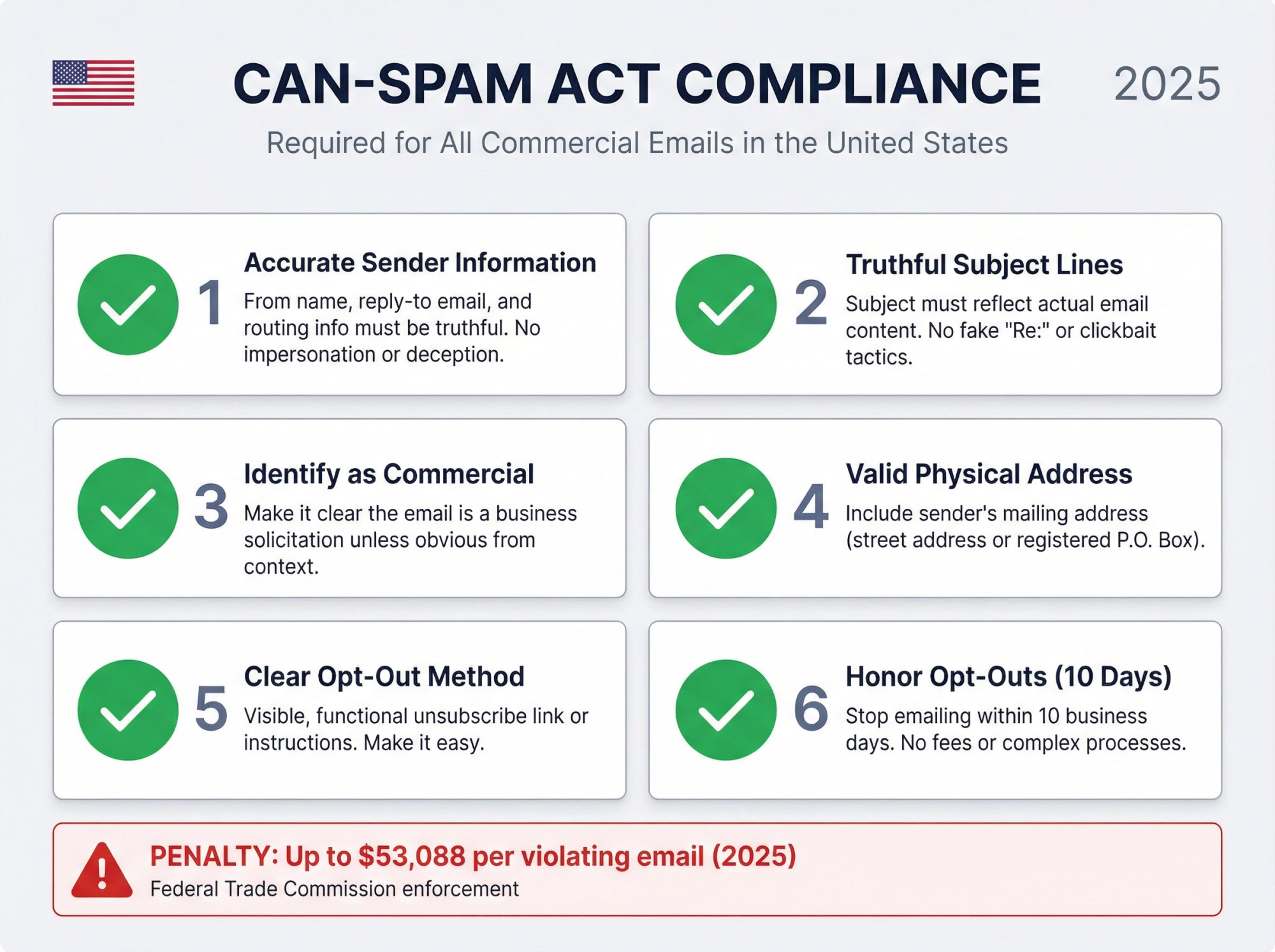
To stay legal under CAN-SPAM, every cold email must:
1. Use accurate sender information
The "From" name, reply-to email, and routing info can't be deceptive. You can't impersonate someone or obscure who's actually sending the email.
2. Avoid misleading subject lines
The subject should reflect the email's content. No clickbait. No fake "Re:" subjects to trick people into thinking it's part of an ongoing conversation.
3. Identify the message as commercial
Make it clear somewhere in the email that it's a business solicitation. This can be as simple as "This is a marketing message" unless it's obvious from context.
4. Include your valid physical address
Every email must include the sender's physical mailing address (your company's street address or a registered P.O. Box).
5. Provide a clear opt-out method
You must include a visible, functional unsubscribe link or instructions that allow recipients to opt out easily.
6. Honor opt-outs within 10 business days
If someone unsubscribes, you must stop emailing them within 10 business days. You can't charge a fee or make them jump through hoops.
What happens if you break these rules?
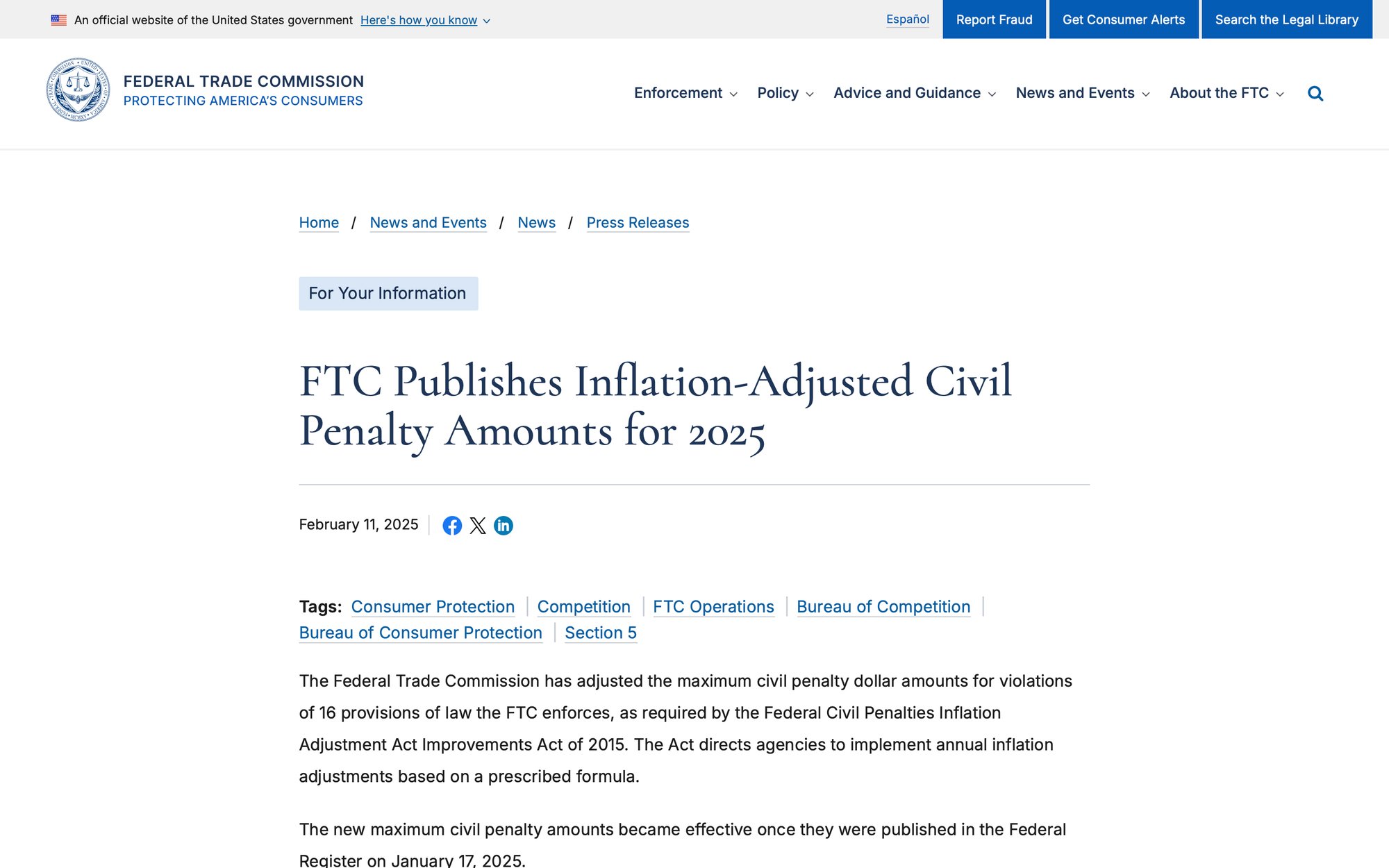
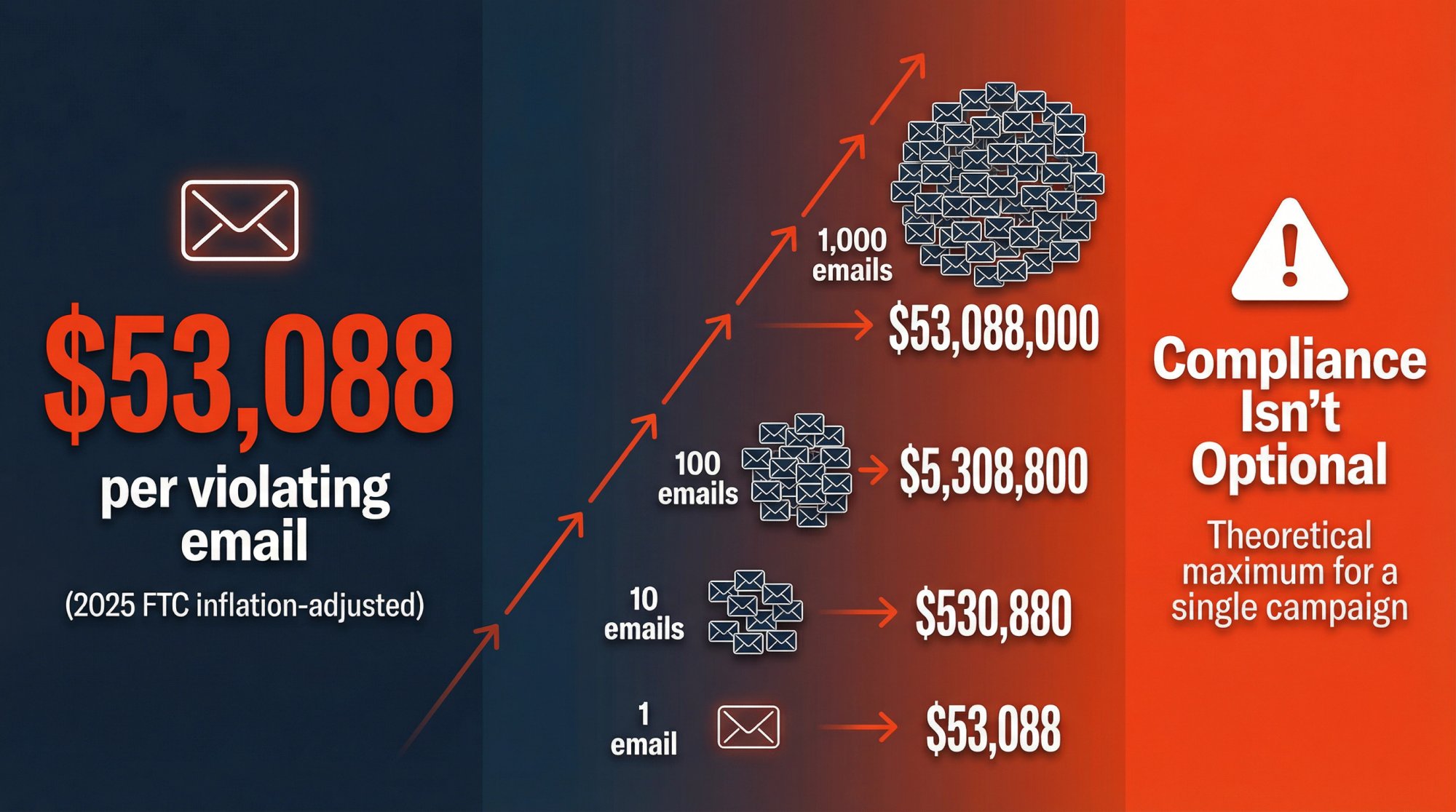
The Federal Trade Commission can seek fines of up to $53,088 per violating email as of 2025 (this figure is inflation-adjusted annually).
A sloppy cold email blast to 1,000 people that breaks the rules could theoretically rack up tens of millions in fines.
While maximum penalties are rare, the message is clear: compliance isn't optional.
Fortunately, CAN-SPAM's rules are straightforward and mostly common sense for ethical marketers.
One important note: Even though U.S. law doesn't require consent first, you should only email B2B contacts who are likely to find value in your message. Sending irrelevant emails en masse can still harm your sender reputation (and your brand) even if it's technically legal.
Also be aware that some states like California have additional privacy laws (CCPA/CPRA) that impose extra obligations when handling personal data. These don't ban cold emails outright, but they underscore the importance of transparency.
European Union: GDPR and ePrivacy
Is cold emailing legal in the EU?
It can be, but the rules are much stricter than in the U.S.
Europe has two key frameworks: the General Data Protection Regulation (GDPR) and the Privacy and Electronic Communications Directive (ePrivacy Directive).
Under GDPR, an email address is personal data, so you need a lawful basis to process it (to send someone an email).
GDPR doesn't outright forbid cold email, but in practice explicit prior consent is the safest legal basis for emailing someone who hasn't contacted you first.
GDPR does acknowledge that "legitimate interest" can be a lawful basis for direct marketing in some B2B cases. This is what many B2B senders rely on to justify cold emails to corporate addresses without prior opt-in. But legitimate interest isn't a free pass.
You must ensure your interest in contacting the prospect doesn't override their privacy rights. In plain terms: only contact business people who are likely to be interested, keep the email highly relevant to their role, and always offer an opt-out.
The ePrivacy Directive usually goes further by requiring opt-in consent for email marketing, especially to individuals. Most EU countries ban unsolicited B2C emails outright unless the recipient consented (or if they're an existing customer, under a "soft opt-in" exemption).
For B2B emails, some EU jurisdictions allow more leeway. Emailing someone at their company address may be permitted under "legitimate interest," provided the message relates to their job and they haven't opted out.
In the UK (which follows similar rules via PECR), prior consent is generally required for personal addresses, but there's an exemption for corporate email addresses if the content is relevant to their business and you include an opt-out.
The lines can be blurry. Many EU-based sales teams simply avoid pure cold emailing unless they have some form of prior interaction or permission.
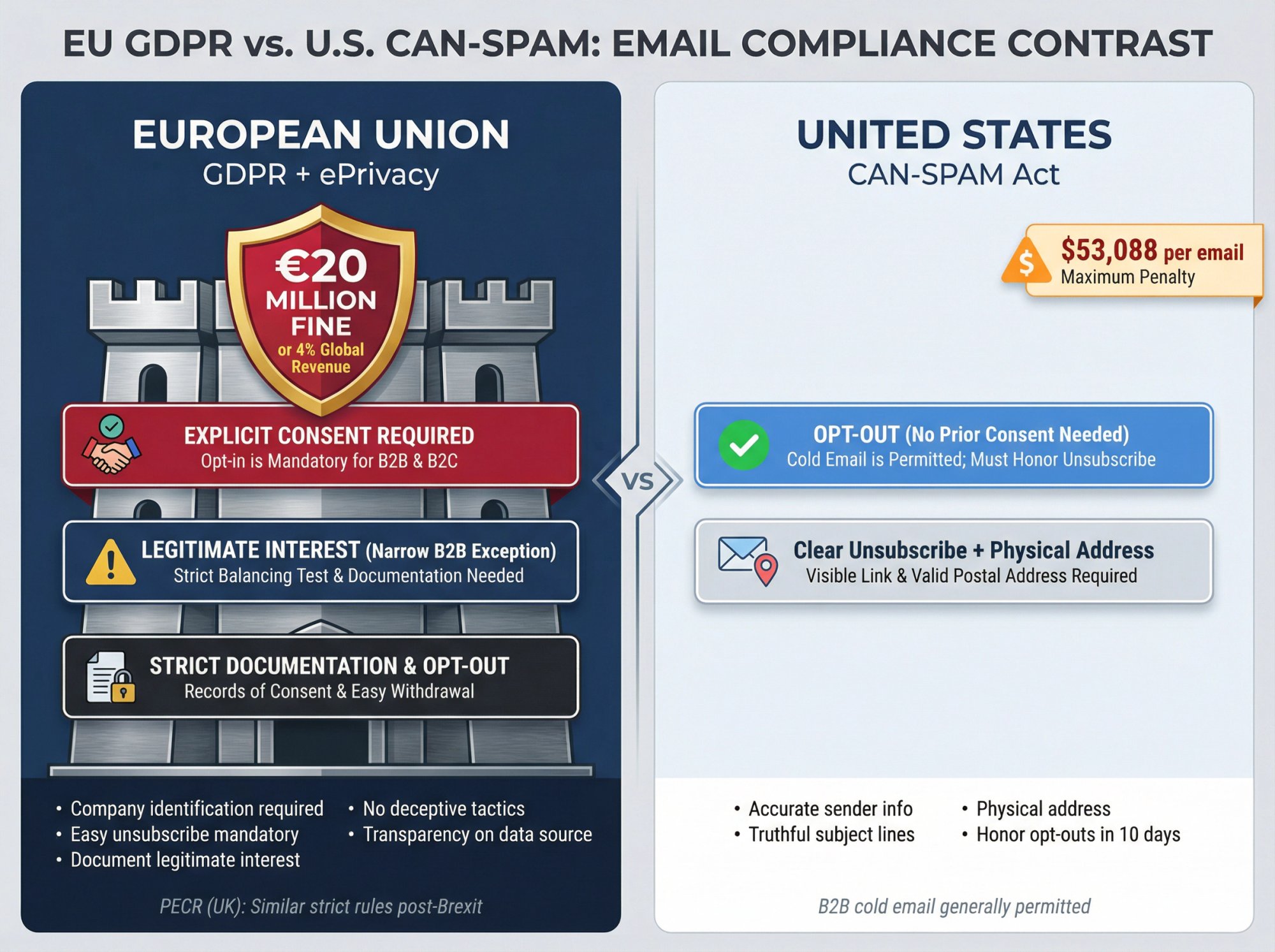
If you do cold email in Europe, you must:
• Clearly identify yourself and provide contact info in the email (company name, address, etc.)
• Include an easy unsubscribe/opt-out mechanism in every message
• Avoid deceptive or high-volume "spammy" tactics
• Keep a record of your compliance (document why you believe the person would have an interest)
• Provide transparency about how you got their contact (e.g., "We found your profile on LinkedIn")
The penalties for breaking EU rules are severe.
GDPR allows fines up to €20 million or 4% of worldwide annual turnover for the worst offenses.
Data protection authorities have issued multi-million euro fines to companies for unlawful marketing and data misuse.
Bottom line: If you're reaching out to EU residents, it's best to get consent or consult legal experts on a legitimate interest approach. When in doubt, err on the side of permission.
(Note: The EU is working on an updated ePrivacy Regulation that could unify and possibly tighten rules further. Keep an eye on regulatory updates.)
United Kingdom: PECR (Post-Brexit)
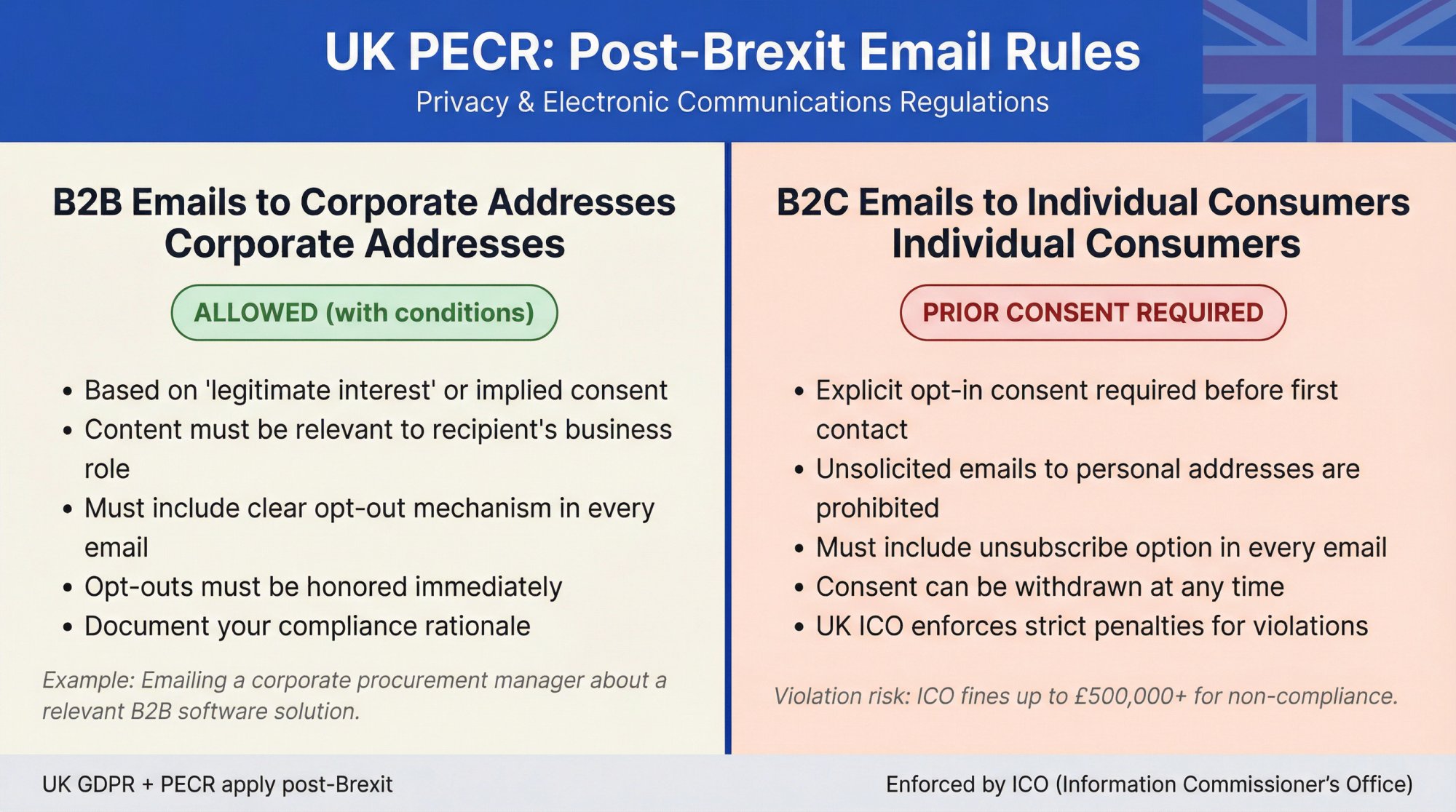
The UK, post-Brexit, has its own version of GDPR (UK GDPR) and still uses the Privacy and Electronic Communications Regulations (PECR).
For practical purposes, the UK's email rules are very similar to the EU's.
Unsolicited emails to individuals (B2C) require prior consent, while B2B emails to company addresses are allowed under implied consent or legitimate interest (as long as they're relevant and include an opt-out).
The UK's data authority (ICO) has penalized firms for sending marketing emails without consent. If you're emailing UK contacts, follow the same precautions you would for the rest of Europe.
Canada: CASL (One of the Strictest Laws)
Canada's Anti-Spam Law (CASL) is one of the toughest anti-spam regimes in the world.
CASL requires senders to have consent before sending commercial electronic messages to anyone in Canada, whether B2C or B2B.
This means pure cold emailing (no prior contact) is largely illegal in Canada unless you qualify for a narrow exception.
There are two types of consent under CASL:
Express consent: The recipient gave you clear, affirmative permission to email them (they opted in through a signup form or explicitly said "yes"). This consent doesn't expire until revoked.
Implied consent: Limited, time-bound permission that applies in specific contexts:
→ The person was recently your customer or engaged in negotiations (within the last 2 years)
→ Someone publicly publishes their email address (e.g., on a company website) without a "no spam" disclaimer and your email relates to their job/role
For example, if a consultant lists their email online and you email them about a business service relevant to them, that could be allowed as implied consent.
Important: Implied consent in Canada expires after 2 years (or 6 months if it was an inquiry but no purchase), unless renewed.
In all cases, every message must include clear sender identification and a working unsubscribe mechanism. If someone unsubscribes, you cannot email them again under any circumstance.
CASL's penalties are extremely high:
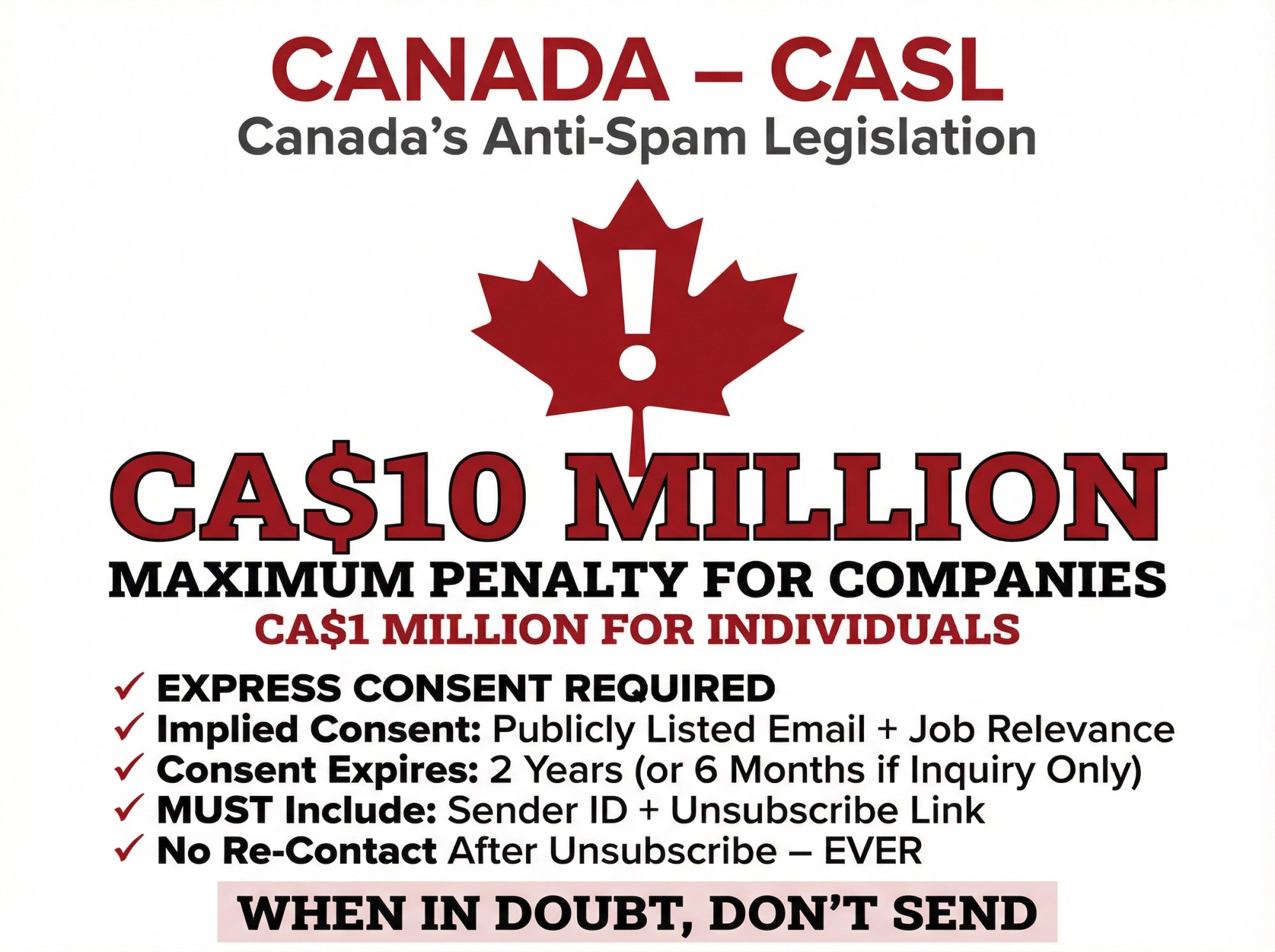
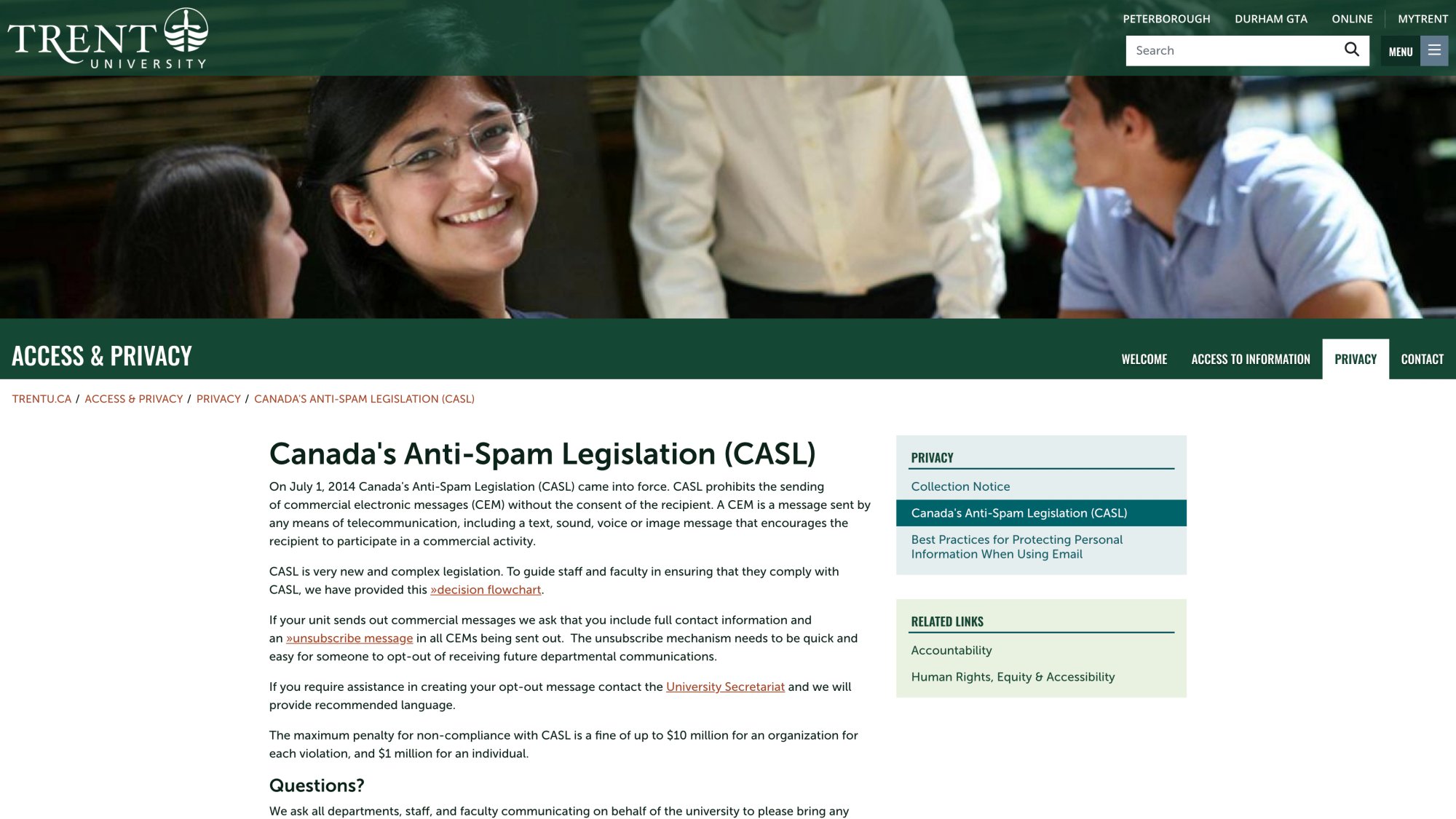
Up to CA$1 million per violation for individuals, and CA$10 million for companies.
Companies have paid CA$200,000+ in fines for CASL violations.
Bottom line for Canada: Do not cold email without some form of consent. Seek express opt-in from Canadian prospects (via LinkedIn conversation, webinar, or contact form) before emailing, or rely on very clear cases of implied consent.
When in doubt, don't send that first email.
Other Countries: Australia, Asia-Pacific, and More
Many other countries have their own anti-spam and privacy laws:
Australia: The Spam Act 2003 requires prior consent (express or very limited inferred consent) for commercial emails. You must include accurate sender identification and an easy unsubscribe. Australia's regulator (ACMA) reported over AU$14 million in spam-related fines issued between 2023 and 2025.
Hong Kong: Governed by the PDPO (Personal Data Privacy Ordinance). Explicit consent is required to use someone's email for marketing. Fines up to HK$1 million (about US$128,000) for privacy breaches.
Singapore: Covered by the PDPA and Spam Control Act. Sending B2C emails without consent violates PDPA, but B2B emails are allowed if they're business-related. Singapore requires clear sender info and unsubscribe options.
Other regions: Japan requires unsubscribe options and prohibits sending to those who opt out. South Korea requires "[ADV]" in subject lines. Brazil's LGPD treats unsolicited emails similarly to GDPR. India currently doesn't have dedicated email spam law, but data protection regulations are evolving.
Rule of thumb: Know where your recipient is located and check that country's email compliance rules before cold outreach. If a region requires opt-in, don't risk it without consent.
How to Stay Compliant with Cold Email Laws
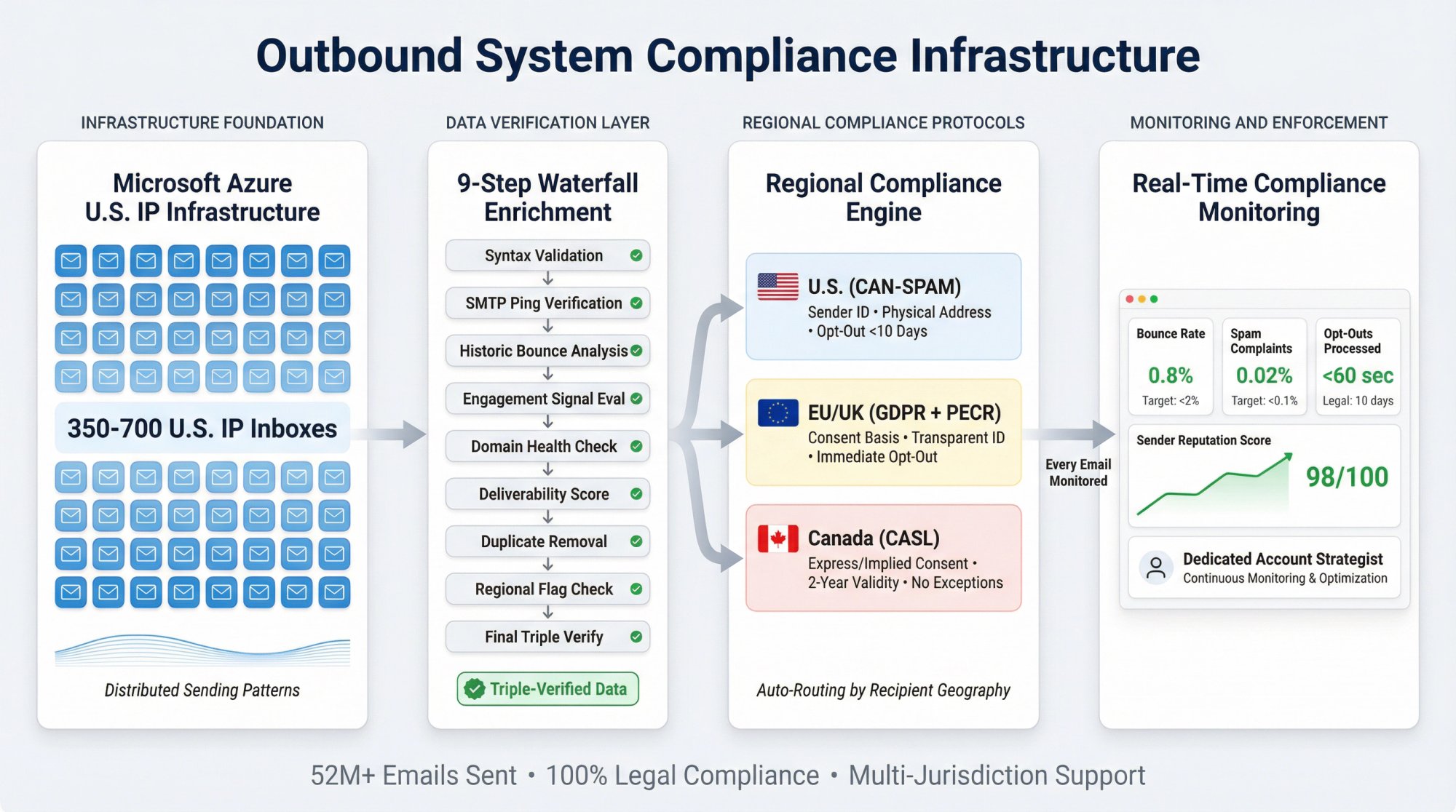
At Outbound System, we've sent 52M+ cold emails across multiple jurisdictions while maintaining strict legal compliance.
Our approach combines technical infrastructure with regulatory expertise to keep your outreach both legal and effective.
Here's how we do it:
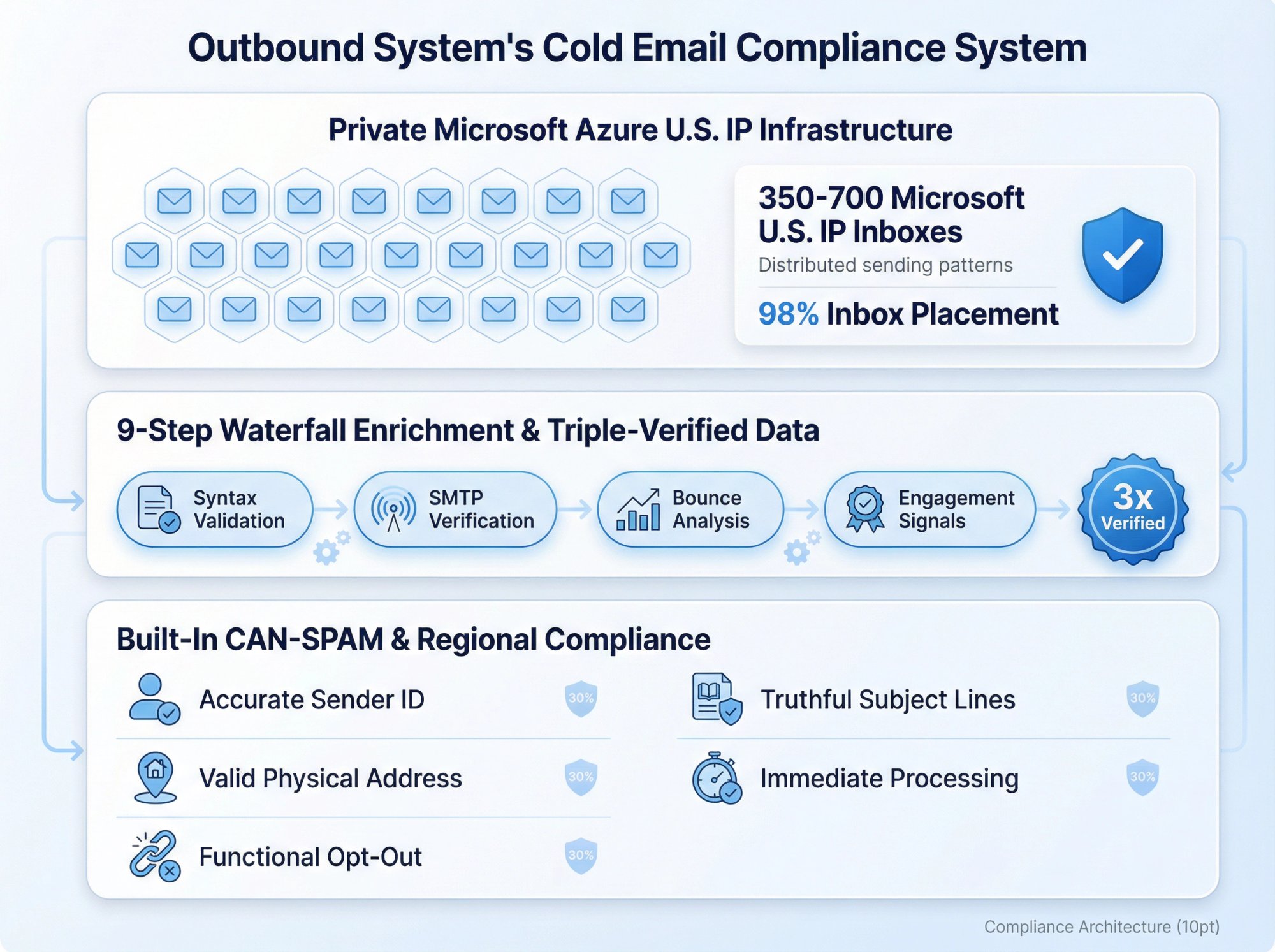
Private Microsoft Azure U.S. IP Infrastructure
We use 350 to 700 Microsoft U.S. IP inboxes (depending on your tier) with distributed sending patterns that mimic natural human behavior. This isn't just about deliverability. It's about compliance at scale.
Each inbox sends low volumes that stay well below spam thresholds, ensuring your emails don't trigger automated filters or regulatory scrutiny. Learn more about how we achieve 98% inbox placement with Microsoft Azure.
9-Step Waterfall Enrichment & Triple-Verified Data
One of the biggest compliance risks? Sending to bad data.
Our 9-step waterfall enrichment process combines:
• Syntax validation checks
• SMTP ping verification
• Historic bounce data analysis
• Engagement signal evaluation
This minimizes hard bounces (which damage sender reputation) and ensures you're only contacting real, active prospects.
Built-In CAN-SPAM & Regional Compliance
Every email we send includes:
Compliance Element | Implementation |
|---|---|
Sender ID | Accurate sender identification in From field |
Physical Address | Valid mailing address in footer |
Unsubscribe | Clear, functional opt-out mechanism |
Subject Lines | Truthful, non-deceptive content |
Opt-Out Processing | Within required timeframes (immediate when possible) |
For EU/UK prospects, we apply stricter consent standards and document legitimate interest justifications. For Canadian contacts, we verify implied consent criteria before sending.
Multi-Channel Approach (When Email Isn't the Best First Touch)
In regions with strict opt-in requirements, we often start with LinkedIn outreach to establish a relationship before moving to email. Our LinkedIn Lead Generation service manages 600+ profiles with careful throttling and profile safety protocols.
Once we have a LinkedIn connection or conversation, we have a much stronger basis for email follow-up. You can also learn how to generate B2B leads on LinkedIn effectively.
Dedicated Compliance Monitoring
Every Outbound System client gets a dedicated account strategist who monitors:
→ Bounce rates and spam complaints
→ Unsubscribe requests (processed immediately)
→ Regional compliance requirements
→ Sender reputation metrics
We catch potential issues before they become legal problems.
Want to run cold email campaigns without the compliance headaches?
Book a free 15-minute consultation and we'll show you exactly how we generate qualified meetings while staying 100% compliant with global email laws.
How to Keep Cold Emails Legal and Effective
The best practices for legal compliance overlap with best practices for effective outreach. By following these guidelines, you'll stay on the right side of the law and get better engagement.
1. Target the Right Prospects
Only email relevant prospects who are likely to have a genuine interest in your offering.
Don't send emails "at random" or blast thousands hoping something sticks. Not only is that often illegal (especially in EU/Canada), it's counterproductive.
A highly targeted prospect list (built from research or reputable sources) ensures you can genuinely justify why you're reaching out.
Quality over quantity. Always.
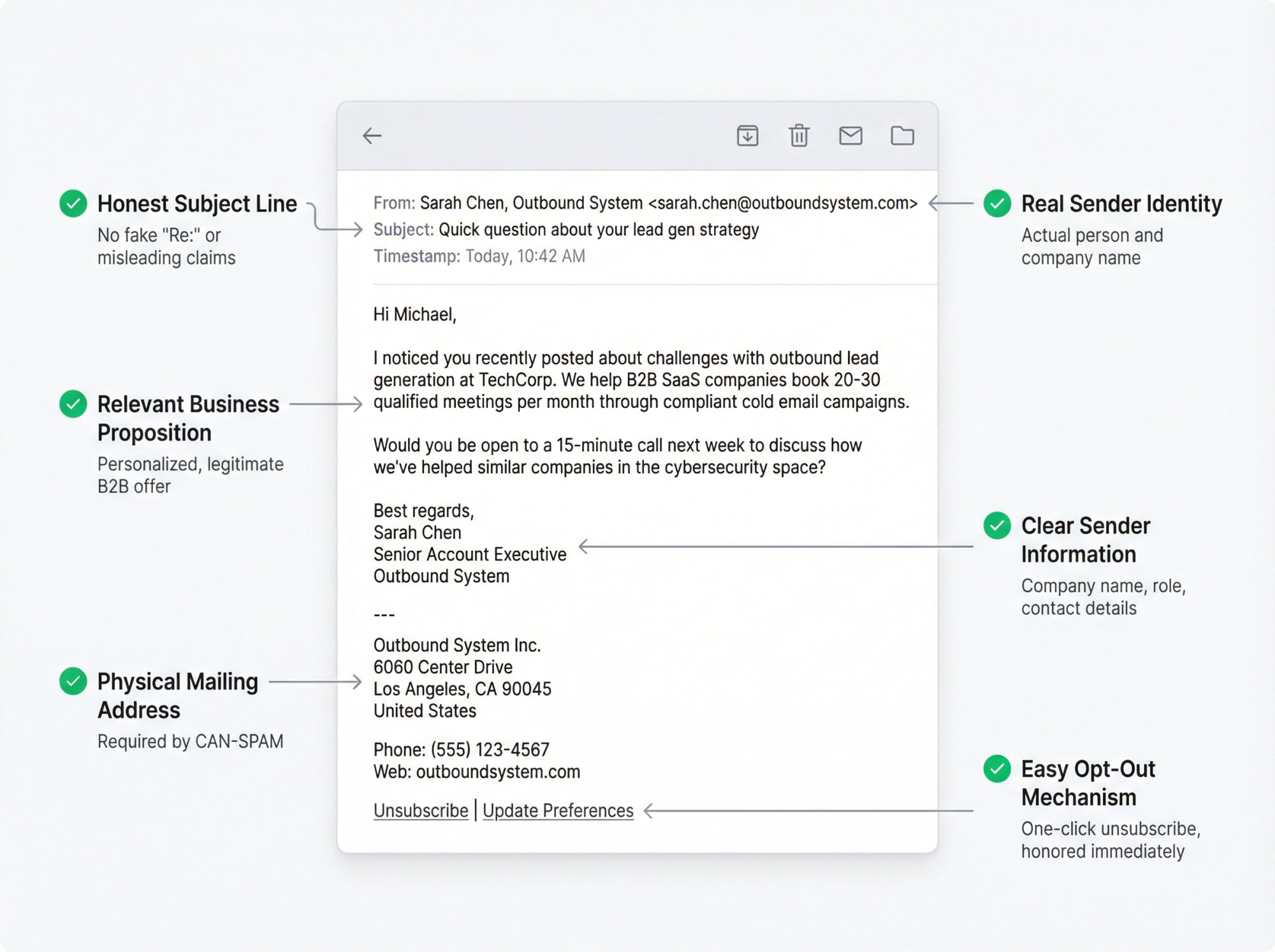
2. Use Professional Identity & Contact Info
Always identify yourself clearly.
Use your real name (or your company's name) in the sender field, not a fake persona. Include an email signature or footer with:
• Company name
• Physical address
• Website
• Contact phone (if appropriate)
This transparency isn't just legally required under laws like CAN-SPAM. It also builds trust.
If an email looks anonymous or fishy about who it's from, people will treat it as spam.
3. Include an Easy Unsubscribe Option (and Honor It Immediately)
Every cold email must have a clear way to opt out.
Typically, this is a one-click "Unsubscribe" link at the bottom. In more personal-feeling cold emails, it could be a line like "If you'd prefer not to hear from me, just let me know."
Make sure whatever method you use is easy and immediate. If someone opts out, remove them from your list right away.
Don't wait the full 10 days if you can help it. Keeping a suppression list of opted-out emails is crucial so you don't contact them in future campaigns.
This isn't just legal compliance. It's basic respect.
4. Avoid Deceptive Tactics
Never try to trick recipients with your emails.
This means:
✗ No misleading subject lines (don't pretend it's a reply when it's not)
✗ Don't mask your sending domain to hide your identity
✗ No bait-and-switch content
Besides being illegal under most spam laws, such tactics will destroy your credibility and get your emails filtered as spam.
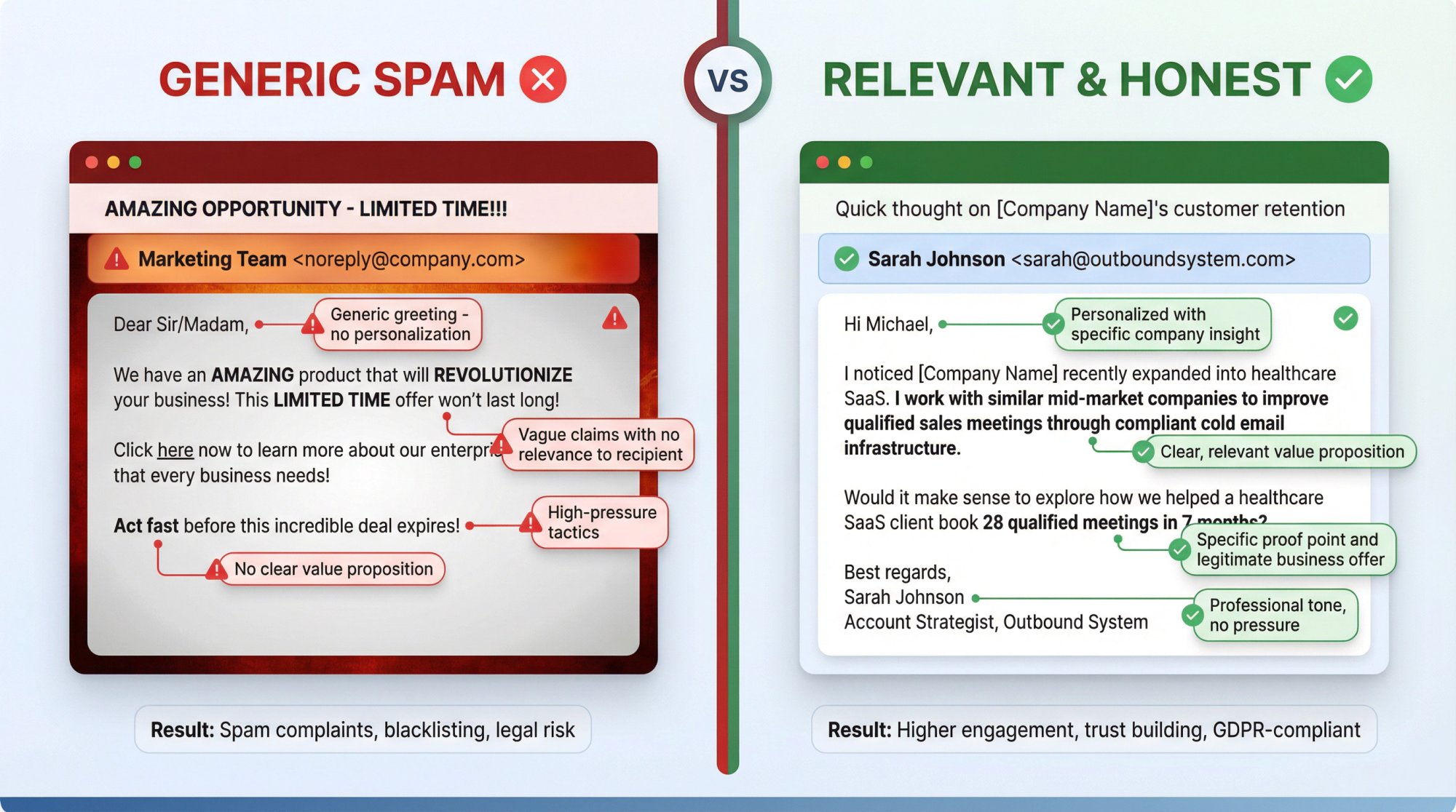
5. Keep It Relevant and Honest
Write your cold emails with a focus on a legitimate business proposition. How you can help the recipient's business.
Keep the content factual, polite, and relevant to them. If you have personal insights about their company or role, include them (it shows the email isn't a random mass blast).
Do not include random marketing fluff that could come off as spammy. Avoid inappropriate or prohibited content.
Act like you're emailing a respected colleague, not firing off a sketchy advertisement.
This also helps justify "legitimate interest" if someone ever scrutinizes your email. You can show it was a tailored B2B offer, not generic spam.
6. Adapt to Local Laws (Consent vs. Opt-Out)
Here's a quick reference for different jurisdictions:
Region | Consent Required? | Key Requirement | Max Penalty |
|---|---|---|---|
US | No (opt-out) | CAN-SPAM compliance | $53,088 per email |
EU | Yes (or legitimate interest) | GDPR + ePrivacy | €20M or 4% revenue |
UK | Yes (or legitimate interest for B2B) | PECR | £500K+ |
Canada | Yes (express or implied) | CASL | CA$10M per company |
Australia | Yes (express or inferred) | Spam Act 2003 | AU$2.5M+ |
Adapt your approach to the laws of your recipient's country.
If you're emailing the U.S. or other opt-out jurisdictions, you have more freedom to send the first email, but still include all required disclosures.
If you're emailing Europe or Canada (opt-in regions), ideally get consent first. If you proceed without explicit consent in a region that allows legitimate interest, document why you believe it's allowed and ensure you meet all conditions.
Segment your contact lists by region so you can apply stricter rules where needed.
Many outbound agencies (like Outbound System) let you exclude EU emails from cold campaigns unless they're specifically vetted for legitimate interest.
7. Monitor Responses and Complaints
Even when you follow the law, monitor your email deliverability and feedback.
If prospects mark your email as spam, that can hurt your sender reputation and lead to blocking.
Watch your:
→ Open rates
→ Bounce rates
→ Spam complaint rates
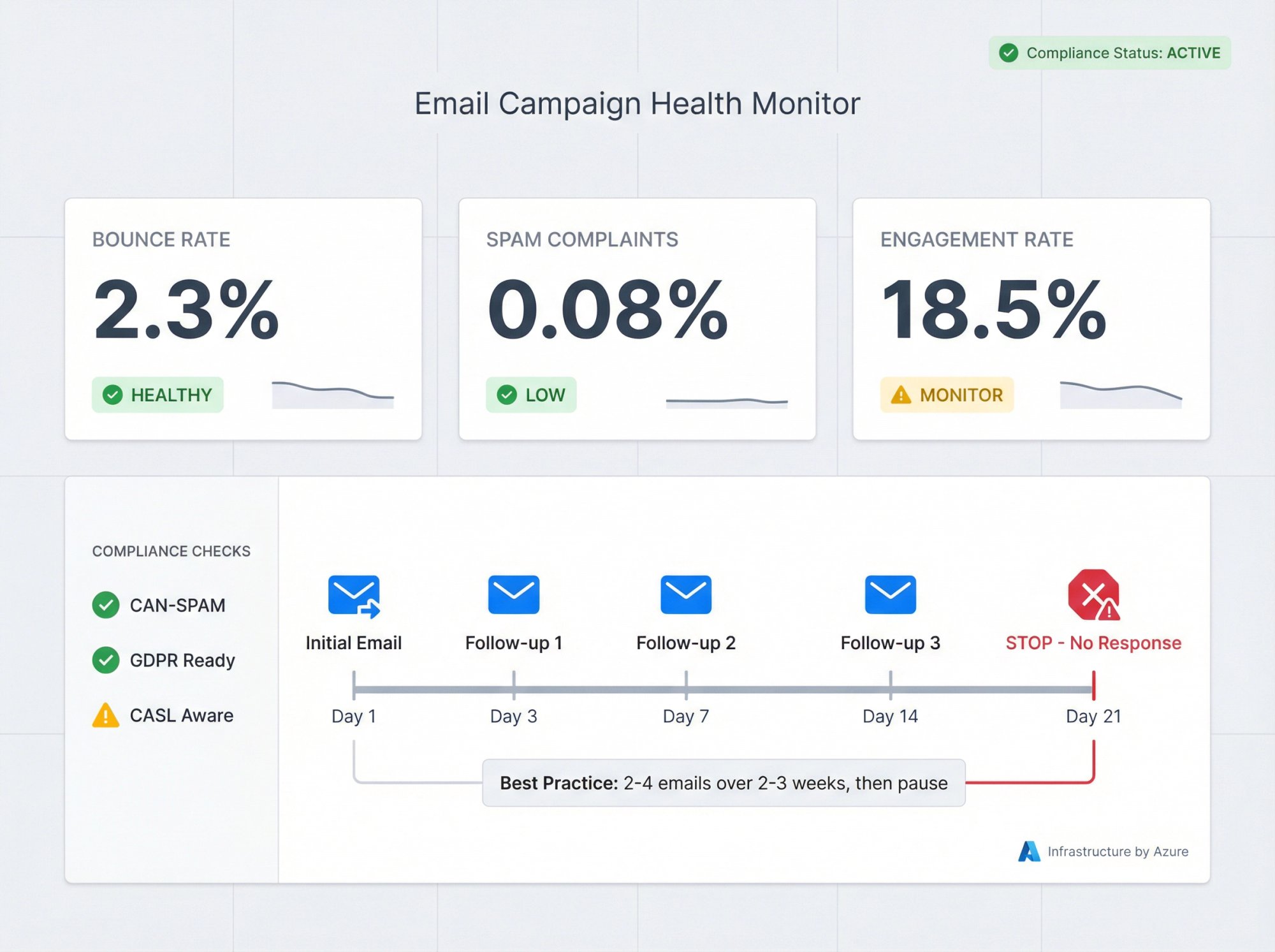
If a campaign is getting unusually low engagement or high spam flags, pause and reassess.
ISPs (like Google or Microsoft) have their own algorithms that might penalize you even if you're technically compliant.
It's wise to use tools for email warming, domain reputation monitoring, etc., to stay in good graces with spam filters.
Legal compliance doesn't automatically mean inbox placement. You still have to avoid looking spammy to email providers.
8. Don't Overmail or Harass Prospects
There's no hard law on how many follow-ups you can send, but both legally and ethically, you should limit your frequency.
Sending too many emails in a short time can be considered harassment.
Best practice for cold outreach: send a reasonable follow-up sequence (2-4 emails spaced over a few weeks) and then stop if you get no response.
Continually messaging someone who hasn't engaged can prompt them to report you. Excessive emailing could violate "reasonable use" expectations under GDPR's legitimate interest.
Keep your cadence respectful. Give up after a few tries if you hear crickets.
What Happens If You Break Cold Email Laws?
Ignoring cold email laws can lead to severe consequences.
The fines are eye-watering:
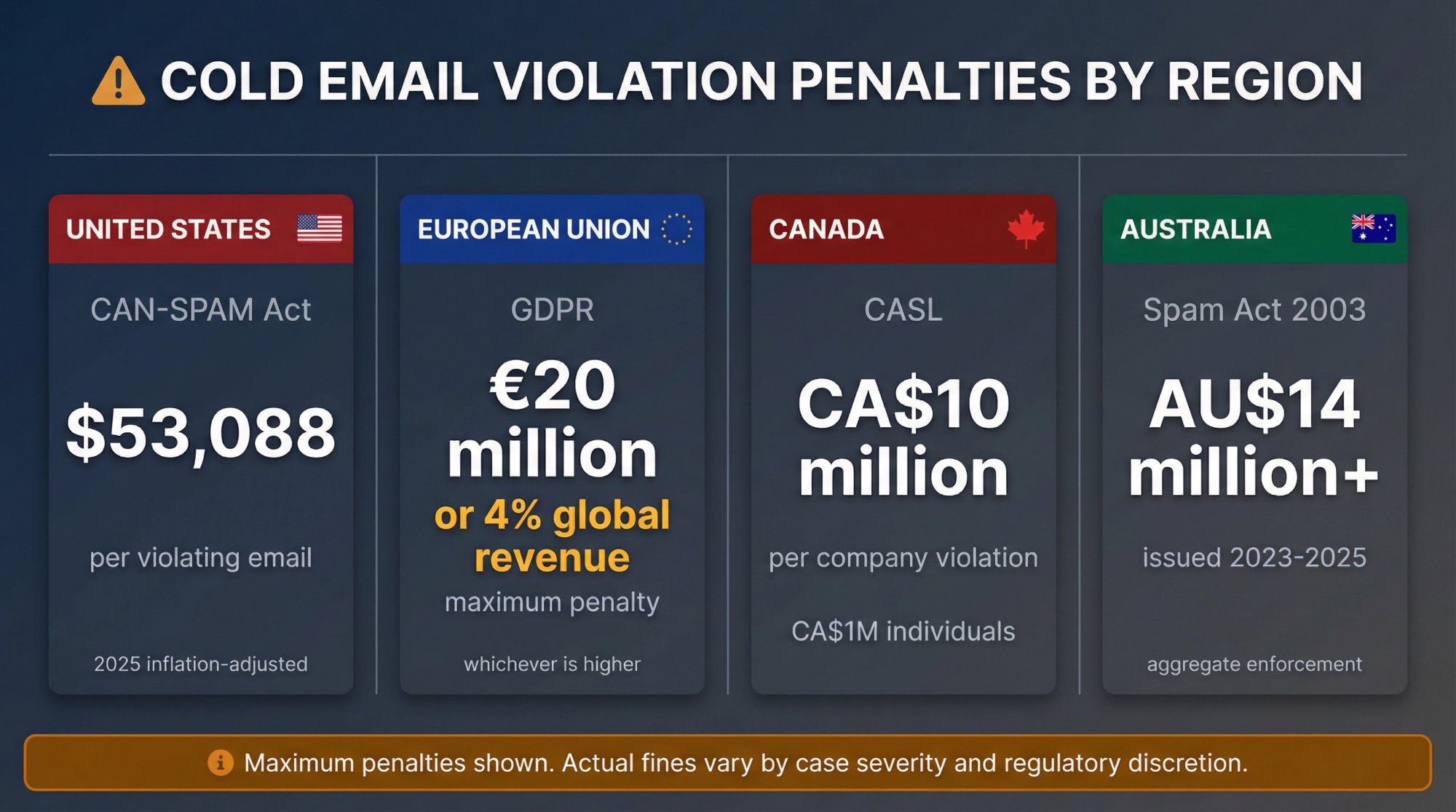
• Over $50,000 per email under U.S. CAN-SPAM
• Up to €20 million under EU GDPR
• Multi-million dollar penalties under Canada's CASL
• AU$14 million+ in fines from Australia between 2023-2025
While maximum fines are rare, companies have been fined hundreds of thousands for spamming and privacy violations. Small businesses aren't immune. Regulators often go after smaller senders to set examples.
Beyond government fines, you could face lawsuits (in some jurisdictions, recipients or competitors can sue for spam).
Even if legal action never happens, email providers will take matters into their own hands.
Major email services (Google, Microsoft, etc.) use algorithms to detect spam-like behavior. If you break rules or get spam complaints, your domain could be blacklisted, meaning future emails never reach inboxes.
You could also get your email account suspended by your provider.
Your company's reputation suffers when people perceive your outreach as spammy. You risk burning bridges with potential customers.
On the flip side, by embracing compliance, you actually gain an advantage.
Running a clean, law-abiding cold email program helps you build trust with prospects. Many decision-makers are annoyed by spam, but a well-composed, compliant cold email stands out as respectful.
You're showing that you respect their time and privacy. This can only improve how they view your brand.
Some outreach experts even turn compliance into a selling point: "We follow GDPR/CAN-SPAM best practices," which implies you're not a shady actor.
Staying legal isn't just about avoiding fines. It's about protecting your sender reputation and company credibility.
Think of compliance as an integral part of your cold email strategy, not an afterthought.
Cold Email Compliance Checklist
Before you hit send on your next cold email campaign, run through this checklist:
✓ Legal Framework
□ I know which country/region my recipients are in
□ I've verified the email laws for those regions
□ I have proper consent (if required) or a documented legitimate interest basis
✓ Email Content
□ Sender name and "From" address are accurate and truthful
□ Subject line accurately reflects email content (no deception)
□ Email includes my company name and valid physical mailing address
□ Content is relevant to the recipient's business role
□ Message includes a clear unsubscribe mechanism
✓ List Quality
□ Email list is targeted and researched (not purchased or scraped randomly)
□ I've removed any previously opted-out contacts
□ Data has been validated for accuracy
✓ Compliance Processes
□ I have a system to process unsubscribe requests within 10 days (ideally immediately)
□ I'm monitoring bounce rates and spam complaints
□ I have documentation of consent or legitimate interest where required
✓ Sending Practices
□ I'm not sending excessive volume to the same recipient
□ Sending frequency is reasonable (not harassing)
□ I'm using properly warmed domains with good sender reputation
If you can't check every box, don't send the campaign.
The risk isn't worth it.
Frequently Asked Questions
Is cold email legal in the United States?
Yes. Cold email is legal in the U.S. without prior consent as long as you comply with the CAN-SPAM Act. You must include accurate sender info, avoid deceptive subject lines, provide a physical address, and include a working unsubscribe option that you honor within 10 business days.
Is cold email legal in Europe (GDPR countries)?
It depends. Under GDPR, you need a lawful basis to process personal data (including email addresses). For B2C emails, you generally need explicit consent. For B2B emails to corporate addresses, you may be able to rely on "legitimate interest" if the content is highly relevant to the recipient's job, you document your reasoning, and you always include an opt-out. Many EU countries have strict interpretations, so when in doubt, get consent first.
Is cold email legal in Canada?
Not without consent or a specific exception. Canada's CASL requires either express consent (they opted in) or implied consent (recent business relationship, or publicly published email address relevant to their role). Pure cold emailing with no prior relationship is risky in Canada and can result in fines up to CA$10 million for companies.
What's the difference between cold email and spam?
Cold email is targeted, personalized outreach to specific prospects who are likely to find your offer relevant. Spam is mass-blasted to huge lists with no regard for relevance or consent. Cold emails include clear sender identification and easy opt-out options. Spam often uses deceptive tactics and ignores unsubscribe requests.
What happens if I don't comply with cold email laws?
You could face significant fines (up to $50,000+ per email in the U.S., €20 million in EU, CA$10 million in Canada). Your domain could be blacklisted by email providers. You could face lawsuits. And your company's reputation and sender credibility will be severely damaged.
Do I need to include an unsubscribe link in every cold email?
Yes, in virtually every jurisdiction. The unsubscribe mechanism must be clear, easy to use, and honored promptly. In the U.S., you have 10 business days maximum to process opt-outs. Best practice is to honor them immediately.
Can I buy email lists for cold outreach?
Technically, you can buy lists in some jurisdictions (like the U.S. under CAN-SPAM), but it's risky. Purchased lists often have poor data quality, leading to high bounce rates and spam complaints. In regions requiring consent (EU, Canada, Australia), purchased lists are essentially useless unless you can verify consent was obtained. It's almost always better to build your own targeted list from research.
How many cold emails can I send to the same person?
There's no specific legal limit, but don't harass prospects. Best practice is 2-4 emails spaced over a few weeks. If they don't respond or ask you to stop, cease contact immediately. Excessive emailing can be considered harassment and could violate legitimate interest requirements under GDPR.
What should I include in my email signature for compliance?
At minimum, include your full name, company name, valid physical mailing address, and a working email address. Many also include a phone number and website. This transparency is required under CAN-SPAM and helps build trust with recipients. Check out our email structure guide for more details.
How does Outbound System ensure cold email compliance?
Outbound System handles compliance through our private Microsoft Azure infrastructure, 9-step data verification process, built-in CAN-SPAM requirements in every email, regional compliance protocols for EU/Canada, and dedicated account strategists who monitor sender reputation and process opt-outs immediately. We've sent 52M+ emails while maintaining strict legal compliance across multiple jurisdictions.
Ready to run compliant, high-converting cold email campaigns?
Outbound System takes care of all the technical and legal complexity so you can focus on the conversations that drive revenue.
We've generated 127K+ leads and $26M in closed revenue for 600+ B2B clients using our private Microsoft infrastructure, AI-powered personalization, and triple-verified data.
Book your free 15-minute consultation and we'll show you exactly how to generate qualified meetings while staying 100% compliant with global email laws.