Your cold email's first line is everything.
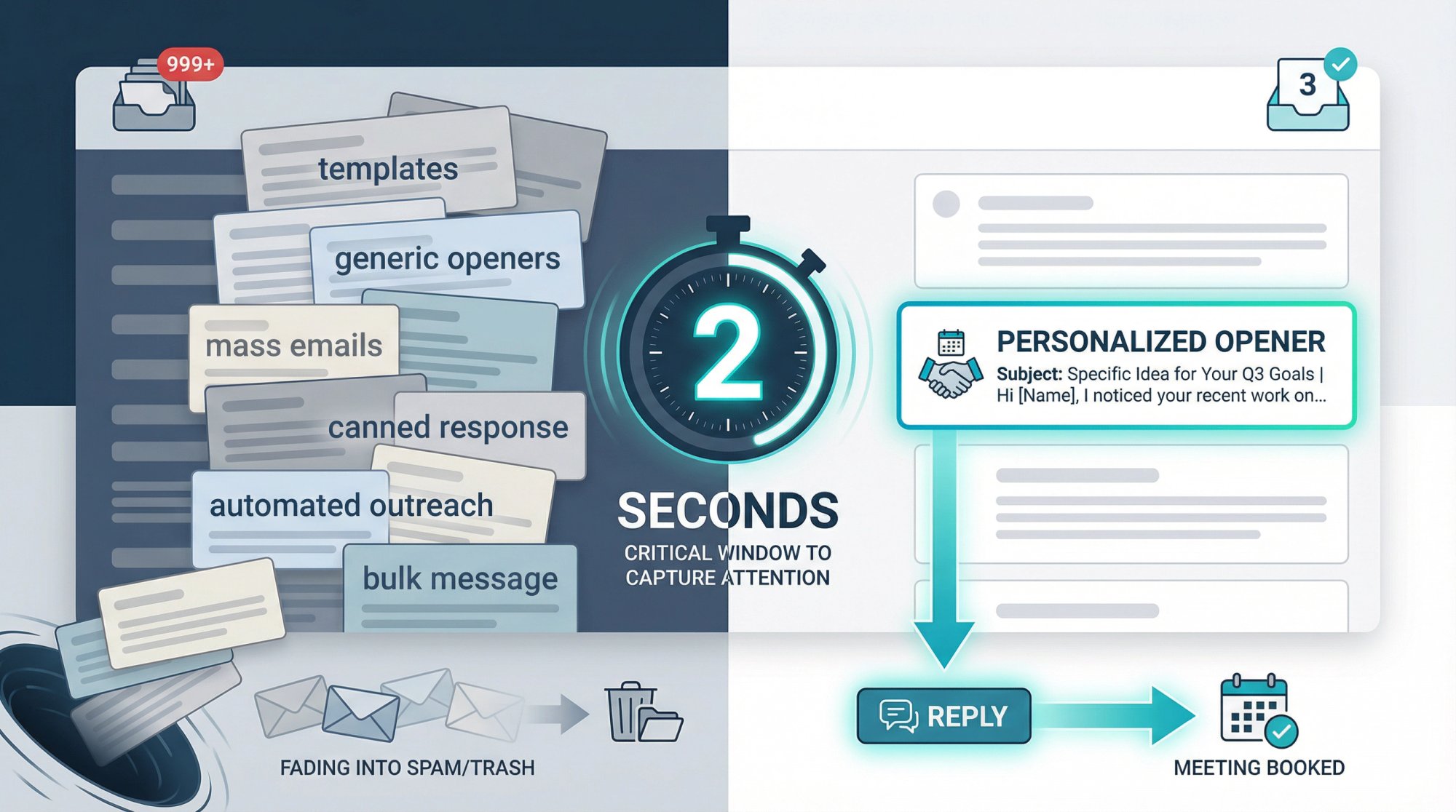
You've spent hours building the perfect prospect list, crafting a compelling offer, and setting up your sending infrastructure. But if your opening line doesn't immediately grab attention, none of that matters. The prospect will delete your email in under two seconds.
In cold outreach, you get roughly 2 seconds to capture attention before the reader moves on. That first sentence also appears as the preview text in most email clients, right beside the subject line.
According to recent polling, 34% of people consider the preview snippet almost as important as the subject line when deciding whether to open an email.
That opening snippet is precious real estate. Don't waste it on filler.
A strong first line immediately grabs attention and sets the tone for your message. It should give the reader a reason to keep reading by hinting at value or showing you've done your homework.
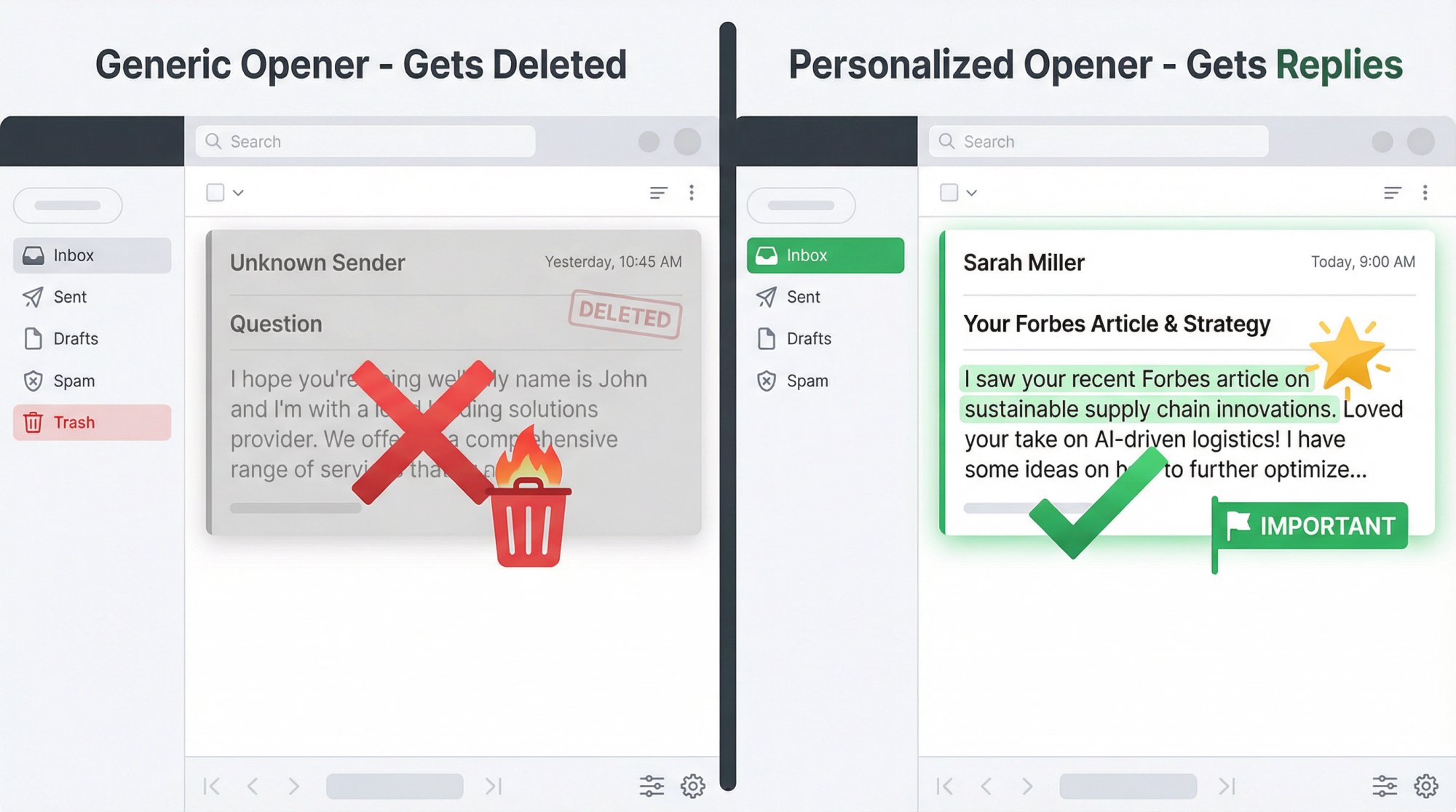
A generic or templated opener gets you ignored or sent to spam. Lines like "I hope you are well" or "My name is ___ and I'm reaching out because…" scream mass email to prospects today. Savvy prospects can spot automated sales emails instantly.
Your opening line is your chance to prove this email was written for them, not just blasted to hundreds of people.
What Makes a Cold Email Opening Line Effective?
After reviewing thousands of successful cold email campaigns, the best cold email openers share a few key traits:
Personalized to the Specific Person
It should sound like it's written only for them, not a copy-paste template. Use the prospect's name and company, but go beyond that. Reference something unique about them or their business whenever possible.
Shows You Did Your Research
Strong openers often include a detail that could only come from personal research. Maybe you're mentioning a recent company event, a blog the recipient wrote, or a mutual connection. This signals right away that you're not emailing blindly.
Concise and Fluff-Free
You've got limited space and attention span to work with. The first line should cut straight to the point in a natural, conversational way.
Aim for one sentence (20 words or less) that either delivers value or piques curiosity.
Every word counts.
Here's what matters: The goal isn't just getting your email opened. It's making the prospect want to keep reading after that first line. Everything else depends on clearing this hurdle.
Cold Email Opening Lines to Avoid
Equally important is what not to do. Never use a generic or self-centric opening line. This loses readers fast.
Starting with "My name is ___ and I'm with ___ company…" or "I'm reaching out to you because…" is a quick way to get deleted. These phrases are all about you (the sender) and could apply to anyone, which is a red flag that the email isn't personal.
Also, skip overused pleasantries that add no value:
• "I hope you're doing well" wastes precious space with a cliché greeting that screams mass email
• "Happy Tuesday" adds zero context or value
• "I know you're busy but…" sounds apologetic and weak
• "To whom it may concern" is laughably impersonal for a cold email
Your recipients get dozens of those generic openers every week. To stand out, you need to do something different from the very first line.
Tone matters too. Use a friendly, conversational tone rather than overly formal language. A cold email should feel like one colleague reaching out to another, not a stiff business letter. Phrases like "Dear Sir or Madam" or corporate jargon will make it sound like a template.
Write as if you were speaking to the prospect in person. Respectfully and personably.
5 Cold Email First Line Examples That Work
There's no single first line that works for every situation. But there are several proven approaches you can use to craft an opening line that hooks your reader.
I'll break down the top strategies with real examples so you can mix and match the approach that fits your prospect best. Context is king. Choose a style that makes sense for the person you're contacting and the message you want to convey.
1. Observation-Based Personalization
One of the most effective ways to start a cold email is by making an observation about the prospect. This could be about them personally, their company, or content they created.
The key is that it's specific. Something that clearly could only apply to that prospect.
This instantly signals, "Hey, I've done my homework on you." It flatters the recipient's ego a bit and builds rapport before you've even pitched anything.
Examples:
Referencing their content:
"Hi {{Name}}, saw your post on multi-channel outreach and you're spot on about how crucial it is in B2B sales."
Here, you're citing their own content and agreeing with them. A subtle compliment that shows respect for their perspective.
Mentioning company news:
"Just saw the news that {{Company}} expanded into the APAC market – congratulations! I've been following this development closely."
Citing a podcast or interview:
"I listened to your recent podcast on state of SEO – it actually inspired me to revisit my own 2025 SEO strategy!"
In each case, the opener revolves around them. Their content, their company, their accomplishment. It doesn't feel like a sales email at all. It feels like a genuine comment from an interested peer or follower.
Why it works: Observation-based first lines work because they immediately answer "Why me?" for the reader. The prospect can tell in one glance why you chose them to email (not just anyone). It creates curiosity and it often comes with a compliment or positive tone that makes people more receptive to your message.
It's hard to ignore an email that starts by talking about you in a knowledgeable way.
Pro Tip: Be as specific and recent as possible with your observation. If you reference an old accomplishment or something generic (e.g. "I saw you work at Microsoft"), it won't be as impactful. Mention fresh, unique details. The more obscure (yet relevant) the better. Include details that show real effort and research.
2. Compliment or Praise Opening Lines
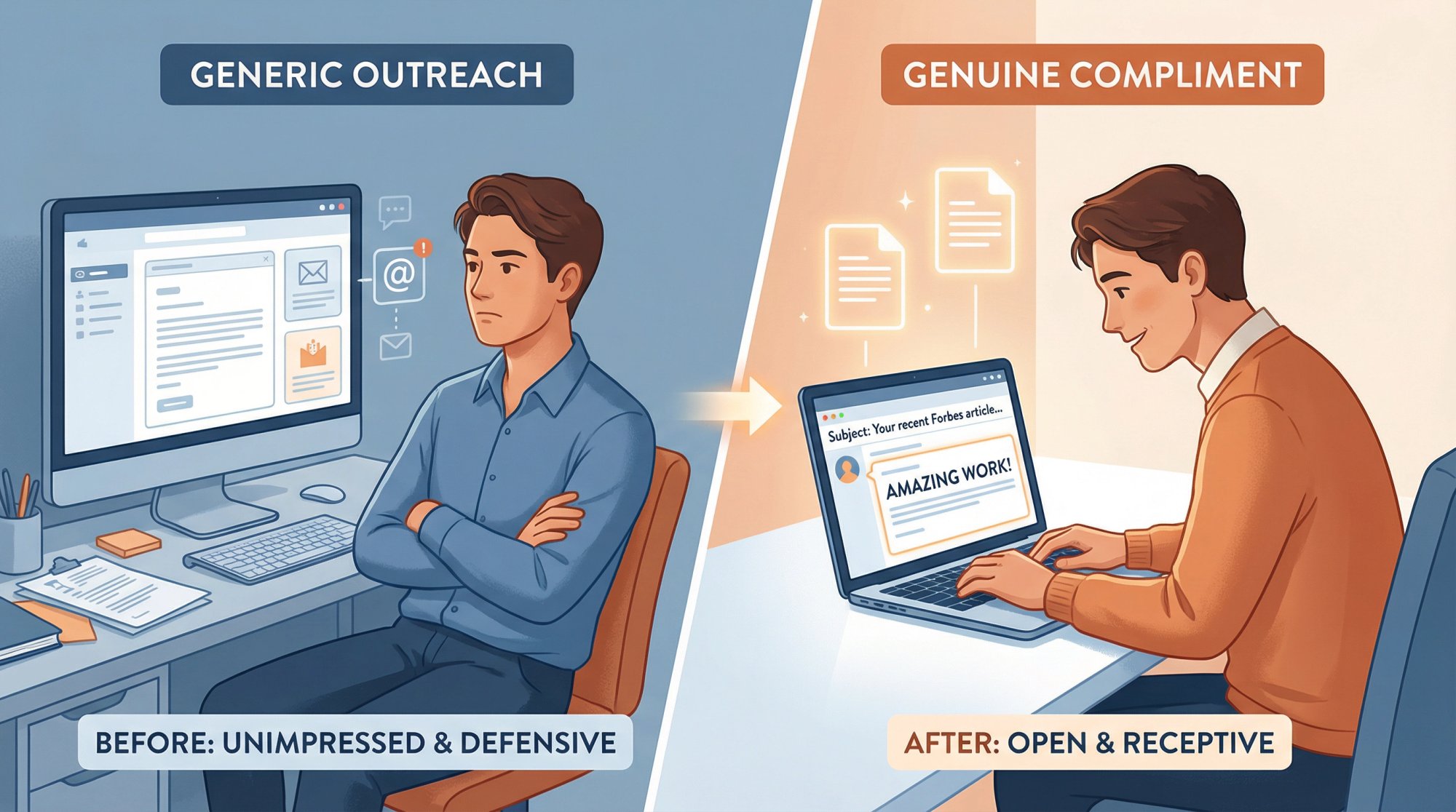
Everyone appreciates a sincere compliment, especially busy professionals who might not hear "good job" often. Starting your email with a bit of praise can warm up even a cold prospect.
The trick here is to make the compliment genuine and relevant, not flattery for flattery's sake. Tie it to something professional the person cares about.
Examples:
• "Congrats on your recent promotion to Head of Marketing! I've followed your work and you totally deserve it."
• "Your SaaS growth case study in TechCrunch was fantastic – loved the part about doubling ARR in 6 months."
• "I have to say, the webinar you gave last week was incredibly insightful. Especially your point on pipeline quality over quantity – that hit home for me."
Each of these openers starts with positive reinforcement of the prospect's achievements or work. It feels good to the reader, and importantly it doesn't feel like a template. You can't automate "Congrats on your promotion to Marketing Head" to thousands of people. It has to be manually written for that one person, right?
That's why it stands out.
Be careful not to use generic or fake-sounding praise. Saying something like "I love your company" or "You're a brilliant leader" without any specifics comes off as hollow (or even sarcastic). Always anchor the compliment in a fact. A role, an award, an article, a metric, etc. that the person will recognize as true.
Specificity is the antidote to sounding insincere.
Also, keep the compliment brief and don't go overboard. One line is enough to acknowledge their achievement. After that, you need to segue quickly into the reason you're reaching out (the value for them). But opening with a compliment sets a positive tone and makes the prospect more receptive to what comes next.
3. Question-Based Openers that Spark Curiosity
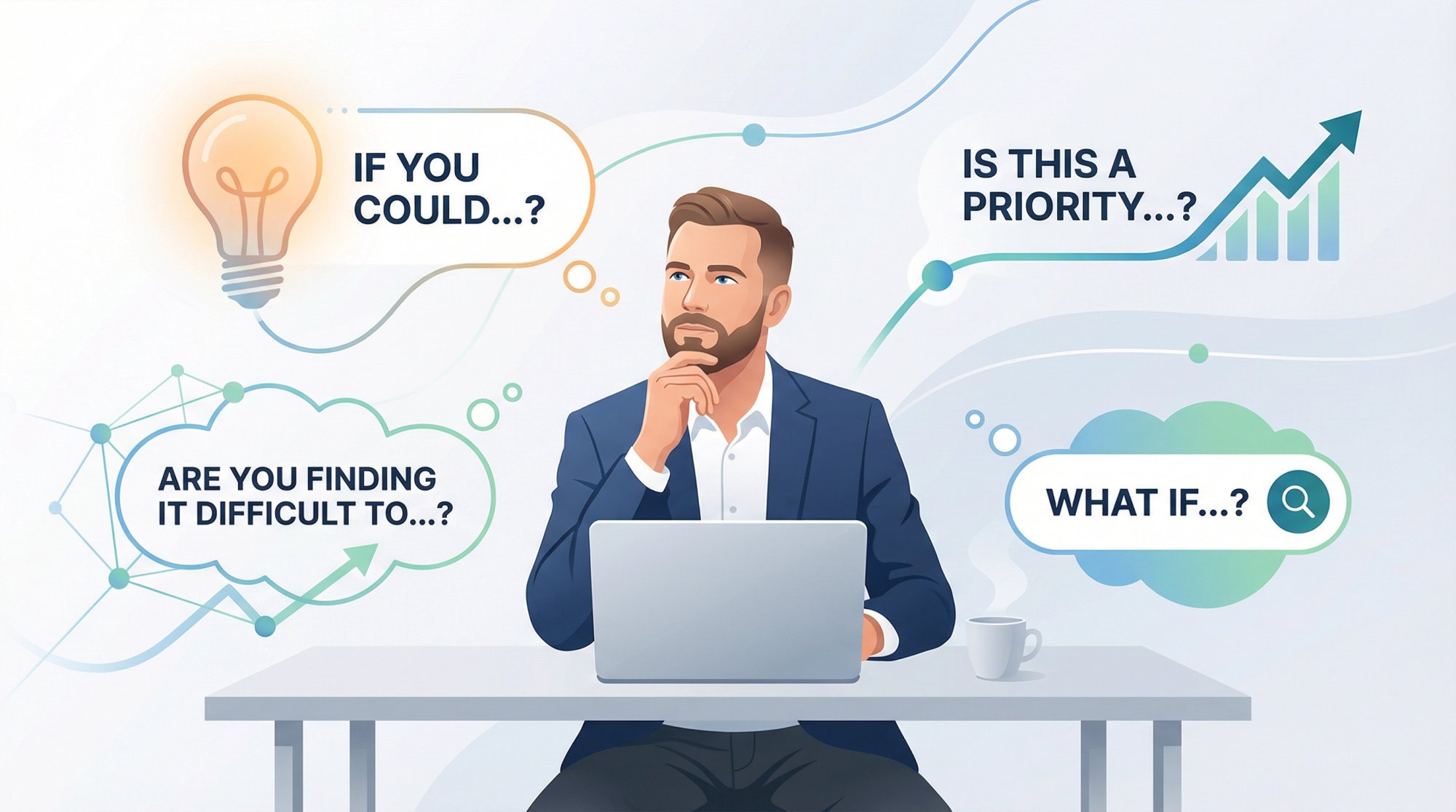
Another powerful tactic is to start with a question. Something that triggers the reader to think or piques their curiosity.
A well-crafted question can feel very engaging, almost conversational, as if you're already in a dialogue with the prospect.
It can also highlight a pain point or opportunity in a way that intrigues them to read more.
There are a few flavors of question-based first lines:
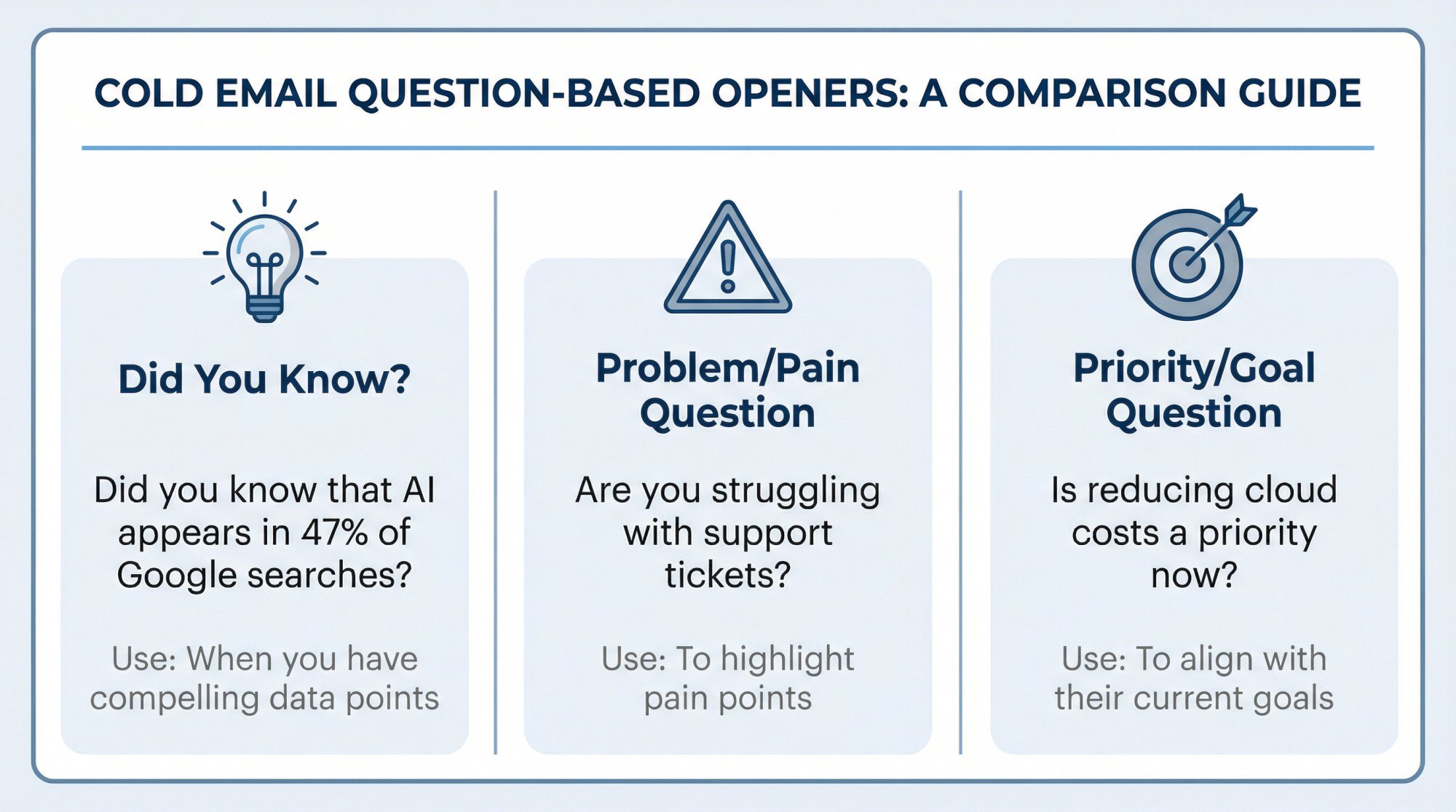
The "Did You Know…?" Opener
Here you drop an interesting fact or statistic as a question. For example:
"Did you know that AI-generated answers now appear in 47% of Google searches? 😮"
This kind of line works as a hook because it provides a relevant insight the prospect may not know. Use this approach when you have a compelling data point related to their industry or problem. It grabs attention and sets you up as someone knowledgeable.
The Problem/Pain Question
Here you directly address a challenge and hint at a solution:
"If you could make your sales reps generate 30% more pipeline, would you still be hiring more BDRs?"
Or:
"Are you finding it a struggle to keep up with support tickets during peak season?"
The question format is engaging and it forces the reader to mentally answer (and ideally think, "Yes, actually that is a challenge…"). It leads naturally to your value prop about solving that problem.
The "Priority" or "Goal" Question
This is where you ask if a certain goal or initiative is a priority for them:
"I was wondering, with Q4 coming, is reducing cloud costs a priority for you right now?"
This shows you're considering their perspective and timing. It's less about a pain and more about aligning with their current focus. If you guess right, they'll be intrigued that you "read their mind" about what they care about. If you guess wrong, it's still clear you're thinking about their needs (and they might correct you, which is a reply opportunity).
When using a question opener, make sure it's directly relevant to the prospect. A random trivia question or a super broad question ("Have you ever wanted to save time?") won't resonate. It should either reference something you know about their situation or highlight a pain point common to their role/industry.
Avoid overly cheesy or clickbait questions. They should be meaningful, not just gimmicky.
The best questions often identify a gap the prospect has, making them go "hmm, I have been wondering about that…" or "hmm, we could use help there."
One more tip: Don't overuse question marks or sound overly salesy by piling on multiple questions. One focused question in the first line is enough. Your opener should be a single, crisp question that leads into your pitch.
4. Trigger Event Openers (Using Timely Signals)
Leveraging a trigger event is one of the most potent ways to create timely relevance. A trigger event is some recent occurrence related to the prospect or their organization that might create a need for your solution.
By referencing it in your first line, you accomplish two things at once: you show you've been paying attention to their world, and you set up the context for why your outreach is timely now.
Common trigger events and how to use them in openers:
Trigger Event | Example Opener | Why It Works |
|---|---|---|
New role/promotion | "Congrats on the new role as VP of Engineering at {{Company}} – I imagine ramping up is both exciting and challenging!" | People in new roles are often evaluating new initiatives |
Company expansion | "I saw {{Company}} just opened 3 new offices in Europe – exciting growth!" | Opens the door to discuss supporting their expansion |
Funding announcement | "Just read about {{Company}}'s Series B funding – congrats on the huge milestone!" | New funding often means new spending priorities |
Competitor move | "Notice your competitor {{ACME Corp}} rolled out a new AI feature… Are you planning a response?" | Executives pay attention to what rivals are doing |
Fresh content | "I read your CEO's interview in Forbes about the focus on customer success – interesting to see that priority." | Shows you're following their thought leadership |
Using trigger events in first lines is powerful because the context is fresh in the prospect's mind. You're triggering a memory for the recipient. It recalls something they just experienced or achieved. It answers "Why now?" and can create urgency or importance around your email.
For example, if they just expanded markets, they might urgently need solutions that help scale (and you email offering that help at the perfect time).
Pro Tip: Always connect the trigger event to your value proposition. Don't just congratulate them and stop there. The opener should naturally lead into why that event relates to your reason for reaching out. For instance, if you mention their expansion, your next sentence might be "Expanding to new regions often strains the sales pipeline – that's where our platform has helped companies like yours, by…"
This one-two punch of trigger event + relevant offer can be extremely effective when done tactfully.
One caution: Not all "signals" are worth using just because you can find them. Focus on triggers that clearly relate to a need your product/service addresses. A company hiring a bunch of new sales reps is a signal they're growing (and maybe need sales enablement tools). Good to use. But a company posting "Happy Holidays" on LinkedIn is a "signal" that doesn't tie to any business pain. Not useful.
Use meaningful triggers, not trivial ones.
5. Shared Connection or Common Ground
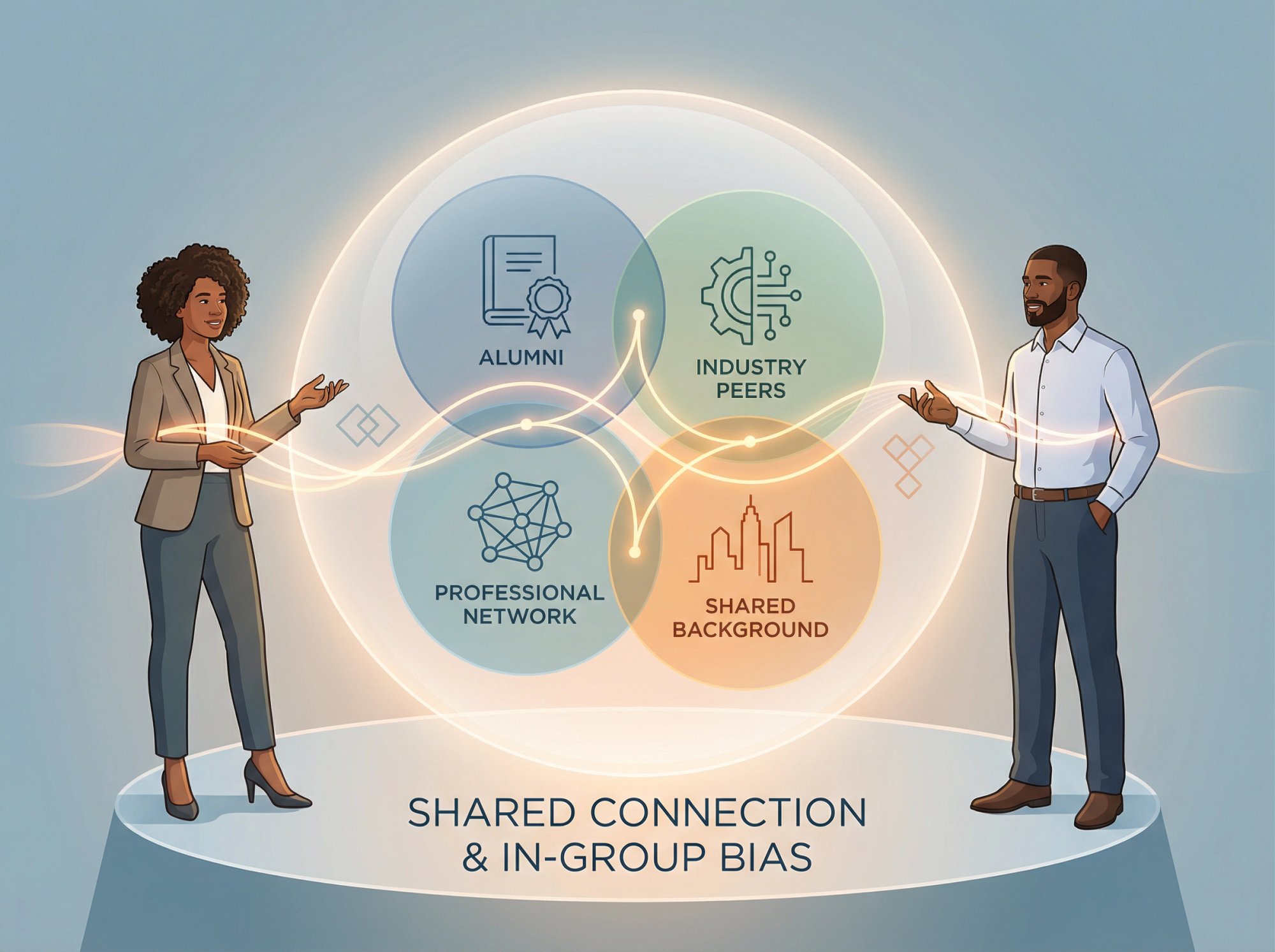
People naturally trust and like those who are similar to them or connected to them. If you can establish some common ground in the first line, a cold outreach will feel warmer.
This approach involves referencing a mutual connection, shared background, or anything you have in common with the recipient.
A few ways to do this:
Mention a Mutual Contact's Referral
If someone who knows the prospect referred you or is a point of connection, lead with that:
"Hi {{Name}}, {{Mutual Contact}} from {{Company}} mentioned you might be looking for help with X…"
Name-dropping (with permission) instantly lends credibility and context. The prospect thinks, "Oh, you know so-and-so? They thought you could help me?" That's a strong hook. It implies trust, since the mutual contact shared info about their pain point and perhaps vetted you as a solution.
Alma Mater or Shared Affiliation
LinkedIn makes this easy. If you see you went to the same university or are part of the same professional association or group, bring it up:
"Noticed we're both UPenn alumni – always great to see fellow Quakers in the tech world!"
Or:
"As a member of [Industry Association], I realized we haven't met yet – so I thought I'd reach out."
Shared Industry or Role Experience
If you share a similar role or background, you can highlight that in a flattering way:
"Like you, I come from a SaaS marketing background, so I've followed your work at {{Company}} closely."
Or:
"As a fellow content marketer, I really admire the blog strategy you've led at {{Company}}…"
This says "we're on the same side" and establishes empathy. It can naturally lead into a collaboration pitch or knowledge-sharing offer.
Why it works: Referencing shared connections or interests makes a cold outreach feel purposeful rather than random. The recipient sees instantly why you chose them. Not just for a sale, but because you have something in common.
It leverages the psychology of in-group bias: we tend to favor and pay more attention to people who remind us of ourselves or who come recommended by someone we know. Some of the highest-performing openers reference mutual connections or shared communities for this reason. It makes an email "cold" in theory but warm in feeling.
When using this approach, authenticity is crucial. Don't fabricate a connection or stretch the truth (that can backfire horribly if found out). And don't overemphasize the connection such that it seems contrived. A simple mention in the first line is enough, then move to your point.

This works because it transitions a cold intro into a quasi-warm one. You're part of their tribe in some way. Just be sure it's a meaningful group. Simply living in the same large city isn't that special, but having the same school, past employer, or niche group stands out.
Shared Industry or Role Experience
If you share a similar role or background, you can highlight that in a flattering way:
"Like you, I come from a SaaS marketing background, so I've followed your work at {{Company}} closely."
Or:
"As a fellow content marketer, I really admire the blog strategy you've led at {{Company}}…"
This says "we're on the same side" and establishes empathy. It can naturally lead into a collaboration pitch or knowledge-sharing offer.
Why it works: Referencing shared connections or interests makes a cold outreach feel purposeful rather than random. The recipient sees instantly why you chose them. Not just for a sale, but because you have something in common.
It leverages the psychology of in-group bias: we tend to favor and pay more attention to people who remind us of ourselves or who come recommended by someone we know. Some of the highest-performing openers reference mutual connections or shared communities for this reason. It makes an email "cold" in theory but warm in feeling.
When using this approach, authenticity is crucial. Don't fabricate a connection or stretch the truth (that can backfire horribly if found out). And don't overemphasize the connection such that it seems contrived. A simple mention in the first line is enough, then move to your point.
Follow-Up Email First Line Examples
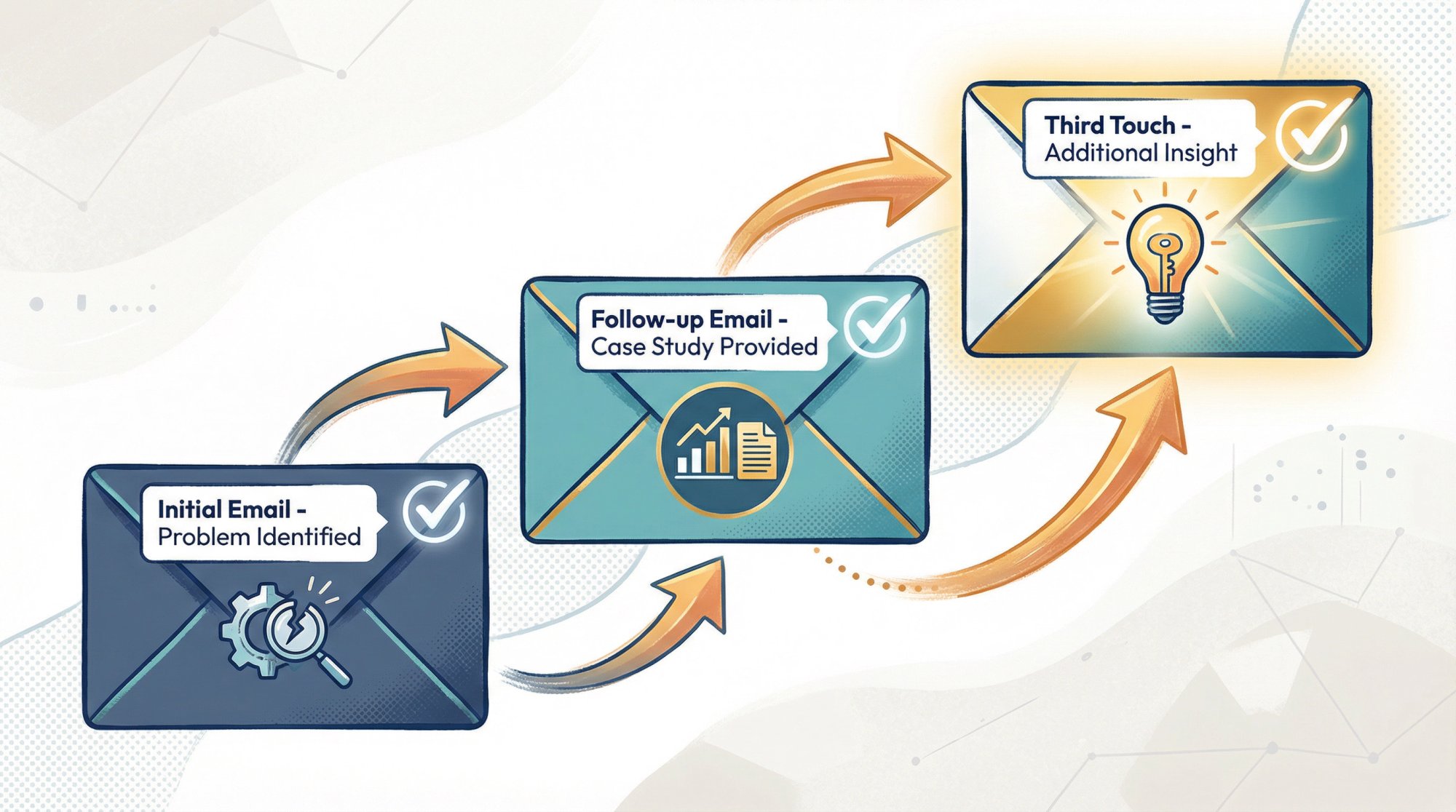
Cold emailing is rarely one-and-done. It often takes a few touches. So, what about the first line of your follow-up emails in a sequence?
These matter too! You still need to grab attention (maybe even more so, since they didn't respond the first time), but you also have a prior context to reference.
Here are a couple of effective follow-up opening lines and why they work:
The Gentle Reminder
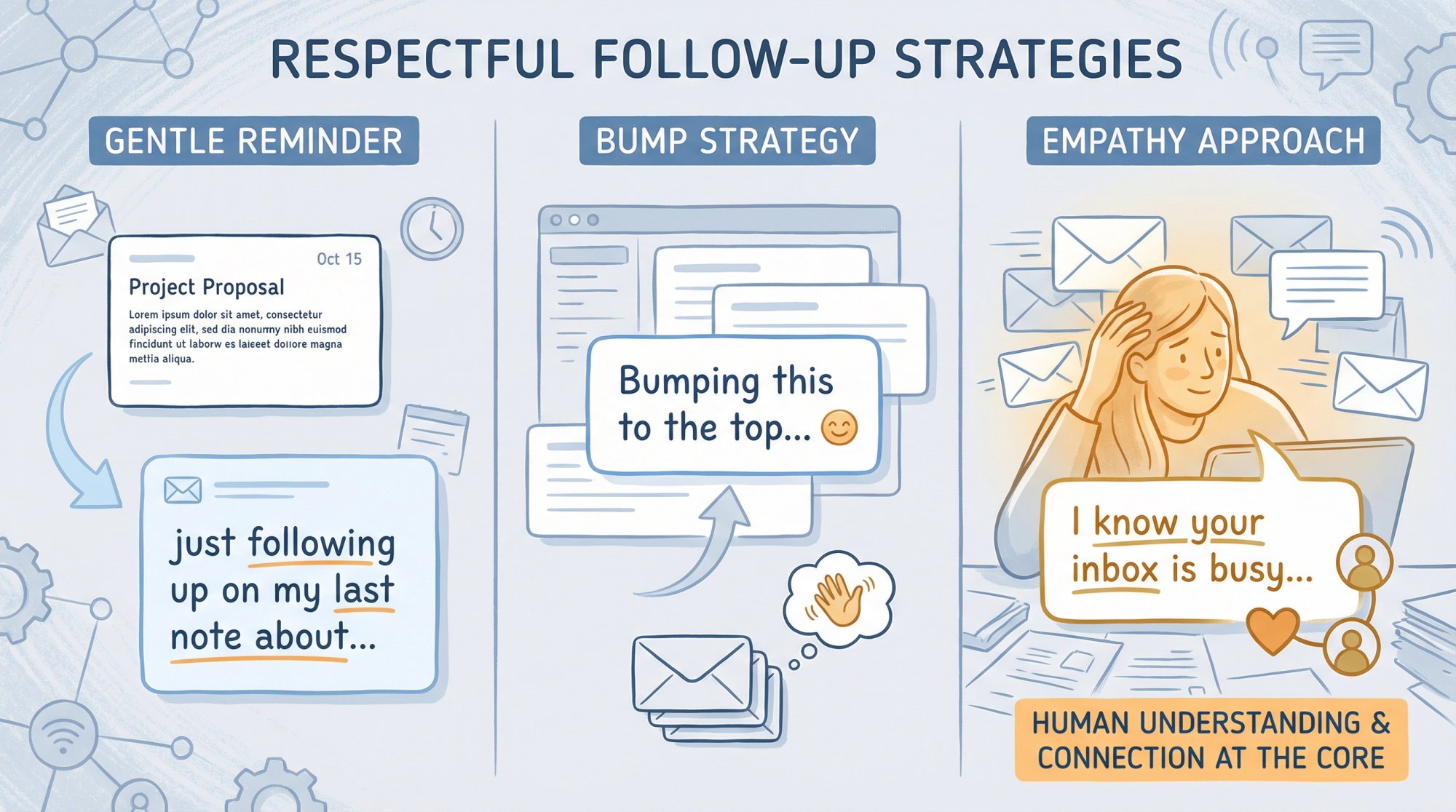
"Hi {{Name}}, just following up on my last note about {{XYZ}}."
This is simple and respectful. For example: "Hi John, just touching base on my email about boosting your marketing ROI…"
It reminds them of the topic and implies continuity without scolding them for not responding. It works because it's low-pressure and focuses them back on the benefit discussed.
The "Bump" Strategy
"Bumping this to the top of your inbox in case it got buried 😊."
Many of us use this internally with colleagues. It's light and acknowledges email overload. Using it with a prospect can be hit-or-miss, but in a friendly tone it can make you stand out as human. Only do this once, and usually after a more substantive follow-up or two.
The Empathy Approach
"Hi {{Name}}, I know your inbox is a busy place – just wanted to bring this back to your radar."
For example: "Hi Jane, I realize you likely get dozens of pitches daily; just circling back in case this one slipped through."
This opener shows empathy (you understand they're busy) and subtly suggests your email might be worth revisiting. It's polite and often appreciated by prospects who truly were swamped.
Reference Your Previous Email's Value
"Following up – last time I mentioned {{a quick win/offer}} for you, and I have a few more ideas…"
This reminds them why it's worth replying. E.g., "Following up, John – I sent over a case study on reducing churn by 20%. I actually thought of another insight relevant to you…"
Now your opener hints that there's even more value if they engage.
When writing follow-up first lines, you generally want to avoid guilt-tripping or desperation. Don't say "You haven't responded" or "I've emailed you 3 times..." That doesn't make them feel inclined to help you. Also avoid too much formality like "This is a reminder that you did not reply…"
Keep it conversational and positive in tone.
Your goal is to jog their memory and entice them to re-engage, not to scold or beg.
How to Make Your First Lines Stand Out
Keep it real: The best first lines feel natural, like one human speaking to another. If you read your opener aloud and it would sound weird saying it to someone's face, then it's probably too stiff or salesy. You wouldn't introduce yourself by rattling off your job title and company mission in person, so don't do it in an email opener either.
Match the buyer persona: Consider who you're writing to. A line that works for a tech startup founder might not land well for a finance VP at a Fortune 500. Adjust formality, references, and tone accordingly. Things that work for SaaS folks don't necessarily work for local retail businesses. Context matters. Always put yourself in the prospect's shoes.
Avoid "spammy" keywords and gimmicks: Words like "Free", "Urgent", "Act now" and overly promotional language in the first line can trigger spam filters or just turn off the reader. Similarly, avoid ALL CAPS or too many exclamation marks. You can be enthusiastic and value-focused without sounding like an infomercial.
Test and iterate: If you're doing outbound at scale, A/B test different opener styles on small segments. Maybe try an observation-based line for half and a question-based line for the other half, and see which gets more replies. Over time, you'll gather data on what resonates most with your specific audience. Just ensure you're still keeping personalization. Testing doesn't mean reverting to generic templates.
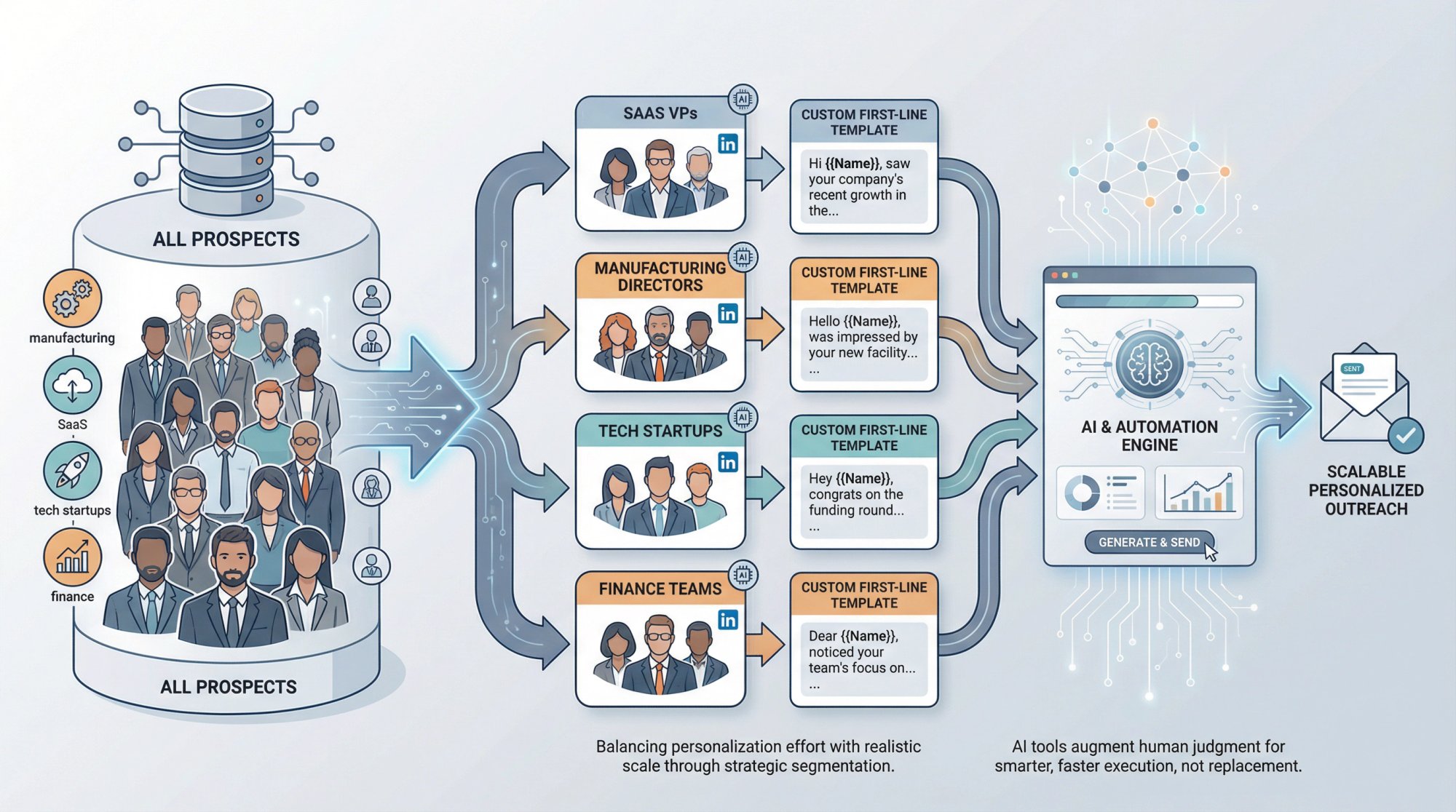
Scale personalization smartly: Writing highly custom first lines for every single prospect is ideal for response rates, but not always feasible at large scale. You can use a segmented personalization approach: group your prospects into segments (by industry, role, etc.) and craft a custom template first line for each segment. For example, a line that speaks to "SEO agencies in Austin" as a group. It's not as potent as one-to-one personalization, but it's a good middle ground.
Some sales engagement platforms and AI tools can even generate first-line snippets based on LinkedIn or web data for each prospect, which can save time. Just review them to make sure they still read naturally.
Cold Email First Line Mistakes to Avoid
For completeness, here's a checklist of what NOT to do with your first lines:
Don't lead with "I" and your life story. Opening about yourself (your name, your company, why you're emailing) is a surefire way to lose the reader. They care about their needs, not your bio. Save the introduction for later or even the email signature. Focus the first line on them.
Don't use bland, overused openers. This includes "Hope you are doing well," "Happy Tuesday," "I know you're busy but…," "To whom it may concern," etc. These add zero value and make your email look like a template destined for the trash bin. Prospects today see these and mentally archive the email immediately.
Don't apologize or sound unsure. Some people open with "I'm sorry for the cold email" or "I'll only take a minute of your time." This undermines you from the get-go. Be confident that you have a valid reason to reach out. Start with that value, not an apology. (Being polite is good; being overly meek is not.)
Don't write a novel. If your first "line" is actually a full paragraph, it's too long. Aim for one sentence or two short ones at most. Long-winded openers will get skimmed or skipped. Your opener's job is to hook attention, not to explain everything. Save the detail for the body of the email.
Don't mislead or use clickbait. Occasionally, senders try gimmicks like "Re: Our meeting yesterday" when you never met, or a provocative statement that isn't true. This might trick someone to open, but it destroys trust and will backfire. Always be honest and relevant. You can be creative without lying.
By steering clear of these pitfalls and sticking to the proven tactics we've covered, you'll already be ahead of 90% of cold emails cluttering prospects' inboxes.
How Outbound System Helps You Scale Personalized First Lines
At Outbound System, we know that crafting personalized, attention-grabbing first lines takes effort. But it pays off.
In cold outreach, small improvements in response rate can mean a big difference in pipeline. And the first line is often the highest leverage point to improve.
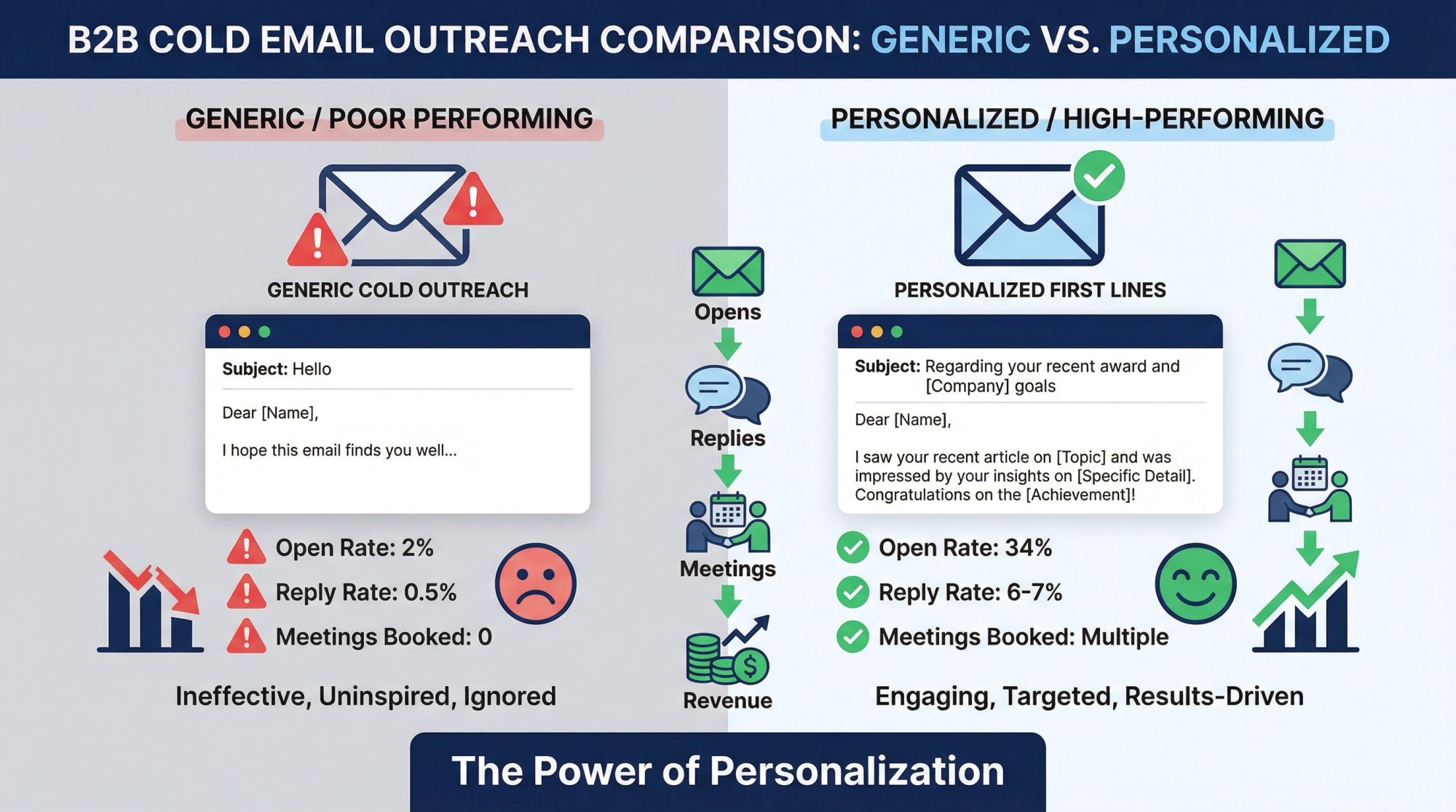
We've seen campaigns that use custom-tailored intro lines significantly outperform those with generic intros. In fact, adding personalization in the opener can boost reply rates by around 2-3x on average. That's huge when you consider what a doubling of replies could mean for your sales team or business.
It makes sense: when recipients feel an email is genuinely about them, they're far more likely to respond.
Our own experience as a cold email agency echoes this. We've seen response rates climb from the typical 1-2% range up to 6-7% by using highly personalized first lines and messages. Those are real conversations and opportunities that wouldn't happen with bland, boilerplate emails.
This is why Outbound System combines human copywriting with AI personalization. Our system creates a custom first line for each prospect based on their LinkedIn profile, company data, recent activity, and relevant trigger events. Then our copywriters review and refine them to ensure they sound natural and authentic, not robotic.
The result? Openers that feel genuinely personal at scale.
We handle the entire infrastructure:
• 350-700 Microsoft U.S. IP inboxes for maximum deliverability
• 9-step waterfall enrichment to ensure data quality
• AI-powered personalization combined with human-written copy
• Unlimited campaigns and A/B testing to optimize your openers
• Dedicated account strategist to help you refine your approach
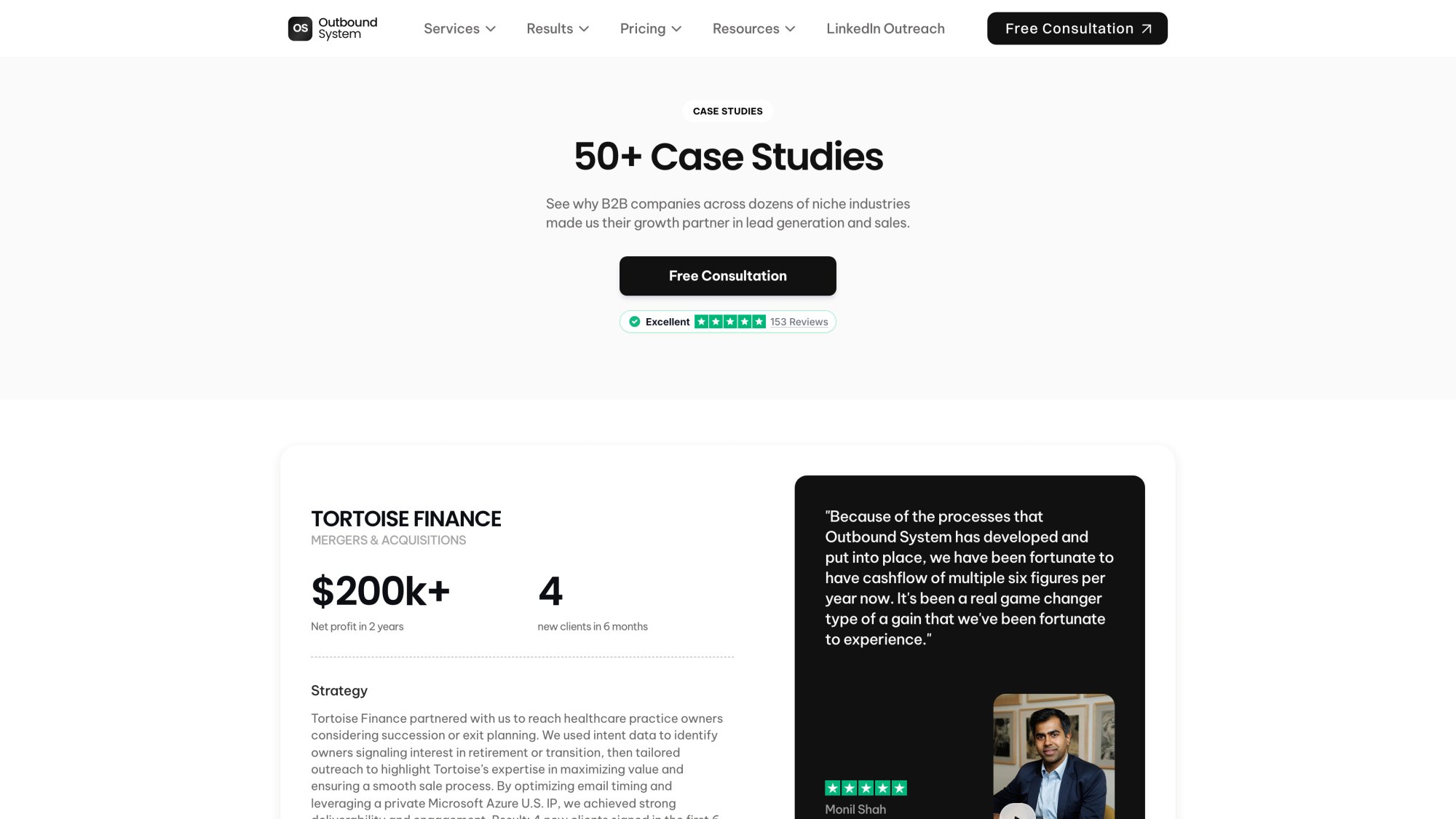
Whether you need help with cold email, LinkedIn outreach, or cold calling, Outbound System takes care of the heavy lifting so you can focus on closing deals, not managing infrastructure.
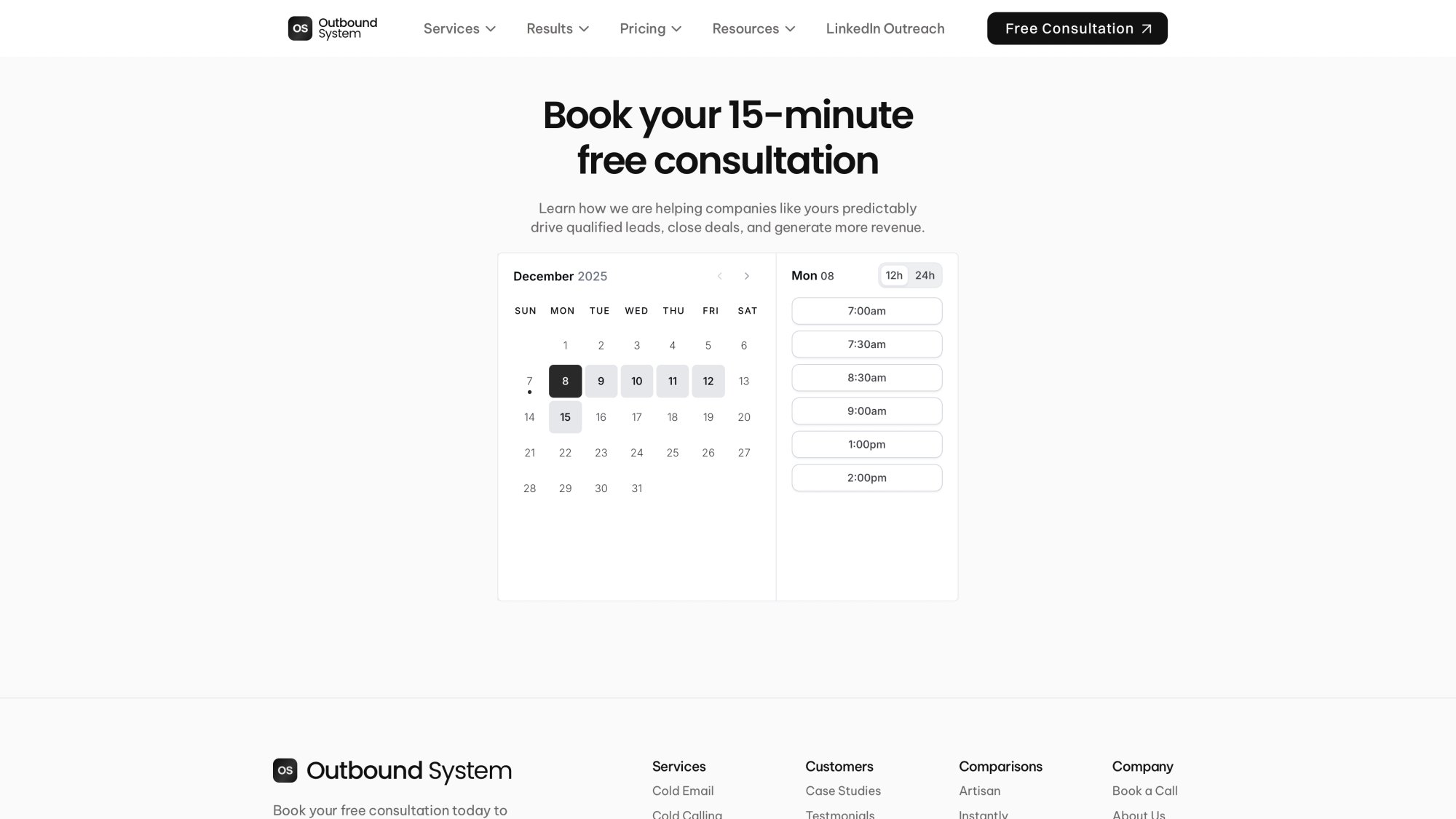
Want to see how personalized first lines can transform your outbound results? Book a free 15-minute consultation with our team and we'll show you exactly what we'd write for your ideal prospects.
Quick Recap: Best Cold Email Opening Lines
Crafting a great cold email opener is part art, part science. Let's quickly recap the approaches with a quick example for each to illustrate how they differ:
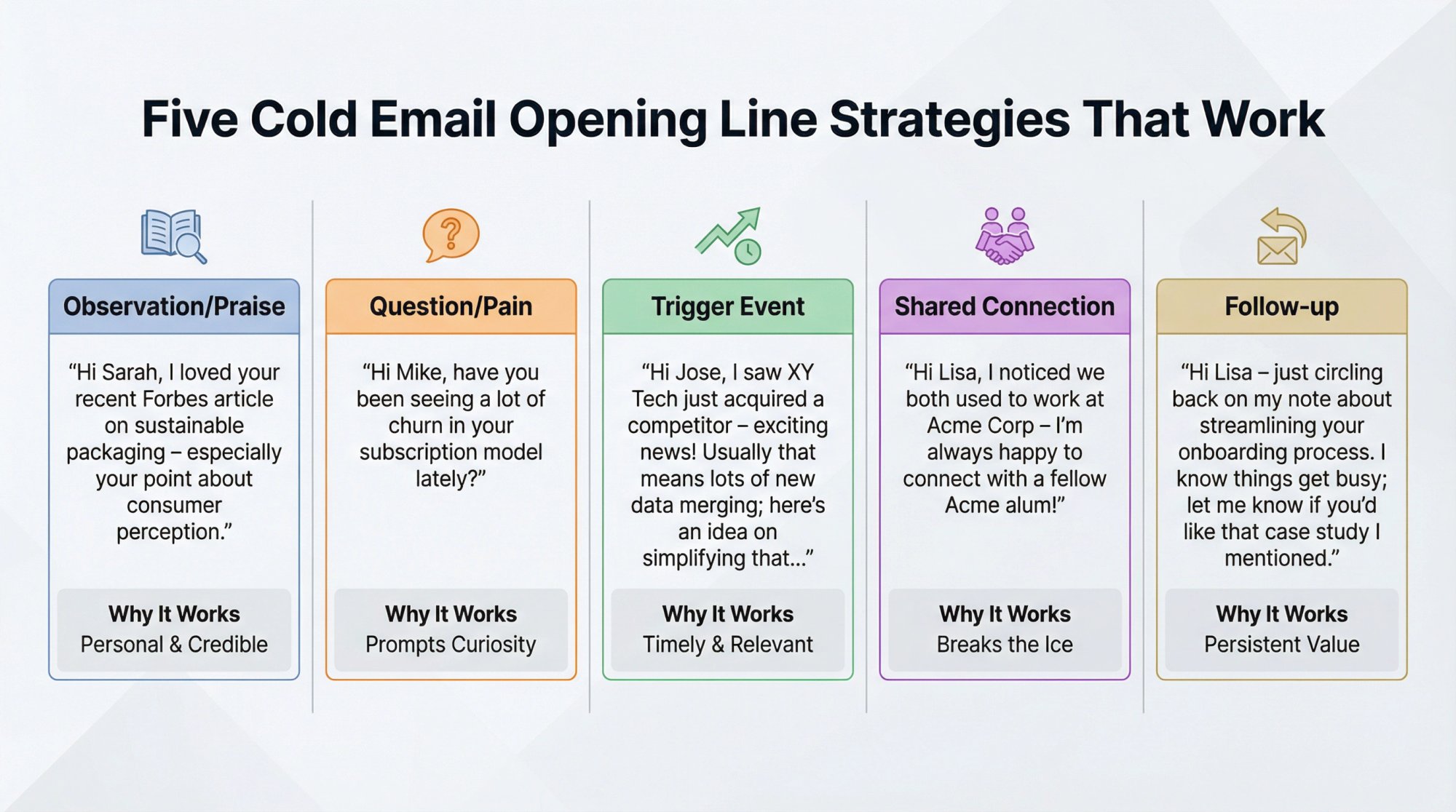
→ Observation/Praise Example: "Hi Sarah, I loved your recent Forbes article on sustainable packaging – especially your point about consumer perception." (Personal, specific, positive opens on her accomplishment)
→ Question/Pain Example: "Hi Mike, have you been seeing a lot of churn in your subscription model lately?" (Cuts right to a pain question that's likely on his mind, prompting curiosity and relevance)
→ Trigger Event Example: "Hi Jose, I saw XY Tech just acquired a competitor – exciting news! Usually that means lots of new data merging; here's an idea on simplifying that…" (Shows awareness of his company's situation, and smoothly transitions into a relevant offer)
→ Shared Connection Example: "Hi Lisa, I noticed we both used to work at Acme Corp – I'm always happy to connect with a fellow Acme alum!" (Friendly common ground, breaking the ice before the pitch)
→ Follow-up Example: (Second email) "Hi Lisa – just circling back on my note about streamlining your onboarding process. I know things get busy; let me know if you'd like that case study I mentioned." (Reminds topic, offers value, keeps tone light and understanding)
By now, you can see there are many ways to write a first line that isn't generic. The unifying thread is relevance.
Whether it's through personalization, timeliness, curiosity, or connection, the opener must focus on something that matters to the prospect and flow naturally into the rest of your email.
Why Great First Lines Are Worth the Effort
In the end, a great first line won't guarantee a sale, but it will guarantee you a shot. It gets the prospect to actually read your email, which is half the battle.
From there, your value proposition and call-to-action can work their magic. But without that hook up front, even the best offer may never be seen.
So, invest the time in your openers. Research your prospect, find that golden nugget to mention, and craft a line that would catch your attention if you were in their shoes. Use the examples and formulas in this guide as starting points, and tweak them to fit your voice and audience.
The goal of the first line is simple. Earn the right for the next line to be read. Keep that focus, and you'll see the difference in your cold email success.
By applying these strategies, your cold emails will immediately set themselves apart from the generic spam in prospects' inboxes. A little extra thought upfront leads to more opens, more replies, and ultimately more opportunities.
If you need help scaling personalized outreach, Outbound System's AI-personalization engine creates a custom first line for each prospect, helping achieve those 2-3x higher reply rates we mentioned. However you do it, make the first line count.
It's the small hinge that can swing big doors in B2B sales.
Frequently Asked Questions
How long should a cold email first line be?
Aim for one sentence or 20 words or less. Your first line appears as preview text in most email clients, so keeping it concise ensures the entire message is visible before someone opens the email. The goal is to hook attention quickly, not to explain everything in the opener.
Should I personalize every cold email first line?
Yes, personalization significantly improves response rates. Generic openers get ignored or marked as spam. Prospects can spot automated sales emails instantly. Even at scale, you should use segmented personalization where you craft custom templates for specific prospect groups rather than one-size-fits-all openers.
What's the biggest mistake people make with cold email openers?
The biggest mistake is starting with generic, self-centric opening lines like "My name is ___ and I'm reaching out because…" or "I hope you're doing well." These make it obvious the email is a template. Instead, focus the first line on the prospect and something specific about them.
How do I find information to personalize my first lines?
Use LinkedIn, company websites, recent news, podcast appearances, blog posts, or social media activity. Look for trigger events like promotions, company expansions, funding announcements, or recently published content. Include details that show real effort and research rather than generic observations anyone could make.
Do question-based openers work better than statement-based ones?
It depends on your audience and context. Question-based openers can spark curiosity and engage prospects by making them think. But the question must be directly relevant to their situation. Statement-based openers that reference specific observations or trigger events often perform just as well because they immediately demonstrate you've done your homework.
How many follow-up emails should I send, and how should I vary the first lines?
Most successful cold email sequences include 3-5 follow-ups over 2-3 weeks. Vary your first lines by referencing the previous email's topic, acknowledging they're busy, or offering additional value. The empathy approach works particularly well for follow-ups: "Hi {{Name}}, I know your inbox is a busy place – just wanted to bring this back to your radar."
Can I use AI to write my cold email first lines?
AI can help generate first-line ideas based on prospect data, but you should always review and refine them to ensure they sound natural and authentic. Some AI tools can pull LinkedIn or web data to create personalized snippets, which saves time. At Outbound System, we combine AI personalization with human copywriting to get the best of both worlds.
What if I can't find any personalization angles for a prospect?
If you truly can't find specific information about a prospect, use segmented personalization based on their role, industry, or company size. For example, craft a first line that speaks to common challenges faced by "VP of Sales at mid-market SaaS companies." While not as powerful as individual personalization, it's better than a completely generic opener.
How do I know if my first line is working?
Track your open rates and reply rates. If open rates are low, your subject line or sender name might be the issue. If open rates are decent but reply rates are poor, your first line (and overall email copy) needs work. A/B test different opener styles with small segments to see what resonates. Aim for reply rates above 3-5% as a benchmark for good performance.
Should my first line mention my product or service?
Not directly in most cases. Your first line should focus on the prospect, not your offering. The goal is to hook their attention and earn the right to make your pitch in the body of the email. But you can hint at value or a relevant pain point that your solution addresses. The key is to make it about them first, you second.