Outbound sales isn't dead. Actually, it's thriving in ways most people don't realize.
Despite all the buzz around inbound marketing and "they'll come to you" strategies, outbound sales remains the fastest way to fill a B2B pipeline with qualified leads. Research shows that 82% of buyers will accept meetings with salespeople who reach out proactively.
And nearly 70% of sales professionals say cold outreach effectively builds new business relationships.
In today's noisy market, waiting passively for prospects isn't enough. Mastering outbound sales (the art of reaching out first) gives your team control to target the right accounts, generate immediate pipeline, and accelerate growth.
This guide breaks down what outbound sales is, how it differs from inbound, the core process steps, proven strategies, and the metrics that matter. Whether you're building a sales engine from scratch or looking to scale what's working, this resource equips you with 2025 insights to succeed.

What Is Outbound Sales and How Does It Work?
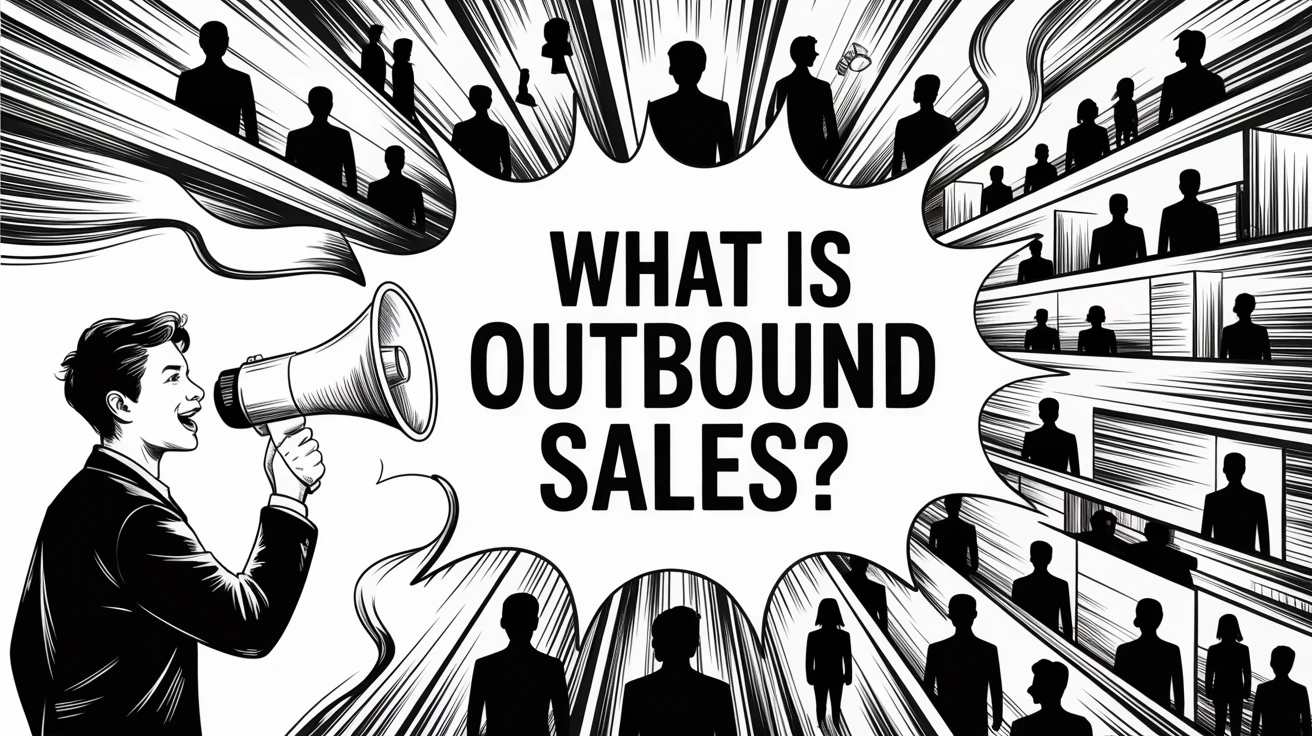
Outbound sales is when salespeople initiate contact with potential customers instead of waiting for them to inquire.
It's proactive. It's prospecting-driven. Reps reach out via cold calling, cold emails, social media messages, or face-to-face outreach with one goal: starting a sales conversation.
In outbound sales, your team actively seeks prospects and pitches your product or service. You're using lists of targets that fit your ideal customer profile, and you're making the first move to create opportunities.
This is the classic "sales hunter" model (sometimes called traditional sales). A sales development rep might cold-call CFOs in your target industry or send personalized email sequences to key decision-makers.
Outbound sales reps aren't responding to warm inquiries. They're reaching out cold to generate interest and book meetings.
The entire approach centers on making the first move to create potential sales opportunities.
Outbound Sales vs Inbound Sales: Key Differences
The opposite of outbound is inbound sales, where the buyer initiates contact.
In an inbound scenario, prospects come to you by responding to your marketing. They fill out demo request forms, download whitepapers, or call your office after seeing an ad. Inbound sales relies on marketing-driven lead generation, attracting customers through content, SEO, advertising, and branding until they raise their hand.
The fundamental difference? Who starts the relationship.
In outbound sales, the sales rep starts the conversation (seller-initiated outreach). In inbound sales, the customer starts it by expressing interest (buyer-initiated contact).
Outbound reps typically push a message out to people who haven't engaged with the company before. Inbound reps pull in people who've already shown interest through marketing.
Factor | Inbound Sales | Outbound Sales |
|---|---|---|
Lead Source | Prospects discover you via content marketing, SEO, social media, or referrals | Your team identifies and contacts leads through cold calls, emails, and direct outreach |
Cost & Effort | Lower ongoing cost per lead, but needs upfront marketing investment and time to build pipeline | Faster results but requires persistent effort (salespeople's time, data tools) and higher touch per prospect |
Timeframe | Longer-term strategy, nurturing leads until they're ready | More immediate results. Reps can start calling today and generate meetings this week |
Targeting | Interest can be broad or random (anyone who finds your content) | Precise targeting. Sales team chooses specific industries, company sizes, and buyer personas |
Scalability | Scales with marketing reach (more content, more traffic), generates leads 24/7 | Scales by adding sales development reps and increasing outreach. Direct control over volume |
Conversion | Higher close rates because leads are self-qualified and actively interested | Lower conversion rates since outreach is unsolicited, but lets you chase bigger fish proactively |
Feedback Loop | Slower feedback inferred from analytics or form fills | Immediate feedback from direct conversations. Quickly learn what messaging lands and what objections come up |
Neither approach is "better" in all cases. They serve different purposes.
Many successful companies use a hybrid sales strategy, combining both. Marketing-driven inbound provides a baseline of interested prospects, while outbound efforts actively target high-value accounts who might never stumble across your content.
Your inbound team nurtures warm leads. Your outbound team targets specific accounts. The result? A fuller pipeline.
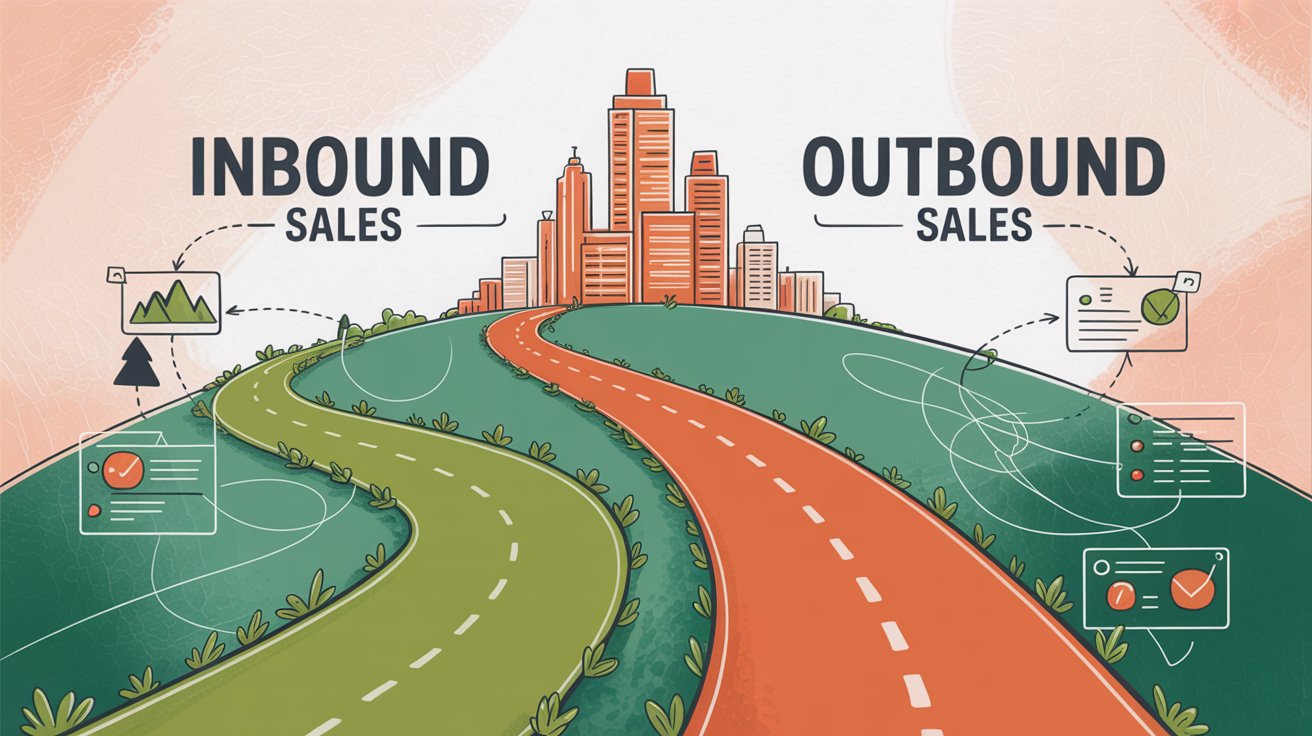
Inbound and outbound sales are complementary. This guide focuses on the outbound side.
Who Does Outbound Sales? Understanding Team Roles
Modern sales organizations typically have specialized roles for outbound prospecting versus closing deals.
The primary outbound-focused role is the Sales Development Representative (SDR) (also called Business Development Representative or BDR).
SDRs are inside sales reps dedicated to outbound prospecting. They research leads, cold call or email them, and qualify interested prospects.
Importantly, SDRs typically don't close deals. They pass hot leads to account executives to finalize sales. Their job is generating and nurturing opportunities at the top of the funnel.
An SDR's day involves:
• Finding new contacts on LinkedIn
• Sending personalized outreach emails
• Following up multiple times (persistence is key)
• Calling prospects to gauge interest
Their goal? Schedule meetings or demos with qualified leads.
By having SDRs focus on this early stage, companies allow their closers (Account Executives) to concentrate on later stages like demos, handling objections, and closing contracts. This division makes the sales process more efficient. SDRs keep the pipeline full while AEs turn pipeline into revenue.
In smaller businesses, one person might handle the entire cycle (prospecting and closing). But as you scale, separating these functions is a best practice.
Key outbound sales roles include:
• Sales Development Rep (SDR/BDR) – Focuses on outbound prospecting: sourcing leads, initiating contact (calls, emails, social), following up, and qualifying. Measured on activities and meetings created.
• Account Executive (AE) – Focuses on conducting sales meetings, demos, and closing deals. Works the opportunities SDRs hand off. Measured on deals closed and revenue.
• Outbound Sales Manager – Oversees the SDR team, sets outreach strategy, provides coaching, and ensures the team meets meeting quotas.
By building the right outbound team, you ensure each part of the sales process has a dedicated owner. A well-trained SDR team can dramatically scale your outbound reach.
Outbound sales is a team effort. Defining clear roles (hunters vs. closers) sets you up for success.
Why Outbound Sales Still Works in 2025
Outbound sales can be resource-intensive. It takes effort to research leads and endure cold call rejections.
So why do it?
Because when executed well, outbound sales offers unique advantages that inbound alone can't match.
Speed to Market
Outbound is one of the fastest ways to generate leads and sales, especially for new offerings.
Instead of waiting months for SEO and content to rank, outbound reps can start booking meetings immediately by reaching out via phone or email.
Outreach through cold calls and cold emails can yield quick results from a wide audience, making outbound ideal when you need pipeline now (to hit a quarterly target or launch in a new vertical).
Precise Targeting
With outbound, you decide exactly who to target by industry, company size, job title, geography, and more.
This precision lets you focus on high-value prospects that fit your ideal customer profile. Inbound leads might not always match your target persona, but outbound ensures your sales team talks to the right people.
This targeted approach often leads to higher-quality leads because you proactively choose accounts likely to benefit from your solution. Outbound also allows a personalized touch for each prospect, since reps can tailor their message to that specific company or individual.
Control and Scalability
Outbound sales puts the sales team in control of pipeline generation.
You're not at the mercy of market conditions or algorithms. Want more leads this quarter? Hire more SDRs or increase daily call targets. You control the volume and pace of outbound efforts, which makes results more predictable.
With the right systems (data tools, dialing software, email sequences), outbound programs can be scaled in a repeatable way across many prospects without being limited by inbound lead flow.
Immediate Feedback & Market Insight
Because outbound reps engage directly with prospects, they get immediate feedback from conversations.
Each call or email response teaches you something. Common objections. Competitor mentions. Pain points in the market. These real-time insights help you refine your pitch quickly.
Outbound selling becomes a form of market research. By talking to dozens of prospects weekly, your team gathers valuable intelligence on what messaging resonates and what challenges customers face. This feedback loop is much faster than waiting to interpret inbound analytics.
It also allows on-the-spot adjustments. A rep can tweak their approach by the next call based on the last call's feedback.
Relationship Building
Outbound outreach, when done consultatively, is an opportunity to build personal relationships with potential customers.
Speaking one-on-one, asking questions, and providing value in conversations helps establish trust over time. Even if an outbound prospect doesn't buy immediately, a good rep will nurture the connection (connect on LinkedIn, send useful content, follow up periodically).
This human-to-human engagement is something impersonal inbound forms can't match. By proactively reaching out, you start building your network in the industry.
Many buyers appreciate a knowledgeable salesperson who reaches out with relevant insights or solutions (as long as it's targeted and not spammy). In the long run, outbound creates a direct line to important contacts and opens doors that inbound might never open.
Predictable Pipeline Growth
Outbound sales allows you to create pipeline on demand in a more predictable way.
If you know that 100 outbound calls typically yield 5 meetings and 1 sale, you can forecast and dial up activities to hit a revenue goal. Inbound lead flow can be inconsistent, but outbound activities (calls, emails) can be regimented and measured daily.
Many companies rely on outbound when they need a consistent baseline of pipeline each month. It's a repeatable process engineered to generate opportunities. With good metrics and consistent activity, outbound becomes like a spigot you can turn on to keep sales numbers on track.
Of course, outbound has challenges. It requires skilled reps, efficient processes, and resilience to rejection. But these benefits show why outbound is still a critical component of B2B sales strategy in 2025.
It offers speed, control, and targeted reach that complement inbound marketing perfectly.
How to Reach Prospects: Key Outbound Sales Channels
There are several primary channels and tactics used in outbound sales today:
Cold Calling
The classic method. Picking up the phone and calling a prospect with whom you have no prior relationship.
Cold calling is alive and well in B2B sales. Reps use phone calls to introduce themselves, deliver a quick value pitch, and attempt to schedule a longer call or demo. It's highly interactive, allowing reps to handle objections or questions in real time.
Successful cold calling often requires volume (many dials) and skill (a strong opening and good talk track). It remains an essential outbound tool, especially when reaching higher-level executives.
A well-timed phone call can stand out more than yet another email.
Many teams pair cold calls with voicemails and even text messages as follow-ups. Learn more about when to cold call and cold calling vs. cold emailing.
Cold Emailing
Email is the other staple of outbound.
Cold emails involve sending unsolicited (but targeted and personalized) emails to prospects to introduce your offering and request a meeting. Email allows scale. A single rep can send dozens or hundreds of emails in a sequence using automation, reaching many prospects quickly.
It's less intrusive than a call and gives the prospect time to read and respond on their schedule.
Effective cold emails are short, personalized to the recipient's context, and focused on solving a prospect's pain point. Reps often send a series of emails (an email cadence) over a few weeks, since it usually takes multiple touches to get a reply.
Modern sales engagement platforms can automate these sequences while still merging in personalization tokens or custom sentences for each prospect. Cold emailing can generate quality leads at scale, but deliverability must be managed (so your domain isn't flagged as spam).
Social Selling (LinkedIn Outreach)
Social media has become a valuable outbound channel, especially LinkedIn for B2B sales.
Social selling means using social networks to research prospects, engage with them, and reach out directly via connection requests or direct messages. An SDR might connect with a prospect on LinkedIn, like or comment on their posts for visibility, then send a personalized message referencing a recent post or mutual interest.
Social platforms also allow sharing content. Reps can build credibility by sharing industry tips or case studies that their prospects might see.
While social selling alone may not replace calls and emails, it's an excellent supplement adding an extra touch in a multi-channel outbound strategy. It often helps to warm up a cold outreach (the prospect sees your name and face online before you call or email).
LinkedIn InMail and direct messages are commonly used to pitch prospects or invite them to events or webinars as an initial touch. Check out our guide on LinkedIn outreach strategies.
Direct Mail & Gifting
In some outbound campaigns (especially for high-value accounts), teams use physical mail or corporate gifting to get a prospect's attention.
This might include sending a letter, postcard, or a creative gift to the prospect's office with a personalized note. Traditional direct mail is less common than before, but because it's now rare, a well-crafted mail piece can make a memorable impression.
Sending a prospect a box with a relevant book or custom gift can be a door-opener (often paired with an email or call: "Just sent you something in the mail...").
While not as scalable, direct mail is a high-touch outbound tactic to break through digital clutter. Make sure any gifts comply with company policies of the recipient.
Events and Networking
Outbound sales can also happen in person.
Attending industry conferences, trade shows, or local networking events is an outbound tactic. Your sales reps approach people at booths or mixers to identify prospects and start conversations.
Even though event leads might be considered "inbound" if someone visits your booth, the act of working the floor and initiating contact with passersby is classic outbound behavior.
Hosting your own small events or webinars (then following up with attendees) is another way to generate engaged outbound leads. The key is initiating contact at the event and continuing the conversation after.
Other Creative Outbound Methods
Outbound creativity is endless.
Some teams do "sales blitzes", where reps concentrate outreach on a certain city or segment for a short period. Others use referral asks (outbound calling into current customers' networks for introductions).
Account-based marketing (ABM) is essentially a coordinated outbound approach where marketing and sales jointly target a shortlist of high-value accounts with personalized outreach across channels.
The common thread? Your team is initiating contact rather than waiting.
In practice, the most successful outbound sales strategies use a multi-channel approach combining phone, email, and social touches in a coordinated way.
For instance, you might call a prospect and leave a voicemail, then immediately send an email referencing that call, then a few days later connect on LinkedIn. Using multiple channels tends to boost contact rates and responsiveness.
In a 2025 omnichannel world, meeting prospects where they are (in their inbox, on their phone, on LinkedIn) is key to outbound success.
The 5-Step Outbound Sales Process
Outbound sales can be thought of as a repeatable process or workflow that moves a cold prospect from first contact to closed deal.
While every organization may tweak the details, most outbound processes include these core steps:
Step 1: Identify Target Market and Buyer Profiles
Before any outreach, clearly define who you're selling to.
Outbound works best when you know your ideal customer profile (ICP) and buyer personas. Ask yourself: What types of companies are a good fit for our solution? Within those companies, who are the decision-makers or key influencers we should reach out to?
This step involves market segmentation, breaking the broad market into targeted lists. You might decide your outbound focus is CTOs at software companies between 50 and 500 employees.
By pinning down the right segment and buyer, you ensure your reps spend time on prospects with a high likelihood of conversion.
Without a well-defined target, your team can waste effort on the wrong leads.
Invest time upfront in research and creating detailed buyer personas. The more specific you are about who to contact and why they might need your product, the more effective your outbound outreach will be.

Step 2: Lead Generation (List Building)
Once you know your targets, you need to find the leads (acquire names and contact information for potential buyers in those target companies).
This step is about building a high-quality prospect list or database.
Sources for outbound leads include:
• Your own research on LinkedIn or industry directories (manual prospecting)
• Purchasing lists or using data providers to get verified contacts at your target companies
• Using list-building tools or email finders to scrape company websites or online databases for contacts
• Outsourcing to lead generation services or agencies that specialize in compiling lists
Often it's a combination. An SDR might search LinkedIn for "CTO at [target industry] companies" and compile a list, then use an email finder tool to get their addresses. Or the company might invest in a B2B contact database subscription.
However you do it, the outcome is a list of prospects with names, roles, company, and contact info (phone, email).
A good practice is to also qualify the list by basic criteria (company size, location) so you know each contact meets your target profile.
Some organizations have dedicated researchers or use sales ops tools to enrich data (verifying emails, etc.). We use a 9-step data verification process to triple-verify emails for better deliverability.
The quality of your outreach is only as good as the quality of your list, so this stage is critical. Garbage in, garbage out applies. Take time to source accurate leads.

Step 3: Outreach & Qualification
Now the real outbound selling begins: reach out to the leads and gauge their interest and fit.
This step is all about executing your outreach cadence (calls, emails, messages) and identifying which leads are worth pursuing.
Typically, an SDR will:
Send initial outreach via email or phone call with a brief introduction and value proposition tailored to the prospect. Often email is the first touch since it's less invasive. Many SDRs only call after an introductory email, or vice versa.
Follow up persistently if there's no response. It often takes 5+ touches to get a reply. This may involve a sequence like: Email 1, Email 2, LinkedIn message, Call/voicemail, Email 3, etc., over a couple of weeks.
Modern sales engagement platforms can automate parts of this sequence and remind reps when to call next.
Qualify the lead when you make contact (the prospect responds to an email or answers a call). Qualification means determining if the prospect has a potential need, authority, budget, and timeline for your solution. It often involves asking questions about their pain points or current solution.
Secure the next step if the prospect shows interest or matches the criteria (a qualified lead). The SDR typically schedules a discovery call or demo with a sales consultant or AE. If the prospect isn't interested or isn't a fit, the SDR disqualifies them (or perhaps nurtures to try again later).
During outreach, personalization and relevance are key.
Generic spam blasts won't work. Prospects are more likely to respond if your message shows understanding of their business or role. Mention a specific challenge their industry faces, or reference the prospect's recent company news to hook their attention.
Keep messages short and focused on the prospect's pain points rather than a long pitch about your product. Always have a clear call-to-action (asking for a 15-minute call next week, for example).
Remember, persistence pays in outbound. One follow-up email likely isn't enough, since busy prospects often miss or ignore the first attempt. The best outbound teams have a structured cadence of multiple touches and use tools to automate those touches at scale without losing the human element.
Step 4: Sales Call or Demo
This is the make-or-break meeting that the outbound effort is driving toward.
Once a prospect agrees to talk (usually a scheduled call or Zoom meeting), the sales rep's job is to dive deeper into the prospect's needs and showcase how your product or service can help.
Often this takes the form of a discovery call followed by a product demo or sales presentation.
In outbound scenarios, this might be the first live conversation with the prospect (aside from a brief qualifying chat), so the rep needs to come prepared:
Do your research on the company and person beforehand. Know their industry, likely challenges, perhaps competitors. Outbound prospects will expect you to be informed since you asked for their time.
Tailor the conversation to what you've learned about their needs. A canned pitch won't cut it. Focus on how your solution addresses the specific pain points the prospect has mentioned or that you suspect based on similar customers.
Use a consultative approach: Ask questions to clarify the prospect's problems, listen actively, and then position your offering as the solution.
Demo or presentation: If applicable, show the product or a slide deck that speaks to their use case. Keep it interactive. The goal is to advance their interest, not do a one-way monologue.
Handle objections that come up ("we don't have budget," "call me in 6 months," "we already use a competitor"). A skilled outbound seller is ready to address these with customer examples or flexibility (offering a pilot program if they're skeptical, for instance).
Remember that in B2B, especially for larger deals, the sales cycle can involve multiple stakeholders and take time. The first call may not close the deal. It might just lead to another meeting with more executives or a trial evaluation.
Outbound sales reps must be patient yet persistent through this process. Continue providing value at each touchpoint (perhaps send follow-up materials, case studies, etc. after calls).
The sales call phase could actually be a series of calls and meetings as you navigate the buyer's process, but it all started from that initial outbound outreach.
Step 5: Closing and Follow-Up
If the conversations and demos go well, the prospect moves to the closing stage.
This involves negotiating terms, handling any final procurement hurdles, and getting the contract signed. In outbound sales, as with any sale, it's crucial to ask for the business. When the time is right, confidently propose the next steps to finalize the deal (a formal proposal or pilot agreement).
Many deals stall because the rep is afraid to push for close. Don't let that happen.
Once the prospect agrees and signs on as a customer, congratulations! You've converted a cold prospect into a sale.
But the outbound process doesn't end at the signature.
A best-in-class outbound sales org will:
Handoff smoothly to onboarding or customer success to ensure the new customer is happy and sees value quickly (this increases the chance of upsells or referrals).
Continue to nurture the relationship, checking in for feedback and looking for expansion opportunities.
Ask the new customer for referrals. Happy customers can refer other prospects, effectively turning an outbound win into inbound fuel. Don't hesitate to ask a satisfied client, "Do you know anyone else who might benefit from our solution?"
(Often, they do. And referrals tend to close faster with 16% higher lifetime value on average.)
By following up and providing great service, your outbound team can generate a virtuous cycle where today's cold-called prospect becomes tomorrow's champion who brings you more leads.
And importantly, always loop back and analyze the process: which outreach methods worked best? Which messaging got the most responses? Use that data to continuously refine your outbound playbook.
In summary: Outbound sales follows a progression from targeting → lead list → outreach → qualify → meeting → close → nurture. It's a lot of steps, but each can be systematized and optimized.
5 Best Practices for Outbound Sales Success
Mastering outbound sales requires strategy, skill, and consistency.
Here are five best practices that top-performing outbound teams use to boost their results:

1. Focus on the Customer (Personalize Outreach)
Always center your messaging around the prospect's needs, not your product.
A customer-centric attitude (empathizing with their pain points and goals) goes a long way. This means deeply personalizing your outreach.
Segment your prospects (by industry, role, etc.) and tailor your emails and calls to speak directly to their situation. Reference specifics: "I noticed your company is hiring many sales reps. Are you looking for ways to ramp new hires faster?"
By showing you understand them, you'll get far better engagement than any generic pitch.
Remember, outbound is about starting a relationship, and that starts with listening and addressing what they care about.
2. Use Multiple Touchpoints and Channels
Don't put all your eggs in one basket.
In 2025, effective outbound requires an omnichannel approach. Use a combination of email, phone, voicemail, LinkedIn, and even text or direct mail when appropriate.
Different prospects prefer different channels. Some respond to a phone call, others only reply via email. Hitting multiple channels also reinforces your message (a prospect might ignore one email, but after seeing your LinkedIn request and a second email, they recognize your name by the time you call).
Also, consider mixing in marketing touchpoints if possible (invite them to a webinar or send a piece of content).
The cadence might look like: Day 1 email, Day 3 call, Day 5 LinkedIn message, Day 7 email, etc.
Be persistent and creative without crossing into spammy. Each touch should provide value or context, not just "checking in."
3. Use Scripts and Playbooks (But Don't Sound Robotic)
Having a library of proven sales scripts for calls and email templates is incredibly helpful, especially for new outbound reps.
Scripts provide a solid baseline: key talking points, how to handle common objections, email wording that has worked before, etc. They ensure consistency and save time.
But avoid coming off like a robot reading a script.
The best reps use scripts as a guide, not a crutch. They maintain flexibility to make the conversation natural, inject their personality, and improvise when needed. The goal of a script is to make sure you hit the important points and questions, but always listen and adapt to the live conversation.
Regularly update your scripts based on what's working. If a certain opening line is getting great responses, make it standard.
4. Automate and Use Technology
Great outbound teams make smart use of tools to boost efficiency.
Reps only have so many hours in the day. Automation can multiply their output.
Examples:
• Use a power dialer or click-to-dial to call more people faster
• Use email sequencing software to send automated follow-ups so you don't manually send every email
• Use calendar scheduling tools to eliminate back-and-forth when booking meetings
• CRM automation can log activities and track contact history without manual effort
• Data enrichment tools can automatically fill missing info about leads
By automating the routine tasks, your reps free up time to focus on high-value work (like crafting personalized messages or having conversations).
AI tools are also emerging. AI can draft first-pass email copy or suggest the best time to contact someone. Our platform uses AI for line-by-line personalization in cold emails while human copywriters oversee quality.
Embrace technology, but ensure it's enhancing rather than replacing the human touch.
A rule of thumb: automate the process, not the relationship.
5. Track Metrics and Optimize Continuously
Outbound sales is very measurable, so take advantage of that.
Define key performance indicators (KPIs) for each stage (more on metrics in the next section) and monitor them in real time. Track each rep's calls per day, emails sent, contact rate, reply rate, meetings booked, etc.
This data will highlight bottlenecks and areas to improve. If one campaign's email template has a low response rate, tweak the copy or targeting. If your call connect rate is only 5%, maybe your call times or your lead quality needs adjustment.
Use A/B testing in your outreach. Try two versions of an email opening line and see which yields more replies.
Outbound sales is as much a science as an art. The best teams create a feedback loop of measure → learn → refine. They have weekly pipeline review meetings to dissect what's working or not.
By treating each week's results as data, you can systematically improve your conversion rates over time. A culture of continuous improvement, driven by metrics, will significantly boost your outbound ROI.
Finally, underlying all these best practices, outbound sales requires grit and consistency.
Not every day will be full of wins. Reps face a lot of silence or rejection. Winning teams keep a positive, learning-oriented mindset. Celebrate small wins (like a callback or positive email reply) to keep morale up.
And maintain ethical standards: respect prospects' time and privacy, personalize instead of spamming, and always comply with laws like opt-out requests, Do Not Call lists, and GDPR for emails.
Outbound done right is persistent but respectful. When you focus on genuinely helping prospects solve problems, rather than just pushing a pitch, your outreach will stand out and pay off.
Outbound Sales Metrics That Actually Matter
To manage and improve outbound sales, you need to measure it.
By tracking the right metrics, you can quantify performance, identify strengths and weaknesses in your process, and demonstrate ROI.
Here are the key outbound sales metrics and KPIs to monitor:
Outbound Activity Volume
Track how much outreach is happening.
Key metrics include:
• Number of leads prospected
• Calls made
• Emails sent
These volume indicators show your team's effort and capacity. For example, calls made per day per rep, or new outbound leads added to the sequence each week.
If activity is too low, pipeline will suffer. High activity is good, but quality matters too, so watch conversion rates in tandem.
Engagement Rates
Measure how often your outreach is engaging prospects.
For calls, a vital metric is call connect rate: the percentage of dialed calls where you actually reach a decision-maker or have a live conversation.
For emails, track open rates and response rates.
But, note that due to Apple's Mail Privacy Protection (which auto-loads email images), open rates have become less reliable and often artificially inflated.
A better email success indicator is reply rate: the percentage of cold emails that get a response (even a "not interested" is data).
Also track meeting acceptance rate: out of those who respond positively, how many actually schedule a meeting.
These engagement metrics help you gauge the effectiveness of your messaging and targeting. If open rates are high but reply rates low, your subject line might be fine but the email body needs work. If call connect rates are low, perhaps try different call times or verify your phone numbers.
Meetings Booked (Appointment Rate)
This is often the main KPI for SDRs: how many meetings or demos are they booking with qualified prospects.
You can look at raw count per month, and also the conversion rate of outreach to meetings. For instance, what percentage of prospects contacted eventually schedule a meeting.
A related metric is lead qualification rate: the percentage of leads contacted that meet your qualification criteria and are worth pursuing.
A higher meeting/qualification rate means your team is finding good leads and your outreach approach is resonating. If this rate is low, you might be targeting the wrong audience or your pitch isn't compelling enough to secure meetings.
Pipeline and Conversion Metrics
At a higher level, track how outbound efforts translate into sales pipeline and revenue.
Conversion rate is key: the percentage of outbound qualified leads or meetings that ultimately convert into customers.
For example, if 100 meetings lead to 20 proposals and 10 closed deals, that's a 10% close rate from meeting to customer.
You can also measure pipeline generated (sum of deal values from outbound leads) and eventually closed revenue from outbound.
These metrics show the tangible business impact of outbound. If you have both inbound and outbound, you might compare their conversion rates and sales cycle lengths.
Often, outbound deals can have longer sales cycles (since you're convincing a "cold" prospect), so tracking sales cycle length for outbound leads is useful. On average, how many days or months does it take from first contact to close?
Monitoring this helps in forecasting and identifying if deals are stalling in a particular stage.
Deal Size and ROI
Keep an eye on the value side of the equation too.
What is the average deal size of outbound-sourced customers? And importantly, what is the Customer Acquisition Cost (CAC) for outbound: how much you spend on outbound sales efforts (tools, salaries, etc.) divided by the number of new customers acquired.
Outbound can be more labor-intensive per lead, so ensuring the revenue from those leads justifies the cost is crucial. If CAC is too high relative to Lifetime Value (LTV) of the customer, you may need to optimize the process or target bigger customers.
Other efficiency metrics like cost per lead and opportunities per rep can also provide insight into outbound ROI.
And don't forget churn rate of outbound customers. Are they as happy and retained as other customers? If churn is higher, maybe some outbound deals weren't truly great fits and slipped through qualification.
By tracking a balanced set of metrics across the outbound funnel (from activities to engagement to outcomes), you get a full picture of performance.
Use dashboards or CRM reports to visualize these. A sales manager might review weekly: calls per rep, emails sent, replies, meetings set, and pipeline created. If numbers are off, dig in and diagnose why.
Metrics should be used for coaching, not just reporting. Perhaps one rep's email reply rate is unusually high. Share their approach with the team. Another rep's connect rate is low. Maybe they need help with gatekeeper techniques or a better direct-dial list.
In short: measure what matters at each stage of outbound.
As the saying goes, "you can't improve what you don't measure." With data-driven insight, you can continually refine your outbound engine for greater success.
(Note: Due to recent privacy changes like Apple's iOS Mail Privacy Protection, treat email open rates with caution. Many emails show as "opened" even if the user didn't actually read them. Focus more on hard metrics like replies and meetings booked as indicators of engagement.)
How Outbound System Powers Modern Outbound Sales
If you're thinking, "This all sounds great, but building this infrastructure from scratch seems overwhelming," you're not alone.
Most companies struggle with three core outbound challenges:
1. Deliverability infrastructure – Getting cold emails into primary inboxes (not spam) requires distributed sending infrastructure, proper domain setup, inbox warming, and careful volume management.
2. Data quality – Maintaining clean, verified contact lists with accurate emails and phone numbers is time-consuming and expensive.
3. Sustained execution – Running persistent multi-channel outreach at scale requires dedicated teams, tools, and processes most companies don't have bandwidth to build.
That's where Outbound System comes in.
We're not a software tool you have to learn and manage yourself. We're a done-for-you outbound lead generation system that handles the entire infrastructure for you.
What We Actually Do
Cold Email Infrastructure – We send your cold emails through our network of 350 to 700 Microsoft U.S. IP inboxes (depending on your plan), designed specifically to maintain high deliverability through distributed sending patterns. Our clients see 98% inbox placement and 6-7% response rates on average.
No shared IP pools that get burned by other users. No managing your own domain warming. We handle the technical complexity so your emails actually get read.
Triple-Verified Data – Our 9-step waterfall enrichment process combines multiple data sources with syntax checks, SMTP pings, historic bounce data, and engagement signals to verify every email before we send. This minimizes hard bounces and improves reply probability.
Human Copy + AI Personalization – Our copywriters create your core message, then AI systems generate personalized lines based on prospect data, company information, and relevant triggers. This combination delivers the relevance of personalization at the scale of automation.
Multi-Channel Execution – Beyond email, we also manage LinkedIn outreach and cold calling services. Same systematic approach across channels, coordinated to maximize contact rates.
Dedicated Account Strategist – Every client gets a strategist who works with you to analyze performance, refine messaging, and optimize based on reply quality and conversion metrics.
Real Results from Real Companies
Our clients have collectively generated:
• 52M+ cold emails sent
• 127K+ leads generated
• $26M in closed revenue
• An enterprise GenAI SaaS company that booked 28 qualified meetings in 7 months, generating a $2.4M pipeline
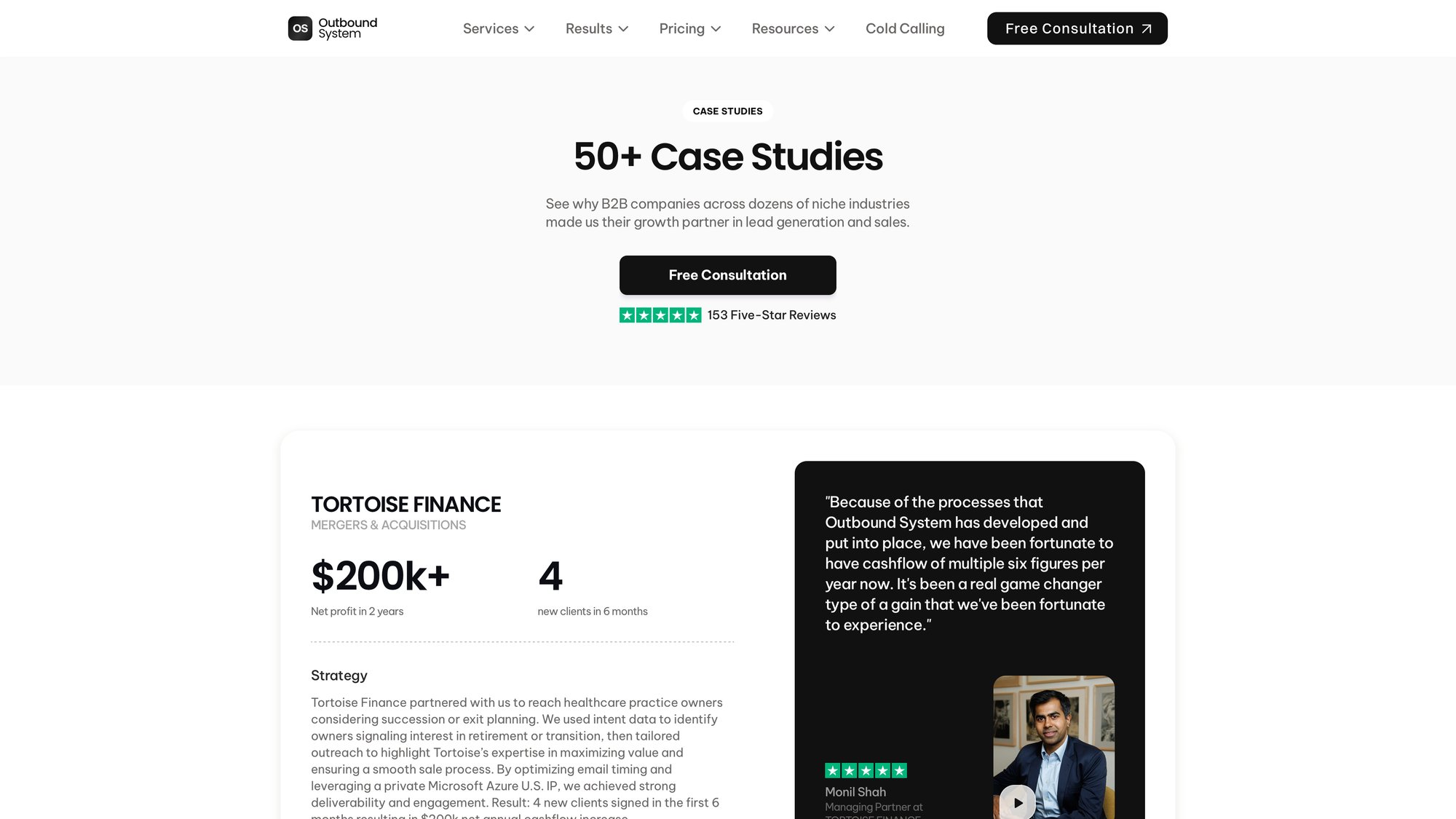
• An M&A advisory firm that realized $200K+ net profit in 2 years with 4 new clients closed in 6 months
• A manufacturing firm that booked 330 meetings in 12 months
Transparent Pricing, No Long-Term Commitments
We believe in month-to-month contracts with transparent pricing:
Plan | Price | What You Get |
|---|---|---|
Growth | $499/mo | 350 Microsoft U.S. IP inboxes, 5,000 unique leads/month, 10,000 emails/month |
Scale | $999/mo | 700 Microsoft U.S. IP inboxes, 10,000 unique leads/month, 20,000 emails/month |
Both plans include AI personalization, 9-step enrichment, unified inbox, real-time metrics, dedicated account strategist, direct CRM integrations, and A/B testing.
We also offer a Pay-Per-Lead option with unlimited Microsoft inboxes and unlimited monthly volume. Per-lead pricing is customized based on your industry, target market, and qualification criteria.
Get Started in 14 Days
Our advertised go-live timeline is 14 days for cold email implementation, covering target research, copy development, domain setup, inbox warmup, and campaign launch.
If you want to see if outbound is right for your business, book a free 15-minute consultation with our team. We'll discuss your goals, target market, and show you exactly how we'd build your outbound system.
No pressure, no obligation. Just a straightforward conversation about whether proactive outbound makes sense for your growth plans.
Outbound Sales in 2025: What's Working Now
Outbound sales is alive, well, and evolving.
In 2025, companies are using outbound not as a brute-force "spray and pray" tactic, but as a highly targeted, tech-empowered strategy to reach the right prospects with the right message.
When done correctly, outbound selling allows you to generate demand on your own terms. You're not waiting for the market to come to you. You're proactively creating opportunities.
This ability to proactively drive revenue is incredibly empowering for any business.
Let's recap the key points:
• Outbound sales means you initiate contact with prospects through channels like phone, email, and social media, as opposed to inbound where the customer comes to you. It's a proactive approach to sales development.
• It complements inbound sales. Outbound gives you speed and control to target ideal customers, while inbound provides warm leads over time. The two together create a robust sales pipeline.
• Successful outbound requires the right team structure (SDRs and AEs), a clear process from prospecting to closing, and relentless focus on the customer's needs at every touch.
• Key outbound tactics include cold calling, cold emailing, and LinkedIn outreach, often combined in a multi-touch cadence. Newer twists like social selling and direct mail can boost effectiveness when used thoughtfully.
• The outbound process involves identifying targets, sourcing leads, persistent outreach and follow-up, then engaging interested prospects in sales conversations and guiding them to a close (and beyond). Each step can be optimized and scaled with the help of modern sales tools.
• Adopting best practices (personalization, multi-channel contact, using scripts and automation, and continuously optimizing based on metrics) will dramatically improve your outbound results. Outbound is hard work, but smart strategies and consistency turn it into a repeatable revenue machine.
• Tracking key metrics (activities, response rates, conversions, etc.) lets you manage outbound sales like a science. Use data to learn and refine your approach each month, and you'll see your team's performance climb.
Perhaps most importantly, remember that outbound sales is about people.
Even with all the tools and automation available, at its core outbound is one person reaching out to another. Empathy, authenticity, and offering real value are what break through to busy prospects.
As buyers get more digitally fatigued, a genuine, personalized approach stands out even more. Outbound sales done right feels helpful, not spammy, to the recipient.
All the trends indicate outbound will remain crucial in the B2B landscape ahead. Buyers may not answer every cold call or email, but they will engage when a salesperson reaches out with relevance and insight at the right time.
By applying the guidance in this article (from clearly defining your targets, to crafting compelling outreach, to optimizing every stage), you can build an outbound sales "system" that consistently turns cold contacts into warm opportunities and revenue.
Finally, don't be afraid to seek help or invest in expertise.
Outbound sales can be challenging to scale on your own. Many companies partner with outbound lead generation experts (like Outbound System) or invest in training and tools to accelerate their success.
Whether you outsource or do it in-house, the fundamentals remain the same. Outbound sales success comes from a blend of strategy, persistence, and continuous improvement.
Armed with this knowledge, you're ready to tackle outbound sales and drive predictable growth for your business.
Happy selling. Go start those conversations.
FAQs: Your Outbound Sales Questions Answered
What's the difference between outbound and inbound sales?
In outbound sales, the sales rep initiates contact with prospects through cold calls, cold emails, or social outreach. In inbound sales, the prospect initiates contact by responding to marketing (filling out forms, downloading content, etc.). Outbound is proactive and seller-initiated; inbound is reactive and buyer-initiated.
Is outbound sales still effective in 2025?
Yes, very much so. Research shows that 82% of buyers will accept meetings when a seller reaches out proactively. Outbound offers speed to market, precise targeting, and control over pipeline generation that inbound alone can't match. The key is doing it strategically with personalization and multi-channel approaches rather than spray-and-pray tactics.
What are the main channels for outbound sales?
The primary outbound channels are cold calling, cold emailing, LinkedIn outreach and social selling, direct mail and gifting, and in-person networking at events. Most successful teams use a multi-channel approach, combining phone, email, and social touches in a coordinated cadence to maximize contact rates and engagement.
How many touches does it typically take to get a response?
It usually takes 5 to 8 touches to get a response from a cold prospect. Sales cycles can vary, but persistence is key. Most successful outbound campaigns use sequences that span 2 to 3 weeks with multiple touchpoints across different channels.
What's the role of an SDR in outbound sales?
A Sales Development Representative (SDR) focuses exclusively on outbound prospecting: sourcing leads, initiating contact, following up, and qualifying interested prospects. SDRs don't typically close deals. They pass qualified leads to Account Executives (AEs) who handle demos and closing. This division of labor makes the sales process more efficient.
What metrics should I track for outbound sales?
Key metrics include outbound activity volume (calls made, emails sent), engagement rates (call connect rate, email reply rate), meetings booked, conversion rate from meetings to customers, pipeline generated, deal size, Customer Acquisition Cost (CAC), and sales cycle length. Track metrics across the entire funnel from activities to outcomes to get a complete picture of performance.
How do I avoid coming across as spammy in outbound sales?
Focus on personalization and relevance. Research your prospects, segment your lists by industry or role, and tailor your messaging to their specific situation. Reference something specific about their business, address their pain points, and provide value in every touch. Use multiple channels thoughtfully, respect opt-outs and Do Not Call lists, and always comply with privacy regulations like GDPR.
What's the biggest mistake companies make with outbound sales?
The biggest mistake is poor targeting and lack of personalization. Too many companies use generic "spray and pray" approaches with broad lists and templated messages. Without a clearly defined ideal customer profile and personalized outreach, your team wastes effort on the wrong leads and gets poor response rates. Quality beats quantity when it comes to outbound prospecting.
How long does it take to see results from outbound sales?
Outbound can generate meetings within days or weeks, making it one of the fastest lead generation methods. But the full sales cycle (from first contact to closed deal) varies by industry and deal size. Simple B2B sales might close in 30 to 60 days, while enterprise deals can take 6 months or longer. The key advantage of outbound is that you can start seeing pipeline activity almost immediately.
Should I build an outbound sales team in-house or outsource it?
It depends on your resources, expertise, and growth stage. Building in-house gives you more control but requires hiring SDRs, investing in tools and infrastructure, and developing processes. Outsourcing to a specialized agency like Outbound System provides immediate access to proven infrastructure, deliverability expertise, and experienced teams without the overhead. Many companies start with outsourcing to validate the channel, then bring it in-house as they scale, or use a hybrid approach.