Most B2B companies are increasing their marketing budgets in 2025, and frontline functions like demand generation are among the top beneficiaries. The reason? Traditional quick-win lead generation tactics alone can't sustain growth anymore.
Today's B2B buyers are fundamentally different. 81% of sales reps report that buyers now research independently before ever contacting a vendor. Your prospects are doing their homework in private, comparing solutions, reading reviews, and consulting peers well before they're ready to talk to sales.
This shift means businesses need to create long-term interest and trust well before a prospect enters buy mode. You can't just push for immediate conversions. You need to build demand systematically.
This guide will show you how to build a demand generation engine that fills your pipeline with high-quality leads and drives sustainable revenue growth. We'll cover what B2B demand generation actually is, how it differs from lead gen, proven strategies (both inbound and outbound), best practices, metrics that matter, and the trends shaping the future.
By the end, you'll have a roadmap to create a demand gen system that works.
B2B Demand Generation vs Lead Generation: Key Differences
B2B demand generation is a comprehensive marketing strategy focused on creating awareness and interest in your product or service over the long term. It covers everything you do to attract, educate, and engage prospective buyers at every stage of their journey, well before they become sales leads.
Unlike traditional lead generation (which focuses narrowly on capturing contact info), demand generation casts a wider net. It's about building credibility, nurturing trust, and sparking desire for your solution over time.
Think of it this way: demand gen is the courtship, lead gen is the proposal.
Demand gen gets the right people to consider and want your brand. Lead gen then converts that interest into tangible prospects through form fills, demo requests, or direct outreach.
Research shows that if a famous athlete creates buzz around a new sneaker in viral videos, that's demand generation. When a retailer then collects interested fans' contact info or drives them to purchase, that's lead generation.
In practice:
Demand generation is typically top-of-funnel (content that educates or builds brand awareness)
Lead generation is mid-to-bottom-funnel (capturing leads via gated offers or outbound outreach)
Both are critical and work together. Strong demand gen makes lead gen far more effective.
The 95/5 Rule Every B2B Marketer Should Know
Here's a reality check: at any given time, only about 5% of your target market is actively in buy mode. The other 95% won't need your product until later.
Critical insight: Focusing only on in-market leads means overlooking a huge swath of future customers. This is exactly what demand generation addresses.
By delivering value and education consistently, you'll be top-of-mind when those buyers finally enter the market. You're planting seeds today that will bloom into pipeline months from now.
Why Traditional B2B Lead Generation Tactics No Longer Work
Modern B2B buying is buyer-centric and digitally driven. Consider these shifts:
How B2B Buyers Research Before Contacting Sales
Studies show 69-70% of the B2B buying process is completed before a prospect ever talks to sales. Buyers gather information anonymously through content, peers, and online communities.
This invisible activity happens in what marketers call the "dark funnel", where significant purchase decisions occur with no direct interaction with your company.
Actually, research finds three-quarters of B2B buyers prefer a rep-free, digital self-service journey for familiar purchases. Your marketing content and reputation do the heavy lifting before sales is even aware of a buyer.
Why B2B Sales Cycles Keep Getting Longer
B2B purchases involve more touches and people than ever. Recent research showed an average of 28.87 touchpoints (emails, ads, calls, meetings) are involved in a single B2B purchase.
Plus, buying decisions are now made by committee. Nowadays 12 to 13 stakeholders on average weigh in on major B2B purchases.
This complexity means your demand gen must engage multiple personas (economic buyers, technical evaluators, end-users) over an extended cycle. It's not a one-call close anymore. It requires strategic nurturing across channels.
How to Cut Through B2B Buyer Skepticism
Today's buyers are inundated with marketing. They've learned to tune out generic pitches and seek genuine value.
Effective demand gen recognizes this by offering helpful, relevant content rather than pushing salesy messages. The goal is to educate and build trust so buyers want to learn more.
Buyers also trust peers and third-parties more than vendors. They rely on review sites, industry influencers, and social media conversations that brands often have limited visibility into.
Demand gen must account for this by cultivating word-of-mouth and customer advocacy (reviews, case studies, referrals) to influence that invisible dialogue.

5 Core Components Every B2B Demand Generation Strategy Needs
Successfully generating demand involves a mix of demand creation (sparking new interest) and demand capture (harvesting existing interest). It requires both inbound and outbound approaches.
Here are the core components:
How to Define Your Ideal Customer Profile for Demand Gen
Everything starts with clearly defining who you want to attract. Develop detailed ICPs and buyer personas that pinpoint the industries, company size, job titles, and pain points that match your solution.
A well-defined ICP ensures your content and campaigns speak to real needs and you aren't wasting resources on poor-fit leads.
At Outbound System, we integrate data from large B2B databases and use a 9-step verification process to zero in on high-fit contacts, ensuring we reach the right people with accurate information.
Best Content Marketing Tactics for Creating Demand
With your target defined, the next step is getting on their radar and piquing interest. In this top-of-funnel stage, marketers use inbound tactics to attract prospects:
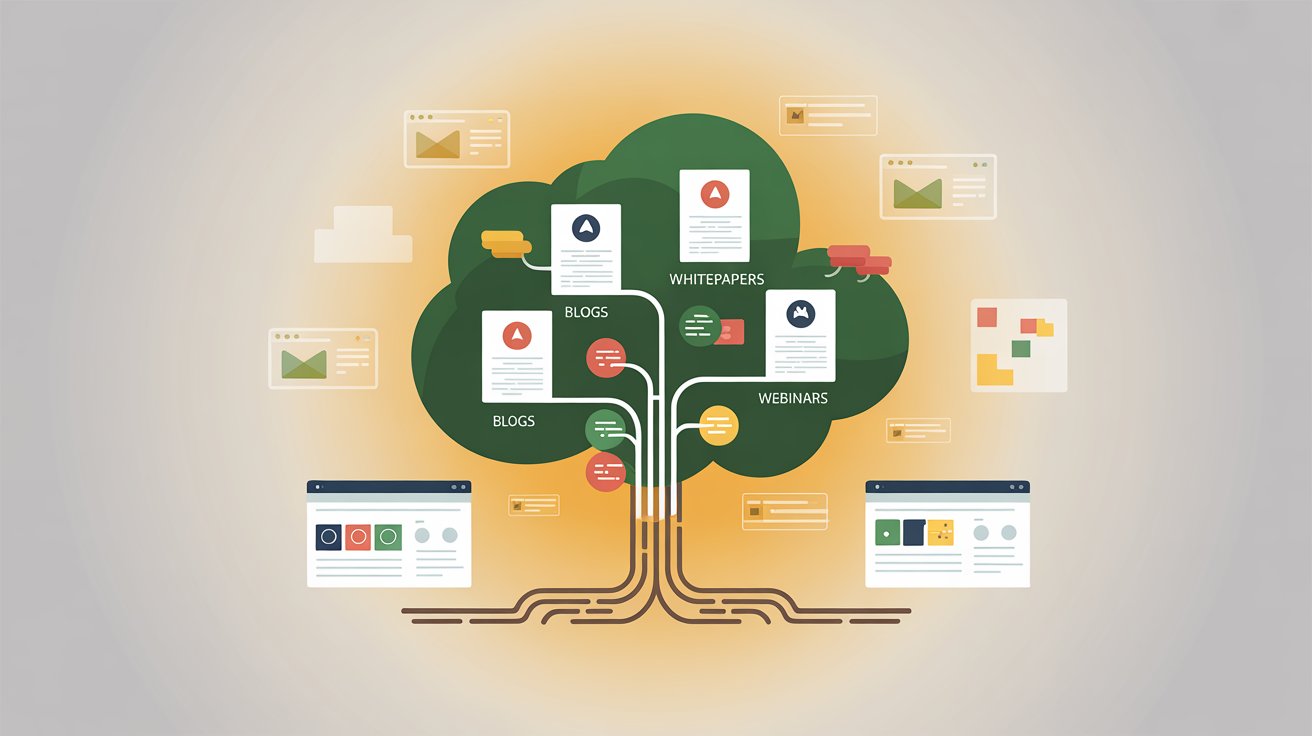
• Content marketing (blog posts, whitepapers, research reports, videos)
• SEO (so your content ranks when they search a problem)
• Social media (organic posts on LinkedIn, Twitter)
• Webinars and virtual events
• Podcasts and industry PR
The focus here is educational, thought leadership content that addresses your audience's pain points. You're positioning your brand as a helpful authority so prospects start to realize a need they hadn't considered before.
Demand creation is like planting seeds. You're warming up the audience over time, creating latent demand.
How to Capture and Convert Interested Prospects
As prospects move from unaware to aware and interested, you deploy tactics to capture that interest and convert it into leads.
This often involves more targeted, mid-funnel content:
• Offering a gated ebook or free tool in exchange for contact details
• Sending personalized outreach emails to prospects who engaged with content
• Retargeting interested accounts with paid ads
• Inviting warm prospects to a free trial or demo
Account-based marketing comes into play heavily here. You focus capture efforts on high-value target accounts with personalized touches (custom demos, tailored microsites) to turn interest into qualified opportunities.
The idea is to meet the buyer with the right offer at the right time. Once you've stoked the fire, now you fan the flames.
Many modern marketers avoid over-relying on gated content too early. Provide value first, nurture before you ask for info. Don't make everything transactional from the start.
How to Qualify and Hand Off Leads to Sales
Effective demand gen doesn't end at collecting an email. It ensures marketing and sales work together to qualify leads and continue the conversation smoothly.
This involves:
Lead scoring (using behavior or intent data to rate how sales-ready someone is)
Progressive profiling to gather more info
SDR team to vet and set appointments
The key is strong sales and marketing alignment. Agree on what constitutes a Marketing Qualified Lead (MQL), how and when it becomes a Sales Qualified Lead (SQL), and nurture those not yet ready.
At Outbound System, our process uses AI to analyze replies and instantly notify sales of hot leads, with CRM integration to ensure no lead slips through.
Best Practices for Long-Term Lead Nurturing Campaigns
Not all prospects captured will be ready to buy now. In fact, most won't.
Demand gen involves long-term nurturing of leads that aren't yet sales-ready. This is where marketing automation shines:
→ Dripping useful content via email workflows
→ Inviting leads to future webinars
→ Retargeting them with new content
→ Direct mail or personal touches over time
Multi-touch, multi-channel nurture is crucial given those ~29 touchpoints on average. The goal is to stay top-of-mind and deepen the prospect's knowledge of how you can help, without being pushy.
When done well, the moment a prospect experiences the pain point you solve, your company will be the first partner they think of.
Inbound vs Outbound Demand Generation (You Need Both)
Before diving into specific tactics, let's clarify the two primary approaches:
What Is Inbound Demand Generation?
Inbound refers to tactics that pull prospects in by aligning with their existing interests or searches.
Examples:
• Content marketing and blogging
• SEO optimization
• Organic social posts
• Webinars and newsletters
The advantage of inbound is that prospects who engage are somewhat self-qualified (they found you). The challenge is volume and patience. Inbound can take time to build momentum, but it pays dividends in trust.
A strong inbound engine attracts motivated buyers organically.
What Is Outbound Demand Generation?
Outbound refers to proactively reaching out to prospects who haven't necessarily engaged with you yet.
Examples:
• Direct mail
• Paid advertising (LinkedIn ads, Google Ads)
Outbound is about creating opportunities from scratch. You identify target accounts or segments and initiate contact to introduce your solution.
It can be more interruptive by nature, but outbound is powerful for reaching the "hidden prospects" you'd otherwise miss. ABM is largely outbound (you don't wait for Dream Client Co. to find your blog; you strategically approach them with personalized outreach).
Modern outbound gets a bad rap when done poorly (generic spam), but when done well (highly targeted, personalized, value-focused), it can uncover huge demand.
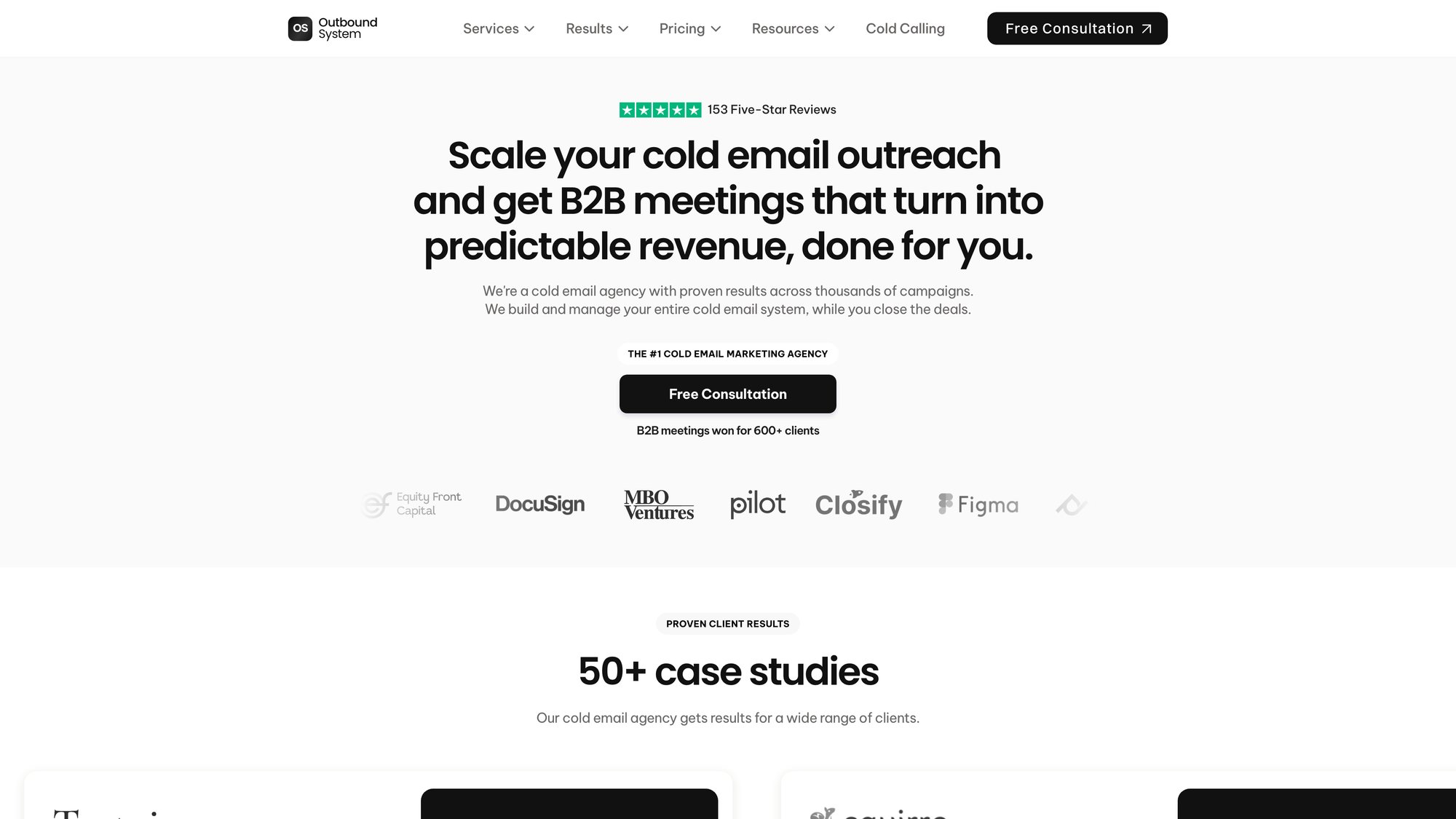
At Outbound System, we use personalized cold emails at scale via hundreds of warmed-up mailboxes to reach prospects. Our results? 85-98% email inbox placement and response rates of 6-7% (which is 3X industry averages) by using quality data and human-crafted, personalized messages.
The takeaway: a balanced demand gen strategy uses both inbound and outbound. Inbound fills the funnel over time; outbound adds targeted boost and accelerates pipeline.
7 Proven B2B Demand Generation Strategies That Work
Top-performing programs deploy a mix of tactics across multiple channels to engage buyers wherever they are. Below are the major strategies and how to use them effectively.
How to Use Content Marketing for B2B Demand Generation
At the heart of inbound demand gen is content marketing. High-quality content is often cited as the number one driver of B2B awareness and lead generation.
91% of B2B marketers use content marketing to reach customers. The goal is to provide genuinely useful resources that address your audience's challenges.
Content Types That Generate B2B Demand
In-depth blog posts and guides: Publish articles that answer common questions your buyers have. Aim to become a go-to knowledge source in your niche. This attracts organic traffic via SEO and builds credibility.
Whitepapers, ebooks, and research reports: Gated long-form content can be used for pure education (demand creation) or to capture leads (demand capture). Consider releasing insightful studies or comprehensive guides that people would exchange an email to get.
Webinars and virtual events: Hosting webinars with valuable lessons or expert panels is a great way to attract new names and nurture existing prospects. Webinars position your team as experts and allow for direct engagement through Q&A.
Video and multimedia: B2B buyers consume video content more than ever. 87% of B2B marketers plan to increase video spend because video is highly engaging for complex topics. Explainer videos, product demos, customer testimonials, or short social videos all feed demand gen.
Third-party content and PR: Getting featured in industry publications, podcasts, or speaking at conferences drives demand. This is borrowed inbound (tapping into audiences that others have built). It boosts credibility through implied endorsement.
Pro tip: Align content to stages of the buyer's journey. Use thought leadership for early-stage awareness, case studies for consideration stage, and ROI calculators for late-stage.
Every piece of content should tie back to your value propositions or the problems you solve (subtly). Consistency is key. A prospect may read a blog today, attend a webinar next month, and see a video later. Each touch reinforces your expertise.
Over 6-12 months, a library of strong content creates a self-sustaining lead magnet for your business.
How to Rank for B2B Demand Generation Keywords
SEO goes hand-in-hand with content. When your potential buyers turn to Google with a problem or research query, your content should be what they find.
Ranking well for relevant searches can continuously bring in highly qualified traffic.
Why SEO matters for demand gen: When someone searches for a solution you offer, appearing in their results means you're discoverable at the exact moment they need you. That's demand capture at its finest.
SEO tactics that drive B2B demand:
① Keyword strategy: Identify topics and search terms your ICP might use at different stages. For early-stage awareness, use problem-oriented keywords. For later-stage, use solution-oriented or comparison keywords.
② On-page optimization: Ensure your content pages have relevant titles, headings, meta descriptions, and readability. Optimize for intent. If someone searches "X vs Y comparison", a blog that directly compares the two will perform better.
③ Link building and authority: Get credible sites to link to your content, which boosts search rankings. Promote your high-value content via outreach, ask partners to share it, consider guest posts.
④ Technical SEO: Make sure your site is fast loading, mobile-friendly, and indexable by search engines. Technical issues can sabotage great content.
SEO is a long-term asset. Improving from page 5 to page 1 on a high-intent keyword could yield a steady stream of prospects who are literally searching for a solution like yours. Those inbound leads often convert at high rates since they came in with intent.
How to Use LinkedIn and Social Media for Demand Generation
Social media has evolved into a powerful demand gen engine in B2B. Platforms like LinkedIn let you reach and engage professionals in a more personal, interactive way.
Consider that 89% of B2B marketers use LinkedIn for lead generation, making it the top social channel in B2B marketing.

Best social media tactics for B2B demand gen:
Organic social content: Share your content across company and personal profiles. But don't just broadcast. Engage. On LinkedIn, encourage your leaders and subject matter experts to post insights, start conversations, and comment on industry discussions.
Employee advocacy is huge. When your team members share and add their perspective, it exponentially increases your reach. Buyers are more likely to trust individuals than brand handles.
Live streams and interactive posts: Features like LinkedIn Live, Twitter chats, or webinars streamed on social create buzz. Interactive content (polls, questions, short videos) often get high engagement. These not only spread awareness but provide fodder for sales follow-ups.
Social listening and engagement: Use social media to listen for pain points or buying signals. Sales teams can monitor posts in LinkedIn groups to identify people asking questions that your product can answer. Marketing can then provide helpful answers (never a hard sell in public, but offering tips or a resource link).
Paid social campaigns: Platforms like LinkedIn and Facebook offer highly targeted advertising options. You can run ads aimed at very specific audiences (IT directors at Fortune 1000 in healthcare, for example). Paid social is excellent for putting content offers in front of the right eyes quickly.
Industry communities and forums: Outside of mainstream social networks, many industries have thriving online communities (Slack groups, Discord servers, Reddit communities, niche forums). Participating in these communities can generate demand in a subtle but powerful way.
By contributing advice and answering questions (with no or soft mention of your product), you build a reputation and often draw people to check out your company. Much of the buyer's journey happens in these peer discussions that are invisible to most analytics.
One caution: Social media demand gen requires a human touch. Users scroll quickly past overt ads or corporate-speak. Success comes from authentic engagement (real employees evangelizing, helpful content that doesn't feel like an ad, responding to people sincerely).
How to Set Up Email Nurture Campaigns That Convert
Email remains the workhorse of B2B marketing. 50% of B2B marketers say email is their most effective channel for distributing content.
For demand gen, email is used in several ways:
Drip campaigns for new leads: When someone downloads a resource or signs up for a webinar, set up an automated email sequence to follow up. The first email delivers what was promised. Subsequent emails offer additional related content, case studies, or an invite to speak with an expert.
The tone should be consultative, not aggressively salesy. You're continuing to educate and build trust.
Lead nurturing newsletters: Many companies run regular email newsletters that share recent blog posts, industry news, or tips. This keeps your brand in front of prospects on a consistent basis.
Personalized one-to-one outreach: For high-value accounts or critical points in the journey, a personalized email from a person (not just automated marketing email) can go a long way. Use marketing automation to flag significant behaviors (visiting the pricing page twice, or a surge in email clicks) and have sales send a personal email at those trigger points.
Cold email prospecting: This overlaps with outbound, but it's worth noting: cold email, when targeted and personalized, can generate new interest effectively.
The caveat is that response rates on truly cold emails are typically low (~1-2% is common). But with improved techniques (small-batch sends from proper domains, highly customized messaging, follow-up sequences, verified data), some companies see much higher engagement.
Through deliverability engineering and AI-personalized copy, Outbound System reports 6-7% cold email response rates and 98% inbox placement (versus industry averages of ~85% deliverability).
The lesson: cold email is still alive, but you must invest in quality over quantity. Spray-and-pray blasts will just end up in spam.
Write emails that feel one-to-one. Focus on the prospect's pain and how you can help. Always include a clear but low-pressure call-to-action (asking a question or offering a piece of content).
Re-engagement campaigns: Don't forget to re-engage older contacts or closed/lost opportunities. A periodic "we thought you might find this new resource interesting" email to lapsed leads can reignite conversations if their situation has changed.
Email is powerful because it's direct and personal (you're landing in someone's inbox, which is still a primary workspace for professionals). Treat that privilege with respect. Never spam, always provide value or relevance, and make it easy to opt-out.
How to Implement Account-Based Marketing for High-Value Accounts
ABM is essentially a concentrated form of demand gen where you treat individual high-value accounts as markets of one. Instead of broad campaigns, you create highly tailored programs for a shortlist of strategic accounts.
ABM has exploded in popularity because it directly aligns sales and marketing on the same goals and often yields higher ROI on those accounts.
Key elements of successful ABM campaigns:
Customized content and experiences: For an ABM account, you might create an entire mini-campaign just for them. Examples include:
→ A personalized landing page addressing the account's specific challenges
→ A whitepaper that uses their industry's data
→ A custom webinar just for that account's team
→ Physical direct mail packages with custom gifts related to their business
The point is to demonstrate a deep understanding of the account and provide value that no generic campaign could.
Multichannel, orchestrated outreach: ABM typically uses a combination of channels in a coordinated way. You run LinkedIn ads that only the target account sees (via IP or company targeting), while your sales reps simultaneously perform outreach via email or phone, and your executives connect with their executives on LinkedIn.
This surround-sound approach increases the likelihood of breaking through. They see your company everywhere.
Sales and marketing alignment: ABM blurs the lines between marketing and sales. Often you have cross-functional teams focusing on groups of accounts. Marketing provides air cover and content, sales provides human-to-human connection and follow-up.
Metrics and ROI focus: ABM is very metrics-driven but in a different way. Instead of volume of leads, you track engagement at the account level. Are we getting meetings with that target account? How much pipeline did we generate from the ABM list?
ABM Benefit | Impact | Evidence |
|---|---|---|
Deal Size | Larger average contracts | 58% of marketers said deal sizes increased with ABM programs |
Revenue Attribution | Higher revenue per account | Companies report 77% of revenue growth tied to ABM initiatives |
Budget Allocation | Increased investment | 66% of companies planned to increase ABM spending |
These stats underscore why ABM is almost a no-brainer as part of demand gen for organizations with complex B2B sales (high annual contract value). Even if you don't formalize a big ABM program, you can apply ABM principles to your top 10 or 20 accounts with a bit of extra personalization and coordination.

How to Scale Demand Generation with Paid Advertising
While inbound methods are vital, sometimes you need an extra push. That's where paid demand gen campaigns come in.
Paid advertising can generate demand by increasing your exposure quickly and targeting very specific audiences or keywords.
Two main paid advertising channels for B2B:
Paid Search (SEM): Running pay-per-click search ads (Google Ads) ensures you capture demand from people actively searching relevant terms. If you're in a competitive market, appearing at the top of search results for high-intent queries can be the difference between a prospect calling you or a competitor.
The advantage of search ads is high intent targeting (you know exactly what the user is looking for). The downside is cost (popular keywords in B2B can be expensive per click) and that it's typically capturing existing demand.
That said, allocate budget to ensure you're present for your core solution keywords so you don't lose those ready buyers.
Paid Social and Display: Platforms like LinkedIn, Facebook, Twitter, and programmatic display networks allow for ads that target by demographics, firmographics, or interests. Use these to promote content for demand gen (a LinkedIn ad campaign offering a free industry report download to your target job titles, for example).
This can pull in new people who match your ICP but weren't actively searching (demand creation).
A newer twist is account-based advertising (using ad platforms to specifically target your ABM list with ads). This ensures those accounts see your content everywhere.
Remarketing: A special mention for remarketing (showing ads to people who have already visited your website or content). These are low-hanging fruit; they know your brand. A common play is to pixel your site visitors and then show them ads over the next few weeks that highlight customer testimonials or offer a demo.
Paid campaigns should be tightly integrated with your overall strategy. Coordinate the messaging with your other channels. Also, track results diligently (look at conversion rates, cost per lead, and down-funnel metrics from each paid effort to optimize budget allocation).
How to Use Events and Direct Outreach for Demand Generation
While digital dominates, don't overlook the impact of human and physical engagement in B2B demand gen:
In-person and Virtual Events: Trade shows, conferences, and field events (luncheons, workshops) have come back strong. Nothing builds a relationship like face-to-face interaction.
Events are great for demand gen because they often attract a qualified audience in one place. Ensure you have a plan to capture leads (badge scans, giveaway contests) and follow up promptly after.
Direct Mail Gifts: In the era of endless emails, a tangible package in the actual mail can delight and differentiate. Some companies use direct mail as part of ABM (sending a small but thoughtful gift to target execs with personalization can warm them up to accepting a meeting).
For demand gen, you might send a new prospect a surprise like a book relevant to their industry, along with a handwritten note. It's a way to create goodwill and reciprocity.
Outbound Calling (Phone Outreach): Cold calling or warm calling is still an effective touch in many industries. While some buyers screen calls or prefer digital, others appreciate a quick human conversation if you truly have something relevant for them.
The phone can particularly cut through in later stages. Calling a webinar attendee to get their feedback and see if they have questions can advance them more in 10 minutes than weeks of email tag.
If using cold calls, do your homework and never read a generic script. Today it's about quality conversations, not volume.
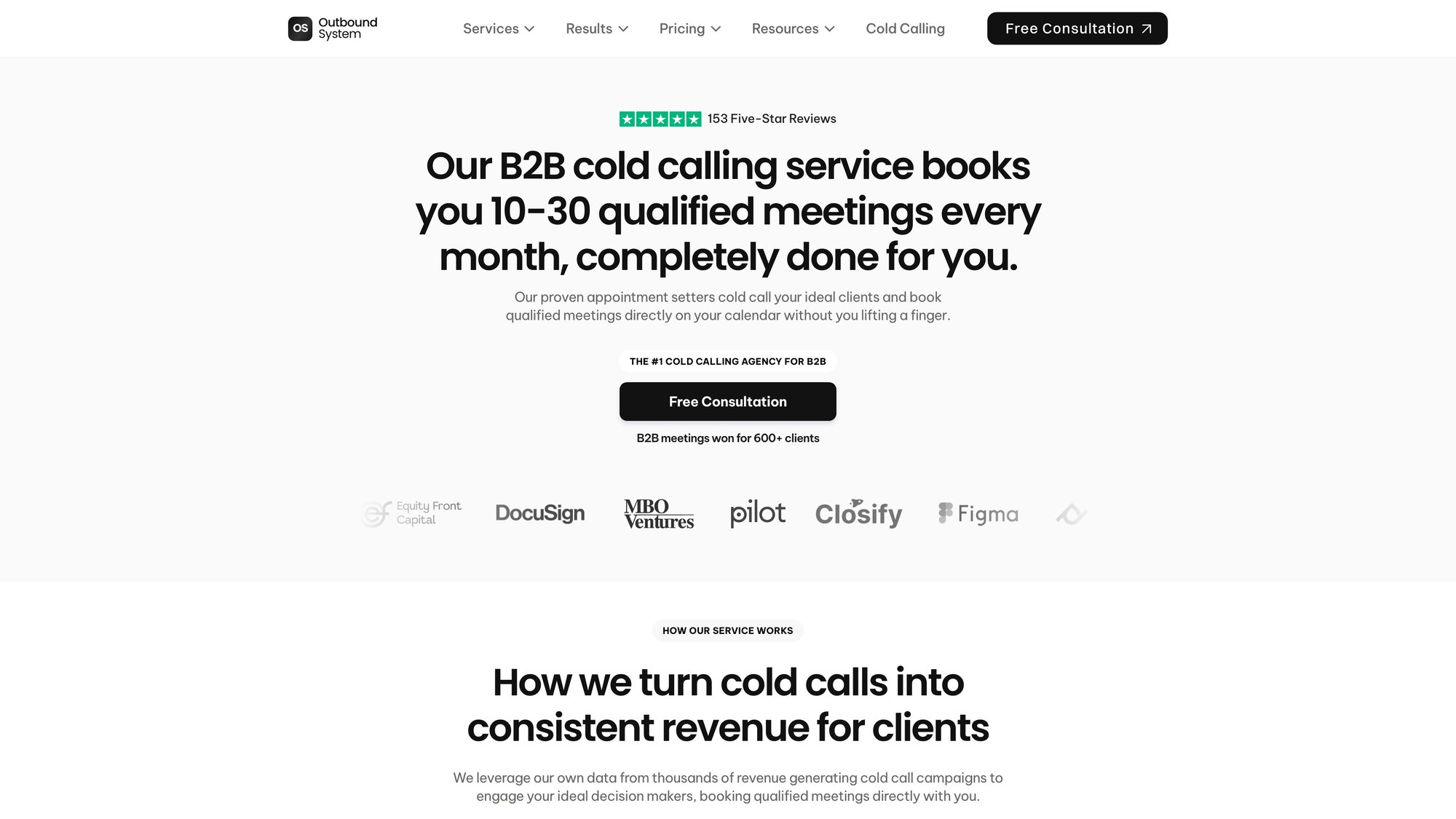
Outbound System even offers a managed cold calling service, showing that many companies still see phone outreach as a key part of a multi-channel strategy, especially to secure meetings that emails might not.
In summary, multi-channel is the name of the game. No single tactic will carry your demand gen; the magic is in how you combine them. A prospect might first encounter your brand through a LinkedIn post, later read a blog via Google, then attend your webinar, get nurtured by email, and finally have a meeting booked after a friendly call.
If any link in that chain were missing, the conversion might not have happened.
7 Best Practices Every B2B Demand Generation Team Should Follow
Even with great tactics in play, success in B2B demand gen often comes down to execution and strategy. Here are seven key best practices followed by leading demand gen teams:
How to Nail Your ICP and Targeting Strategy
Everything starts with knowing exactly who you're targeting. A well-defined Ideal Customer Profile (ICP) is the compass for your demand gen strategy.
If you cast too wide a net, your content and campaigns will be too generic to resonate (and you'll attract unqualified leads). If you get too narrow, you might not have enough audience to work with.
Invest the time in research and data to identify the industries, company sizes, geographies, and buyer personas that are most valuable. Then ensure everyone on your team knows this ICP description by heart.
Use tools and data to refine your targeting continually. Draw from sources like your CRM data, LinkedIn insights, third-party data vendors, and analytics on who is engaging with your content.
In practice, tight targeting means your messaging will hit the mark. You can speak the language of the specific buyer and industry, which dramatically improves response rates.
For instance, an email subject line referencing a pain point specific to SaaS CMOs will outperform a generic one about "increasing revenue" sent to everyone.
As the saying goes, if you try to market to everyone, you market to no one.
How to Offer Value First in Your Demand Gen Strategy
In demand gen, patience and value delivery are virtues. Don't approach prospects with a sales pitch right off the bat.
Core philosophy: The brands that provide genuine value upfront (without asking for anything in return) earn trust faster and convert better over time.
Instead, offer value upfront in the form of education, insights, or useful tools. This could mean:
• Sending a whitepaper with new research
• Providing a template that helps them in their job
• Inviting them to a no-strings-attached workshop
By leading with value, you build goodwill and curiosity. The prospect starts to think, "If I'm getting this much free value, imagine what working with them might do."
This philosophy applies across channels. Your blog posts should genuinely help readers solve problems (not just teasers that require buying your product). Your sales outreach could start by sharing a relevant case study or industry tip, rather than asking for a meeting in the first touch.
Resist the urge to immediately gate everything. Yes, we ultimately want leads, but gating too early can scare off the very audience you need to nurture.
Many modern marketers are adopting "open hand" content strategies where you give a lot away publicly, and only gate the most bottom-of-funnel offers. Research explicitly recommends moving away from gating assets as the primary way to get leads because buyers are tiring of forms and will find information elsewhere.
A practical example: Let's say you run a demand gen campaign on LinkedIn offering a free "ROI calculator" spreadsheet for your target industry. Prospects can download it without filling a form. You pixel those visitors for later retargeting, but you've removed friction upfront.
Thousands may use the tool; you only follow up with those who show deeper engagement (maybe they also check your pricing page or voluntarily contact you). The others still got value and have a positive view of your brand, planting seeds for later.
Offering value first is a long-term investment in demand.
How to Build a Multi-Channel Demand Generation Program
Diversify your demand gen channels. Don't put all your eggs in one basket.
We've discussed a gamut of tactics (content, email, social, ads, events) for a reason: your buyers are scattered across various platforms and have individual preferences on how they like to engage.
A multi-channel strategy ensures you intercept opportunities wherever they arise. It also reinforces your message through repetition in different formats.
Coordinate your campaigns across channels for maximum impact. If you're running a quarterly campaign around a certain theme (say, the launch of a new product feature), you might do all of the following in concert:
① Publish blog articles on the theme
② Push those articles on social
③ Run a webinar discussing the use case
④ Promote the webinar via email and paid ads
⑤ Have sales follow up one-on-one with attendees or high-fit prospects
The multi-pronged attack means a prospect might encounter your theme in a LinkedIn post, see an ad about it the next day, and then get an invite to the webinar the next week. By the third touch, it clicks and they register.
Had you only done one channel, you might have missed them.
Multi-channel also allows prospects to self-select into the channel they prefer. One prospect might ignore cold emails but engage on LinkedIn. Another might love reading your newsletter but never attend live webinars.
By being present in many places, you let them choose the path of least resistance to engage.
However, multi-channel doesn't mean doing everything everywhere blindly. Be strategic. Choose the channels that your ICP actually uses. It's better to actively manage a handful of channels well than to stretch thin on 10 channels.
How to Use Intent Data to Prioritize Hot Prospects
One of the biggest advances in B2B marketing recently is the availability of intent data (information that indicates a company or person is actively researching or showing signs of needing a solution like yours).
Examples:
→ A prospect visiting specific pages on your website (like case studies or pricing)
→ A company's employees reading articles on third-party sites about relevant topics
→ Engagement with competitor content
There are tools that compile these signals and help you prioritize the "hottest" prospects and personalize outreach based on their interests.
For instance, if your intent tool says Company X has surged on "CRM software" searches recently, and you sell a CRM add-on, that's a prompt to have sales reach out or to add Company X to an ABM campaign immediately.
It beats cold-calling random lists because you're focusing on those with active interest.
Even without fancy third-party data, you can use first-party intent signals from your own web analytics and marketing automation:
• Track repeat website visitors
• Identify which content topics a lead has engaged with most
• Use lead scoring models to surface likely buyers
The mantra is work smarter, not just harder. If you know a prospect is researching what you offer, your outreach can cut to the chase and address what's on their mind.
Companies that integrate intent data see improved efficiency. Marketing focuses on accounts ready to engage, and sales spends time on leads likely to convert.
How to Align Sales and Marketing for Demand Generation Success
Demand generation is a team sport that doesn't succeed if sales and marketing operate in silos. Alignment is absolutely crucial.
Both departments must share goals, feedback, and a unified process.
What good sales and marketing alignment looks like:
Shared definitions and metrics: Collaboratively define what counts as a Marketing Qualified Lead, Sales Accepted Lead, etc. Agree on SLAs for follow-up (e.g. sales will contact an MQL within X days).
Have common goals. Marketing's target might not just be number of leads, but pipeline created or revenue influenced, which ties them to sales outcomes.
Regular communication: Hold frequent sales-marketing meetings to discuss lead quality, pipeline status, and upcoming campaigns. Marketing should brief sales on new content or campaigns so reps know what prospects might be responding to.
Sales should brief marketing on the front-line learnings ("We're getting a lot of interest in feature Z" or "Prospects aren't understanding X, can we create content to explain it?").
This ensures your demand gen messaging stays relevant and sales is equipped to capitalize on the interest marketing generates.
Collaborate on content and targeting: Involve sales in shaping campaign themes or content topics (they often know which hooks resonate). When marketing scores a big win (say an eBook that's getting tons of downloads), make sure sales knows to use that asset in their outreach.
Use technology to unify efforts: Ensure your CRM and marketing automation are tightly integrated so both teams see the full picture of prospect interactions. Use shared dashboards that track the entire funnel from lead to revenue.
When sales and marketing act as one, prospects don't slip through cracks or suffer disjointed experiences. There's accountability (marketing isn't just tossing leads over the fence, and sales isn't ignoring the groundwork marketing laid).
Aligned teams see higher conversion rates and better ROI on marketing spend. Companies with strong sales-marketing alignment can be up to 67% more effective at closing deals.
How to Test and Optimize Your Demand Generation Campaigns
Demand generation is not a "set and forget" activity. The best programs adopt a culture of continuous improvement.
This means constantly analyzing what's working (and what's not) at each stage of the funnel and making adjustments.
Key optimization practices:
A/B testing: Wherever feasible, run experiments. Test two versions of a landing page (different headline or form length) to see which converts better. Test different email subject lines or call-to-action wording. Try variations of ad creatives.
When you find a winner, iterate further or roll it out broader. These incremental gains add up to significantly more leads over time.
For example, finding an email subject that boosts open rates from 20% to 25% is a 5-point gain; applied to thousands of emails, that's a lot more prospects reading your message.
Monitor funnel metrics: Keep a close eye on conversion rates at each stage. What percent of website visitors convert to leads? What percent of leads schedule a meeting? What percent of opportunities close?
If you see drop-offs or long stagnations, dig in. Maybe your lead handoff process is leaky. Perhaps leads from Channel A rarely convert to SQL (maybe the quality is low; either refine targeting or shift budget elsewhere).
Retarget and recycle: Optimization isn't only about new leads; it's also about maximizing the value of existing ones. Implement retargeting campaigns to recapture those who didn't convert initially.
Also, recycle leads intelligently. If a promising lead went cold, put them back into a nurture stream and try to re-engage after some time with new content or offers. Don't give up on good fits just because they said "not now" (circumstances change).
Pay attention to engagement signals: Use your analytics. If certain blog posts or content offers are getting disproportionately high engagement, capitalize on that. Perhaps turn that popular blog topic into a webinar or video. If a particular webinar had low attendance, assess why (wrong topic? Poor promotion?). Learn and adjust for next time.
Stay agile: The market and buyer behaviors can change quickly. Be ready to pivot messaging or tactics. For instance, if a new social platform gains popularity among your audience, be willing to test it.
Build slack into your plans for trying new approaches each quarter on a small scale. Some will flop, but the ones that succeed keep you ahead of the curve.
The underlying mindset is to treat demand gen as an iterative process of hypothesis → execute → measure → refine. This data-driven approach will ensure your program keeps getting more efficient and effective.
What Metrics to Track for Demand Generation ROI
It's easy to get caught in the weeds of marketing metrics (likes, clicks, opens, MQL counts). But remember, the ultimate goal of demand gen is not to generate "leads" per se; it's to generate revenue (or at least pipeline that turns into revenue).
You need to measure success on the metrics that truly matter to the business and indicate real impact.
Key demand generation metrics and KPIs to track:
Metric | What It Measures | Why It Matters |
|---|---|---|
Customer Acquisition Cost (CAC) | Total marketing+sales cost ÷ new customers | Ensures your demand gen is efficient. If costs are creeping up, you need to optimize. Average B2B CAC is around $1,450. |
Pipeline Contribution | Sales pipeline ($$$) sourced or influenced by marketing | More telling than raw lead counts. Shows real revenue potential from marketing efforts. |
MQL-to-SQL Conversion | % of marketing qualified leads that become sales qualified | Measures lead quality. If you generate tons of MQLs but low percentage become real opportunities, you might be casting too wide. |
Lead Velocity | How quickly leads move through stages | A healthy demand gen engine supplies volume AND helps shorten the sales cycle by delivering educated prospects. |
Customer Lifetime Value (CLV) | Total revenue a customer generates over their lifetime | Do leads from certain sources end up being higher-value customers? That insight informs where you focus. |
One metric you should not obsess over in isolation is the open rate of emails. Technology changes have inflated those figures and made them unreliable. Instead, look at downstream actions (did the email drive a click or a reply?).
Similarly, vanity metrics like raw website traffic or social likes mean little if they don't convert further. Always tie back to pipeline or meaningful engagement.
By focusing on meaningful metrics, you keep your demand gen efforts accountable and aligned to business goals. It also earns trust with leadership.
When you can say, "Marketing generated $5M in pipeline this quarter at an avg. $500 CPL and $5k CAC, with an expected 5x ROI on spend," that's music to any CFO's ears. It shows marketing is not a cost center but a revenue driver.
Essential B2B Demand Generation Tools and Technology Stack
Executing a sophisticated demand gen strategy requires support from technology (collectively referred to as the marketing tech stack).
While tools can't replace strategy or creativity, they are essential for scaling your efforts and gaining the data insights we've been discussing.
Key tool categories for B2B demand generation:
Tool Category | Purpose | Examples |
|---|---|---|
CRM System | Central database for leads, contacts, accounts, and deals | Salesforce, HubSpot, Pipedrive |
Marketing Automation | Automate email campaigns, lead scoring, nurturing workflows | HubSpot, Marketo, Pardot, Eloqua |
CMS | Manage website and blog content | WordPress, HubSpot CMS, Webflow |
Analytics | Web and marketing analytics, attribution | Google Analytics, Adobe Analytics |
Advertising/SEO | Paid channel management and organic optimization | Google Ads, LinkedIn Campaign Manager, SEMrush, Ahrefs |
Intent Data/ABM | Identify in-market accounts, target high-value prospects | 6sense, Demandbase, ZoomInfo, Bombora |
Lead Enrichment | Data providers for finding and verifying contact info | ZoomInfo, Clearbit, Hunter |
At Outbound System, we implement multi-step verification to maintain clean lists. Our 9-step email enrichment ensures minimal bounces and maximizes deliverability.
Compliance and Security: With regulations like GDPR and CCPA, make sure your tools help manage consent (opt-in forms, unsubscribe handling) and data protection. Trust is also a demand gen factor (you don't want to damage your reputation with a data leak or spam complaint issue).
When evaluating tools, focus on how they integrate and support a unified view of the customer. Siloed data is the enemy of effective demand gen.
Many opt for an all-in-one platform (like HubSpot which combines CRM + automation + CMS) for smaller teams, whereas larger enterprises might use a customized stack of best-in-breed tools connected via integrations.
Be careful not to succumb to "shiny object syndrome" (buying fancy AI-driven tools you don't actually need). Always start with strategy and process, then choose tools that fill those needs.
Top B2B Demand Generation Trends to Watch in 2025
The marketing world never stands still. Several emerging trends and shifts are impacting how B2B demand generation is done, and these will likely grow in importance in coming years.
How AI Is Transforming B2B Demand Generation
Perhaps the hottest topic (the rise of AI in marketing). Generative AI (like GPT-4 and similar) is enabling new levels of content creation and personalization at scale.
For demand gen, AI tools can help:
• Write customized email intro lines
• Generate targeted ad copy variations
• Dynamically personalize website content for each visitor
• Crunch data to find patterns (which behaviors indicate a high intent lead)
The promise is hyper-personalized campaigns delivered more efficiently. Even smaller companies can now access AI tools, not just enterprises.
That said, there's a learning curve. Industry experts suggest investing in AI literacy (training your team) before going all-in, to ensure you use it smartly and ethically.
The takeaway: expect AI to increasingly assist (not replace) marketers, handling grunt work and providing data-driven suggestions so you can focus on strategy and creativity.
How Data Privacy Laws Are Changing Demand Generation
On the flip side of data abundance, privacy regulations and changes (like the death of third-party cookies) are making some traditional tracking and targeting methods less effective.
GDPR, CCPA, and similar laws worldwide mean marketers need to be very careful with data collection and respect user consent. Google's phasing out of third-party cookies in Chrome will limit retargeting and third-party intent data collection.
The trend is toward first-party data (data you collect directly from your audience with permission) becoming gold.
Smart demand gen marketers are finding ways to encourage data sharing (through useful content and trust) and building robust first-party databases. Contextual advertising (targeting based on content context rather than personal data) may also see a comeback.
Privacy is both a challenge and an opportunity. Companies that are transparent and respectful can differentiate themselves and build trust, whereas those that misuse data will face backlash.
Why B2B Buyers Prefer Self-Service Over Sales Calls
As noted, a growing number of B2B buyers (especially younger ones) prefer to avoid sales calls and do most everything online until it's absolutely necessary.
Some are calling this the era of the "self-serve" or even "no-touch" sales model for simpler offerings.
This trend pushes demand gen to deliver more of the information and experience digitally:
→ Free trials
→ Freemium models
→ Interactive demos
→ Video testimonials
→ Robust knowledge bases
Basically giving buyers as much as possible without needing a salesperson.
It's not feasible in every industry to close deals without sales, but any friction you can remove from the research and buying process, do it. For example, if pricing can be transparently published (or a self-quote tool offered), consider it.
The companies that make buying easier can generate demand simply by being customer-friendly in a landscape where others are still forcing old-school sales hoops.
What Is the Dark Funnel and Why It Matters for Demand Gen
The concept of the dark funnel (all those buyer touchpoints that go untracked like Slack groups, word-of-mouth, unregistered website visits) is becoming more accepted.
Thought leaders like to say the traditional linear funnel is dead; it's now much more looped and opaque.
This means demand gen pros must focus on influence, not just direct attribution. You might not always be able to prove that a prospect decided to shortlist you because they saw your VP's insightful LinkedIn post.
But you should still invest in those trust-building plays because they do sway decisions. We have to get comfortable with some ambiguity and use proxy metrics or qualitative feedback to gauge impact.
One strategy is to simply ask new leads "How did you hear about us?" or "What made you reach out?" You'll often find patterns like "I've seen your content on LinkedIn" or "A colleague forwarded me your article."
The dark funnel's growth also means community building and advocacy are key. If customers are talking privately, you want them saying good things. Cultivate customer advocates, engage in community discussions (without selling), and let your expertise echo in those channels.
How B2B Influencer Marketing Drives Demand
Traditionally a B2C tactic, influencer marketing is now making waves in B2B. This isn't about celebrity endorsements, but rather partnering with industry thought leaders, bloggers, or micro-influencers who have trust with your audience.
For example, a noted expert or LinkedIn thought leader co-hosting a webinar with you can draw their followers to your brand.
Additionally, encouraging and equipping your own company's leaders to build personal brands (through content, speaking, social media) can turn them into influencers who organically generate demand.
People like to buy from people. Seeing your team's expertise front and center is compelling. The rise of platforms (podcasts, YouTube, live video) makes it easier for individuals to become influential voices.
Why Always-On Campaigns Are Replacing Big Campaign Launches
Instead of a few big campaigns or seasonal pushes, many marketers are adopting an always-on approach where smaller micro-campaigns are continuously running, and content is continuously refreshed.
The planning cycles are shorter and more iterative. This agile marketing means you can respond to market news or trends quickly (spinning up a webinar in a couple of weeks on a hot topic, for instance).
It also aligns with the idea of meeting buyers whenever they enter the journey, as opposed to assuming everyone starts in January after your big Q1 campaign launch.
Technology and good planning make always-on feasible (having evergreen content streams or an "always-on paid campaign" that just keeps cycling through new creative).
The benefit is a steadier flow of leads and the ability to experiment more. The challenge is organizational (you need a team comfortable with agility and not over-invested in a single big idea). But this is where marketing is heading.
In summary, the future of B2B demand gen will likely be more personalized, more buyer-driven, more data-informed (yet privacy-safe), and require even tighter integration between channels and teams.
The core principles we discussed remain (provide value, target well, nurture leads), but the tactics and tools will evolve.
How Outbound System Delivers Demand Generation at Scale
At this point, you understand the theory and best practices. But executing world-class demand generation requires infrastructure, expertise, and relentless optimization.
This is where partnering with a specialized agency can transform your results.
Outbound System has built its business on these demand gen principles, combining robust outbound outreach with value-driven content and technology-enabled optimization.
Our results across 600+ B2B clients:
• 127,000+ leads generated
• $26M+ in closed revenue
• 98% inbox placement (vs. ~85% industry average)
• 6-7% response rates (vs. ~2% typical)
These results come from treating demand gen not as a one-off campaign, but as a holistic system continuously refined by experts.
Our 3-Channel Demand Generation Approach
We don't just do cold email. We orchestrate:
Cold Email at Scale: Using our private Microsoft Azure U.S. IP infrastructure (350-700 inboxes depending on tier), we achieve industry-leading deliverability. Our 9-step waterfall enrichment ensures triple-verified data and minimal bounces.
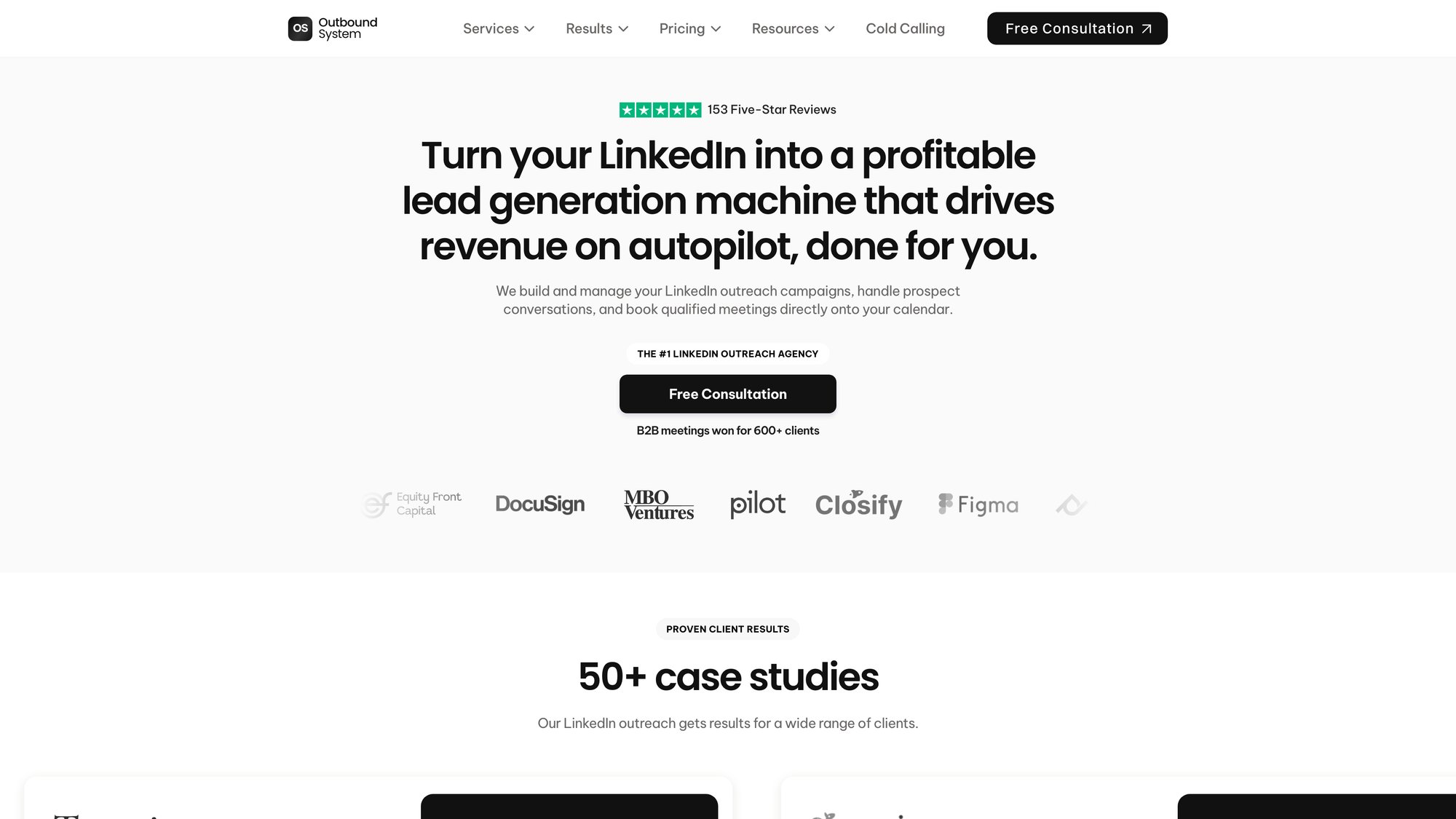
LinkedIn Lead Generation: Managing 600+ profiles with human-written message sequences, Sales Navigator targeting, and profile optimization. 5-day setup versus 14+ days with other providers.
Cold Calling Services: Trained SDRs book qualified meetings directly into your calendar. We guarantee 10-30 qualified meetings in the first 30 days or 100% refund.
All channels feed into unified CRM integrations with real-time reporting and AI-powered lead handoff.
Demand Generation Pricing That Makes Sense
We believe in month-to-month contracts with no long-term commitments. Pricing starts at just $499/month for our Growth plan.
Plan | Monthly Price | What You Get |
|---|---|---|
Growth | $499 | 350 Microsoft IPs, 5,000 leads/month, 10,000 emails/month |
Scale | $999 | 700 Microsoft IPs, 10,000 leads/month, 20,000 emails/month |
All plans include AI personalization, human-written copy, dedicated account strategist, A/B testing, and unlimited campaigns.
We also offer a Pay-Per-Lead option for clients who want unlimited volume and only pay for qualified results.
Why B2B Companies Choose Outbound System
Expertise Over Tools: We're a system, not a software. You get specialist knowledge that produces superior revenue per dollar compared to self-managed tools.
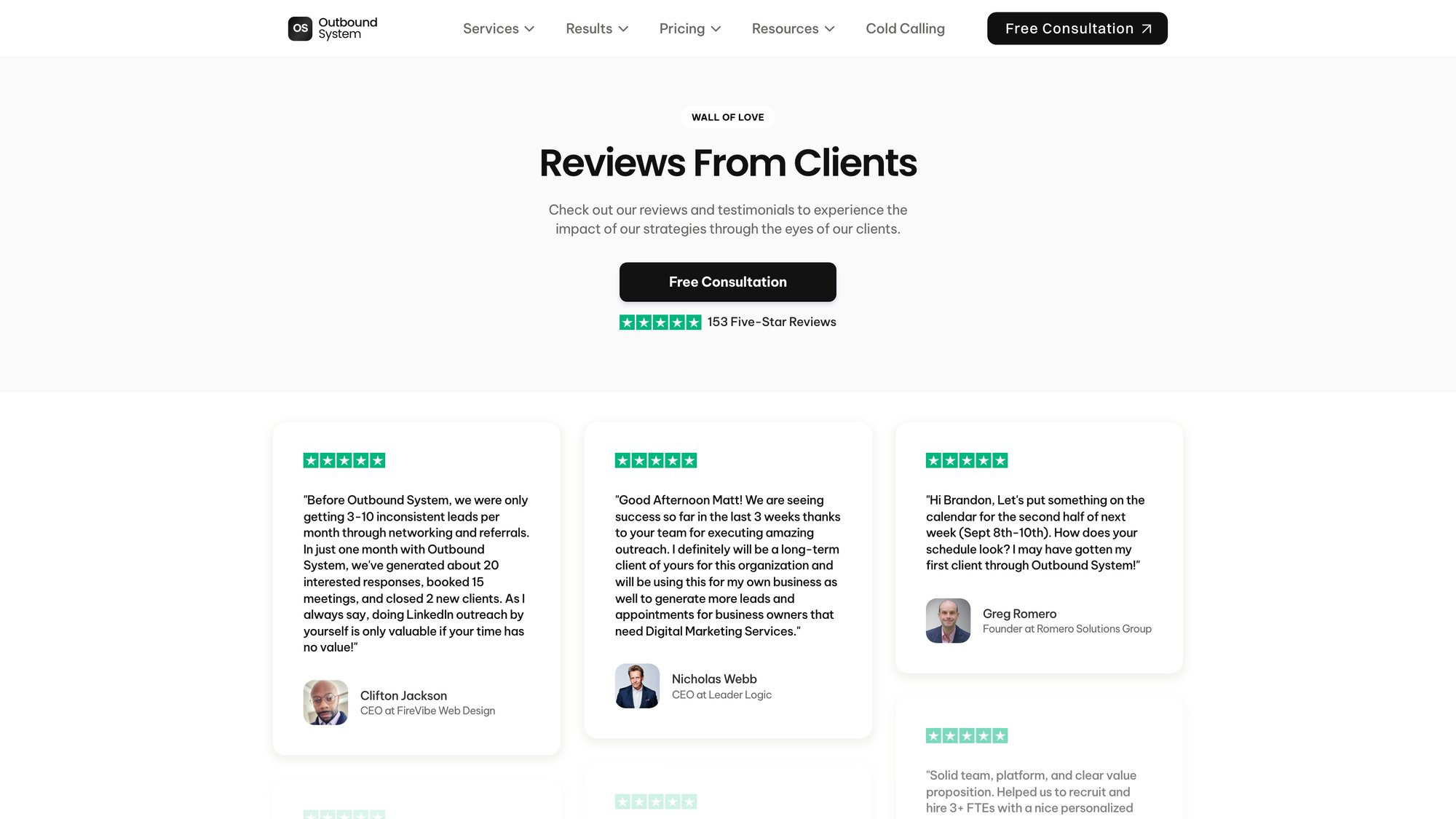
Proven Track Record: 50+ detailed case studies demonstrate results across industries (SaaS, financial services, manufacturing, professional services).
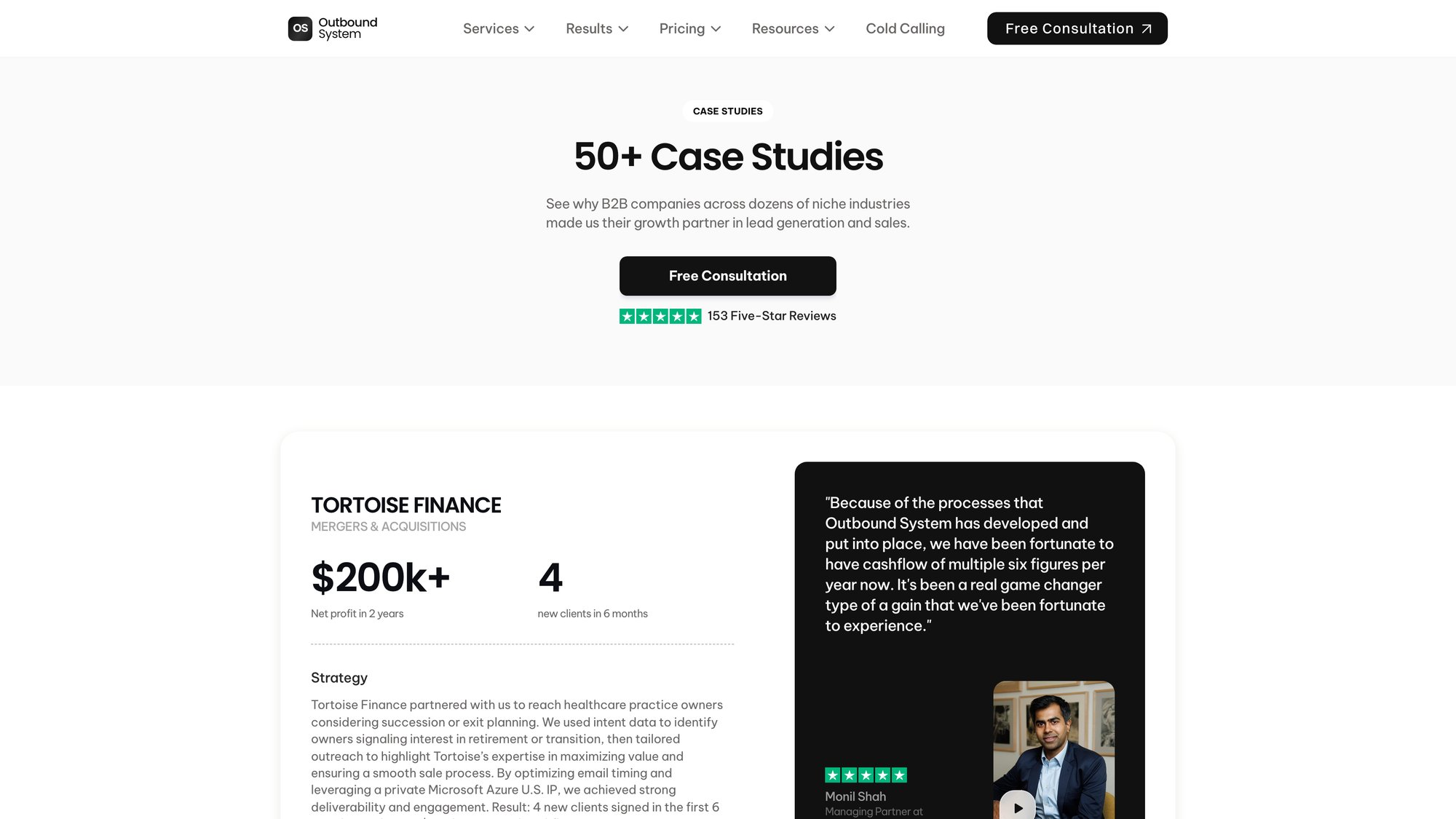
Representative examples:
→ Enterprise GenAI SaaS: 28 qualified meetings booked, $2.4M pipeline in 7 months
→ M&A Advisory: $200K+ realized net profit in 2 years with 4 new clients closed in 6 months
→ Manufacturing Firm: 330 meetings booked in 12 months
Human-Crafted, AI-Enhanced: We combine human copywriting with AI-powered personalization to achieve 2.8x higher response rates than template-based approaches.
Full-Service Execution: From target research to copy development, domain setup, inbox warmup, campaign launch, and lead handoff. You focus on closing deals; we handle the infrastructure.
Ready to Scale Your Demand Generation?
If you're serious about building a high-performance pipeline that consistently delivers qualified opportunities, book a free 15-minute consultation with our team.
We'll discuss your specific challenges, target market, and how our multi-channel approach can accelerate your growth.
Or explore our service pages to learn more:
Don't let your competitors dominate the market. Start generating demand at scale today.
Common B2B Demand Generation Questions Answered
B2B Demand Generation vs Lead Generation: What's the Difference?
Demand generation is a broader, long-term strategy focused on creating awareness and interest in your product or service across the entire buyer journey. It's about building trust and educating prospects before they're ready to buy.
Lead generation is a subset of demand gen that focuses specifically on converting interested prospects into identifiable contacts (capturing their information through forms, outreach, etc.).
Think of it this way: demand gen creates the want, lead gen captures the contact.
How Long Does B2B Demand Generation Take to Show Results?
It depends on your approach. Inbound tactics (content marketing, SEO) typically take 6-12 months to build momentum and show significant results, but they create compounding returns over time.
Outbound tactics (cold email, paid ads, calling) can generate results much faster (often within weeks), but they require continuous investment and optimization.
The best programs combine both for a balanced approach that delivers quick wins while building long-term assets.
What Are Good B2B Demand Generation Conversion Rates?
Conversion rates vary significantly by industry, channel, and funnel stage. Some benchmarks:
Website visitor to lead: 2-5% is typical for B2B
MQL to SQL conversion: 10-30% depending on lead scoring quality
Cold email response rate: 1-2% industry average (though we achieve 6-7% at Outbound System)
LinkedIn connection acceptance: 30-50% with personalized requests
Focus less on hitting specific benchmarks and more on continuous improvement through testing and optimization.
How Much Should You Budget for B2B Demand Generation?
B2B marketing budgets typically range from 2-10% of revenue, with demand gen and lead gen being major components.
For Customer Acquisition Cost (CAC), the average B2B company spends around $1,450 per customer acquired, though this varies widely by industry and deal size.
When evaluating budget, focus on:
• CAC payback period (how long to recoup acquisition costs)
• Customer lifetime value (CLV) compared to CAC (aim for 3:1 ratio minimum)
• Cost per pipeline dollar generated (benchmark against historical data)
Start with what you can afford, measure rigorously, and scale what works.
What KPIs Should You Track for Demand Generation?
Focus on metrics that tie to revenue, not just vanity metrics:
Pipeline metrics: Pipeline created/influenced, pipeline velocity, conversion rates at each stage
Efficiency metrics: CAC, cost per lead, cost per pipeline dollar, marketing ROI
Quality metrics: MQL to SQL conversion rate, lead velocity, win rate by source
Revenue metrics: Revenue attributed to marketing, customer lifetime value, average deal size
Track these in a unified dashboard accessible to both sales and marketing for alignment.
Should You Focus on Inbound or Outbound Demand Generation?
Both. The most successful programs use a balanced approach:
Inbound (content, SEO, social) builds long-term assets that attract qualified prospects organically and establish thought leadership.
Outbound (cold email, ads, calling) accelerates pipeline by proactively reaching high-fit accounts that might not find you otherwise.
Think of inbound as the foundation and outbound as the accelerator. Together, they create a complete demand generation engine.
How Important Is Personalization in B2B Demand Generation?
Critical. Generic, one-size-fits-all messaging no longer works.
Buyers expect relevance. They want to know you understand their specific industry, role, and challenges.
Personalization should happen at multiple levels:
Segmentation level: Different campaigns for different industries/personas
Account level: Customized approaches for high-value target accounts (ABM)
Individual level: Personalized email lines, references to specific challenges
At Outbound System, we combine human-written copy with AI personalization to achieve significantly higher engagement than template-based approaches.
What Role Does Content Play in Demand Generation?
Content is the fuel for your demand gen engine. It serves multiple purposes:
Awareness stage: Blog posts, videos, podcasts that educate prospects about problems and potential solutions
Consideration stage: Whitepapers, webinars, case studies that help evaluate options
Decision stage: ROI calculators, product demos, pricing guides that enable purchase decisions
Nurture stage: Newsletters, educational drips, thought leadership that keeps you top-of-mind
The key is creating genuinely useful content that addresses real challenges, not just promotional material disguised as education.
How Do You Align Sales and Marketing for Demand Generation?
Alignment is critical for demand gen success. Here's how to achieve it:
Shared definitions: Agree on what constitutes MQL, SQL, and qualified opportunities
Common goals: Tie marketing to pipeline/revenue metrics, not just lead volume
Regular communication: Weekly or bi-weekly meetings to discuss lead quality, pipeline status, messaging feedback
Unified technology: Integrated CRM and marketing automation so both teams see the same data
Collaborative planning: Involve sales in campaign planning; involve marketing in sales strategy
Clear SLAs: Define response times for lead follow-up and feedback loops
When sales and marketing act as one revenue team, conversion rates improve dramatically.
Can Small B2B Companies Do Effective Demand Generation?
Absolutely. While enterprise companies have bigger budgets, small B2B companies can compete effectively by:
Focusing tightly on a specific ICP (narrower targeting = more efficient spend)
Leveraging owned channels (blog, email, social) that don't require huge ad budgets
Partnering with specialists (agencies like Outbound System offer affordable plans starting at $499/month)
Being scrappy and creative (personal outreach, community engagement, thoughtful content)
Moving faster (small teams can test and iterate more quickly than large bureaucracies)
Many of our most successful clients are small companies that punch above their weight through smart, targeted demand gen.
Start Building Your B2B Demand Generation Engine Today
B2B demand generation is no longer optional. It's the foundation of sustainable, predictable growth in a world where buyers research independently and make decisions long before talking to sales.
The companies winning in 2025 aren't those with the biggest ad budgets or the most aggressive sales tactics. They're the ones that:
✓ Provide genuine value at every stage of the buyer journey
✓ Target precisely and personalize authentically
✓ Combine inbound and outbound in a coordinated multi-channel approach
✓ Align sales and marketing around shared revenue goals
✓ Measure what matters and optimize continuously
You now have a complete roadmap to build this engine. The strategies, tactics, best practices, and tools are all here.
The question is: will you execute?
If you're ready to transform your demand generation from a cost center into a revenue powerhouse, Outbound System can help. We've generated 127,000+ leads and $26M+ in closed revenue for clients across industries using the exact principles outlined in this guide.
Schedule your free consultation and let's discuss how we can accelerate your growth.
The demand is out there. Let's help you capture it.